



Written by Will Duru, BSc (Hons) Sport and Exercise Science, award-winning Personal Trainer with over 10 years of experience in strength training and optimising recovery.
Most people do not need a 6-day split. That is the truth most of the fitness industry avoids saying. Training six days a week sounds impressive, but more workouts do not automatically build more muscle. In many cases, people simply end up exhausted, under-recovered, and frustrated that their body still looks the same after months of effort.
A real 6-day split is not six random workouts squeezed into a week. It is controlled stress. Structured fatigue. Calculated recovery. And if you get that balance wrong, your body tells you quickly. Your lifts stop progressing. Your joints start aching. Your sleep worsens. Your energy crashes. Most lifters think they need more motivation when the real issue is recovery.
After more than a decade working as a strength coach and personal trainer, I, Will Duru, have seen this pattern repeatedly. Most people already train hard enough. The problem is that they do not understand how to balance intensity, volume, frequency, and recovery together. That balance is what separates advanced lifters from everyone else.
A proper 6-day split is designed for serious lifters who already have a strong foundation. People who understand lifting technique, progressive overload, recovery, nutrition, and consistency. Lifters who can train frequently without their performance collapsing after two weeks. Because once you move beyond the beginner stage, training harder is no longer enough. You need to train smarter.
This is where most people completely misunderstand muscle growth. Muscle is not built during workouts. The workout is simply the signal. Recovery is where the actual adaptation happens. That is why experienced lifters stop chasing exhaustion and start focusing on performance management instead. The goal is not to destroy your body every session. The goal is to create enough stimulus for growth while still recovering fast enough to perform at a high level again the next day.

Who Should Use 4-Day Training Splits? An Honest Assessment
From my experience, implementing a 6-day training split is a significant commitment that demands specific prerequisites from the lifter. It’s not a programme for everyone, and a realistic self-assessment of your experience, recovery capacity, lifestyle, and goals is paramount before embarking on such an intensive regimen. I’ve seen too many eager individuals jump into this without the necessary foundation, only to burn out or get injured. Let’s be honest about who this is for.
Experience Level Requirements: Firstly, 6-day splits are unequivocally designed for experienced lifters. This typically means individuals who have been consistently training for several years (e.g., 3+ years) and have already made substantial progress on less frequent splits (e.g., 3-day full body, 4-day upper/lower, or 6-day body part splits). You should possess:
Mastery of Fundamental Movements: You should be proficient and consistent in executing compound exercises such as squats, deadlifts, bench presses, overhead presses, and rows with proper form. This isn’t about lifting heavy; it’s about lifting correctly.
Strong Mind-Muscle Connection: The ability to effectively engage and feel the target muscles working during an exercise is crucial for maximising stimulus and preventing injury.
Understanding of Training Principles: Familiarity with concepts like progressive overload, intensity, volume, and periodisation is non-negotiable. You need to understand the ‘why’ behind what you’re doing.
High Training Discipline: The commitment to consistently adhere to a demanding schedule, including strict adherence to nutrition and recovery protocols, is paramount. This is where many fall short.
Beginners or even intermediate lifters attempting a 4-day split without these foundational elements risk overtraining, injury, and ultimately, stagnation. Your bodies are not yet conditioned to handle the high volume and frequency, and your technical proficiency may not be sufficient to benefit from the increased stimulus. Build your base first.
Recovery Capacity Assessment: High-frequency training places immense demands on your body’s recovery systems. Therefore, a critical self-assessment of your recovery capacity is essential. This includes:
Sleep Quality and Quantity: Are you consistently getting 7-9 hours of high-quality sleep per night? Sleep is the cornerstone of recovery, and insufficient sleep will severely compromise your ability to adapt to a 6-day split. As a trainer, I can’t stress this enough.
Nutritional Intake: Is your diet optimised for recovery and growth? This means adequate protein intake (e.g., 2.2g/kg body weight), sufficient carbohydrates for energy, and healthy fats. Your caloric intake must match or exceed energy expenditure for muscle growth. Without proper fuel, your body simply cannot repair and grow.
Stress Levels: Are you managing life stressors effectively? High levels of chronic stress (from work, relationships, etc.) can significantly impair recovery, regardless of training stimulus. This is often an overlooked aspect of training.
Supplementation (Optional but Beneficial): While not mandatory, certain supplements like creatine, protein powder, and omega-3 fatty acids can support recovery and performance. These are tools, not magic pills.
If any of these recovery pillars are weak, a 4-day split will likely lead to burnout rather than progress. It’s crucial to have robust recovery mechanisms in place before increasing training frequency. This is where my experience in optimising recovery truly comes into play.
Lifestyle and Time Considerations: A 4-day split requires a substantial time commitment. You will be in the gym 6 days a week, often for 60-90 minutes per session, excluding warm-up and cool-down. This necessitates:
Consistent Schedule: A lifestyle that allows for regular, uninterrupted training sessions. This means planning your week effectively.
Flexibility: The ability to adjust your schedule if unforeseen circumstances arise, without derailing the entire week. Life happens, but your training shouldn’t be the first thing to go.
Prioritisation: Training must be a high priority in your daily routine. If it’s not, a 4-day split will quickly become unsustainable. Individuals with highly unpredictable schedules, demanding jobs, or significant family commitments may find a 6-day split unsustainable in the long term. Consistency is key, and an unsustainable programme is an ineffective one. I’ve seen many try and fail because they couldn’t commit to the time.

Benefits and Challenges of 6-Day Training – What I’ve Observed
From my years of coaching and personal training, I’ve seen firsthand the distinct set of advantages that a 6-day training split can offer to an experienced lifter. It truly can propel you towards new levels of progress. However, I’ve also witnessed the significant challenges that, if not properly managed, can quickly lead to setbacks. Understanding both sides of this intensive training approach is crucial for successful implementation, and it’s something I always discuss with my advanced clients.
Increased Training Volume Potential: One of the primary benefits I’ve observed with a 6-day split is the significantly increased potential for training volume. By distributing the weekly workload across six sessions, you can accumulate a higher total number of sets and repetitions for each muscle group without making any single session excessively long or fatiguing. For advanced lifters, who often require more volume to stimulate further growth, this can be a game-changer. This higher volume, when properly periodised and recovered from, can lead to:
Enhanced Hypertrophy: More frequent muscle stimulation and greater accumulated volume can drive superior muscle protein synthesis and, consequently, greater muscle growth. Research supports that higher training frequencies, when volume is equated, can be as effective or even more effective for hypertrophy [1].
Accelerated Strength Gains: Increased exposure to specific movement patterns and higher overall work capacity can translate into faster strength adaptations. This is particularly true for powerlifters who need to practice their main lifts frequently.
Improved Work Capacity: Your body adapts to the demands placed upon it, and consistently training with high frequency and volume will improve your overall capacity for work, both in and out of the gym. I’ve seen clients become much more resilient.
Enhanced Skill Practice and Technique: Another substantial advantage, particularly for strength athletes like powerlifters, is the enhanced opportunity for skill practice and technique refinement. When you train a lift more frequently, you get more repetitions to perfect your form, reinforce movement patterns, and improve neuromuscular efficiency. This consistent practice can lead to:
Superior Motor Learning: The more often you perform a complex lift, the more ingrained the movement pattern becomes, leading to smoother, more efficient execution. This is a fundamental principle of skill acquisition.
Reduced Technical Breakdown: Frequent practice helps maintain optimal form even under fatigue, reducing the likelihood of technical errors that can lead to injury or missed lifts. This is vital when you’re pushing heavy weights.
Increased Confidence: Consistent, high-quality practice builds confidence in your ability to execute lifts effectively, especially under heavy loads. This mental edge is often overlooked.
Recovery and Overtraining Considerations: Despite the benefits, the most significant challenge of a 6-day split, in my professional opinion, lies in recovery and the ever-present risk of overtraining. While the volume per session is manageable, the cumulative fatigue over a week can be substantial. Overtraining is a state where the body is unable to recover adequately from training stress, leading to a decline in performance, increased injury risk, and systemic issues. Signs of overtraining include:
- Persistent Fatigue:Feeling constantly tired, even after rest days.
- Decreased Performance:Noticeable drops in strength, endurance, or ability to complete workouts.
- Increased Irritability or Mood Swings: Psychological symptoms of being rundown.
- Sleep Disturbances:Difficulty falling asleep or staying asleep.
- Frequent Illness:A suppressed immune system due to chronic stress.
- Joint Pain or NaggingInjuries: The body is breaking down from insufficient recovery.
Effective recovery management, including meticulous attention to sleep, nutrition, stress, and strategic deloads, is not just recommended but absolutely critical for success on a 6-day split. Without it, the benefits quickly turn into detriments. This is where my expertise in optimising recovery becomes invaluable for my clients.
Lifestyle Integration Challenges:
Finally, the lifestyle integration challenges of a 4-day split cannot be overstated. As I discussed in Section 1, the time commitment is significant, and it requires a high degree of discipline and prioritisation. This can lead to:
Social Sacrifices: Less free time for social activities or hobbies outside of training.
Scheduling Conflicts: Difficulty balancing work, family, and other responsibilities with a rigid training schedule.
Mental Fatigue: The constant demand of training can lead to mental burnout, even if the body is recovering physically.
Successful implementation of a 6-day split requires a holistic approach that considers not just the physical demands but also the mental and lifestyle implications. It is a programme for those who are truly dedicated and can structure their lives around their training goals. I always advise my clients to be realistic about their commitments before diving into this type of programme.

Your 12-Week, 2-Day/Week Strength Plan
This plan is designed to be performed on two non-consecutive days (e.g., Monday and Thursday). You will rotate through four different workouts: Push, Pull, Legs, and Core.
- Week 1: Day 1 (Push), Day 2 (Pull)
- Week 2: Day 1 (Legs), Day 2 (Core)
- Week 3: Day 1 (Push), Day 2 (Pull)
- Week 4: Day 1 (Legs), Day 2 (Core)
Workout 1: Push
Exercise | Sets | Reps | Rest Period | Equipment |
Dumbbell Bench Press | 3 | 10-12 | 90s | Dumbbell |
Seated Machine Shoulder Press | 3 | 10-12 | 90s | Machine |
Bodyweight Push-ups (or on knees) | 3 | AMRAP | 90s | Bodyweight |
Dumbbell Tricep Kickbacks | 3 | 12-15 | 60s | Dumbbell |
Mini Band Chest Fly | 3 | 15-20 | 60s | Mini Resistance Band |
Workout 2: Pull
Exercise | Sets | Reps | Rest Period | Equipment |
Lat Pulldown Machine | 3 | 10-12 | 90s | Machine |
Seated Cable Row | 3 | 10-12 | 90s | Machine |
Dumbbell Single Arm Row | 3 | 10-12 per arm | 90s | Dumbbell |
Kettlebell Bicep Curls | 3 | 12-15 | 60s | Kettlebell |
Mini Band Pull-Aparts | 3 | 15-20 | 60s | Mini Resistance Band |
Workout 3: Legs
Exercise | Sets | Reps | Rest Period | Equipment |
Kettlebell Goblet Squat | 3 | 10-12 | 90s | Kettlebell |
Leg Press Machine | 3 | 10-12 | 90s | Machine |
Dumbbell Lunges | 3 | 10-12 per leg | 90s | Dumbbell |
Bodyweight Glute Bridges | 3 | 15-20 | 60s | Bodyweight |
Mini Band Lateral Walks | 3 | 10-12 per side | 60s | Mini Resistance Band |
Workout 4: Core
Exercise | Sets | Reps | Rest Period | Equipment |
Plank | 3 | 30-45s hold | 60s | Bodyweight |
Dumbbell Russian Twists | 3 | 10-12 per side | 60s | Dumbbell |
Leg Raises (on floor) | 3 | 12-15 | 60s | Bodyweight |
Bird-Dog | 3 | 10-12 per side | 60s | Bodyweight |
Pallof Press with Band | 3 | 10-12 per side | 60s | Mini Resistance Band |
Weeks 5-8: Building Phase
Continue the rotation. Increase the weight slightly if the exercises feel too easy while maintaining good form.
- Week 5: Day 1 (Push), Day 2 (Pull)
- Week 6: Day 1 (Legs), Day 2 (Core)
- Week 7: Day 1 (Push), Day 2 (Pull)
- Week 8: Day 1 (Legs), Day 2 (Core)
Weeks 9-12: Strength Phase
For this phase, we will increase the sets on the main compound lifts to build more strength.
- Week 9: Day 1 (Push), Day 2 (Pull)
- Week 10: Day 1 (Legs), Day 2 (Core)
- Week 11: Day 1 (Push), Day 2 (Pull)
- Week 12: Day 1 (Legs), Day 2 (Core)
Workout 1: Push (Strength Phase)
Exercise | Sets | Reps | Rest Period | Equipment |
Dumbbell Bench Press | 4 | 8-10 | 90s | Dumbbell |
Seated Machine Shoulder Press | 4 | 8-10 | 90s | Machine |
Bodyweight Push-ups (or on knees) | 3 | AMRAP | 90s | Bodyweight |
Dumbbell Tricep Kickbacks | 3 | 12-15 | 60s | Dumbbell |
Mini Band Chest Fly | 3 | 15-20 | 60s | Mini Resistance Band |
Workout 2: Pull (Strength Phase)
Exercise | Sets | Reps | Rest Period | Equipment |
Lat Pulldown Machine | 4 | 8-10 | 90s | Machine |
Seated Cable Row | 4 | 8-10 | 90s | Machine |
Dumbbell Single Arm Row | 3 | 10-12 per arm | 90s | Dumbbell |
Kettlebell Bicep Curls | 3 | 12-15 | 60s | Kettlebell |
Mini Band Pull-Aparts | 3 | 15-20 | 60s | Mini Resistance Band |
Workout 3: Legs (Strength Phase)
Exercise | Sets | Reps | Rest Period | Equipment |
Kettlebell Goblet Squat | 4 | 8-10 | 90s | Kettlebell |
Leg Press Machine | 4 | 8-10 | 90s | Machine |
Dumbbell Lunges | 3 | 10-12 per leg | 90s | Dumbbell |
Bodyweight Glute Bridges | 3 | 15-20 | 60s | Bodyweight |
Mini Band Lateral Walks | 3 | 10-12 per side | 60s | Mini Resistance Band |
Workout 4: Core (Strength Phase)
Exercise | Sets | Reps | Rest Period | Equipment |
Plank | 3 | 45-60s hold | 60s | Bodyweight |
Dumbbell Russian Twists | 3 | 12-15 per side | 60s | Dumbbell |
Leg Raises (on floor) | 3 | 15-20 | 60s | Bodyweight |
Bird-Dog | 3 | 12-15 per side | 60s | Bodyweight |
Pallof Press with Band | 3 | 12-15 per side | 60s | Mini Resistance Band |
Recovery Management for High-Frequency Training – My Top Tips
In my world of 6-day split training, recovery isn’t just a good idea; it’s the most important thing for making progress. Training so often and so hard puts a lot of stress on your body. So, looking after your recovery is a must for advanced lifters. If you don’t recover well, you’ll get too tired, get hurt, and stop making gains. Here are the key parts of recovery that I tell all my clients to focus on.
Getting Enough Sleep:
Sleep is the best way your body recovers. When you’re in a deep sleep, your body makes growth hormones. These help fix your muscles and build new ones. For lifters on a 6-day split, you need at least 7-9 hours of good sleep every night. Some people might even need more. To get better sleep, try these things:
- Go to Bed at the Same Time: Try to go to bed and wake up at roughly the same time each day, even on days off. This helps your body’s natural clock.
- Make Your Bedroom Good for Sleep: Your room should be dark, quiet, and cool. Blackout curtains and earplugs can really help.
- No Screens Before Bed: The blue light from phones and tablets can stop your body from making sleep hormones. Try to avoid screens for at least an hour before you go to sleep.
- Avoid Caffeine and Big Meals Late: These can make it hard to fall asleep or get good sleep.
If you don’t get enough sleep, you won’t just feel tired. It can also affect your mood, how well you think, and how motivated you are. This makes it very hard to stick to a tough training plan.
Eating Right for Recovery:
Your food choices are super important for how well you recover and grow. You need to plan your meals carefully to support your hard training.
- Enough Calories: To build muscle and recover, you need to eat enough food. If you’re trying to gain muscle, you need to eat more calories than you burn. If you don’t eat enough, your body won’t recover well and might even break down muscle.
- Lots of Protein: Protein is what builds your muscles. You need a lot of it to fix and build new muscle after training. Aim for 2.2-2.8 grams of protein for every kilogram of your body weight. Try to eat protein evenly throughout the day, including before and after your workouts.
- Enough Carbs: Carbs give your body energy. They fill up your muscle’s energy stores, which get used up during hard training. They also help save your protein for muscle building. Eat good carbs like whole grains, fruits, and vegetables. Eat them around your workouts.
- Healthy Fats: Fats are important for your hormones and overall health. Get them from foods like avocados, nuts, seeds, olive oil, and oily fish.
- Drink Plenty of Water: Water is often forgotten, but it’s key for how well you perform and recover. Not drinking enough water can make you weaker and more tired. Drink lots of water all day, especially before, during, and after your workouts. If your pee is light yellow, you’re probably drinking enough.

Conculsion
The 6-day split strength training programme, while very demanding, is a powerful tool for advanced lifters who want to maximise muscle and strength gains. It gives you great chances to do more training, get better at your lifts, and make faster progress. But you must approach it with a full understanding of its strengths and challenges.
Being successful with a 6-day split isn’t just about going to the gym six times a week. It’s about carefully using advanced training rules. This means smartly spreading out your training work, managing how hard you train, choosing exercises wisely, and most importantly, always focusing on recovery. Sleep, good food, and managing stress are not just small things; they are the main pillars that decide if you can handle and grow from such intense training.
By always watching your body, tracking your progress, and using smart changes like deloads and changing exercises, you can handle the tough parts of 6-day training. The 6-day split is an advanced tool. It needs careful handling and a deep connection with how your body reacts. When you use it smartly, it can help you reach new levels of strength and build the body you want.
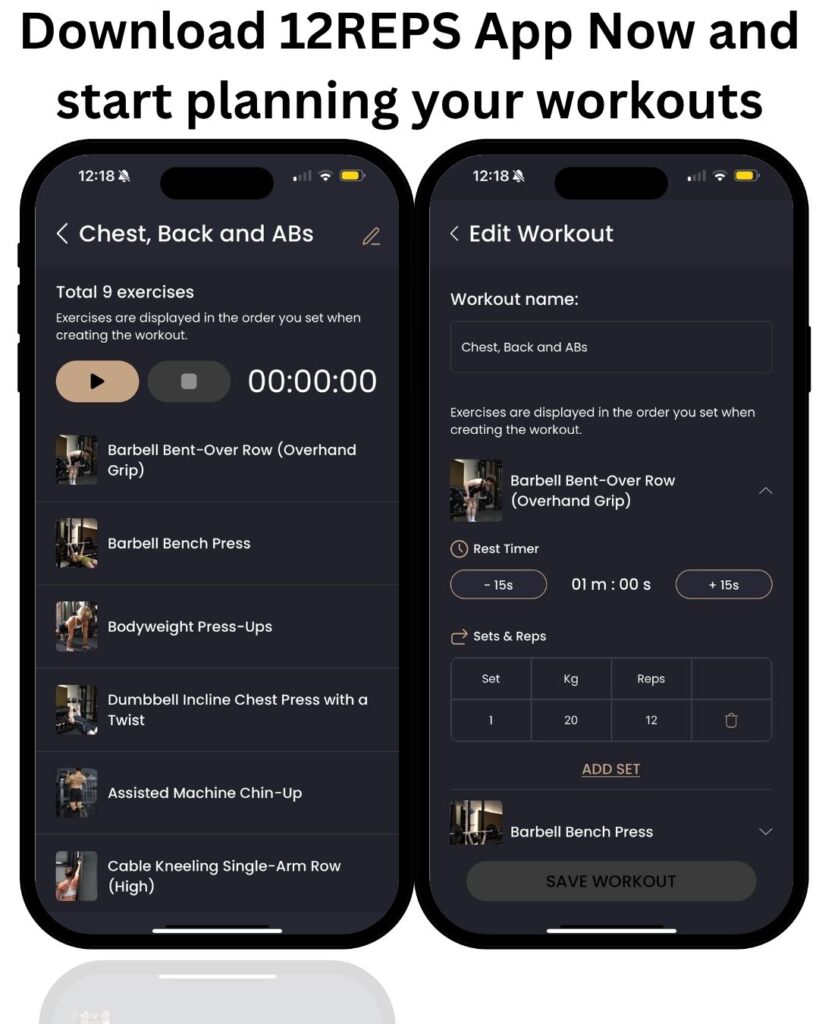
Take on the challenge, stick with the plan, and learn how to master 6-day training. This will truly take your lifting journey to the next level. And remember, the 12reps app is always there to help you track your progress and keep you on the right path. It’s a tool I developed to empower lifters like you to achieve their full potential.