

By Will Duru | BSc Sport Science | 10+ Years Coaching Experience
If you are a woman over 40, strength training may be one of the best things you can do for your body. Not because you need to train like a bodybuilder, but because muscle affects how you move, age, burn energy, and feel in your own skin.
You may already notice that something has shifted. Muscle feels harder to maintain. Belly fat becomes harder to shift. Old workouts do not give the same results. Joints feel stiffer in the morning. Energy dips through the day. That is not weakness. That is biology. And it is something you can do something about.
Strength training is not just about looking toned. It helps you stay capable, strong, and independent as you age. The women I work with who commit to lifting consistently do not just change how they look. They change how they feel about what their body can do.
What Changes in Your Body After 40
Understanding why your body feels different is the first step. There are real physiological reasons this happens, and none of them mean you are past your best.
Muscle Mass Declines With Age
From around your mid-30s, muscle mass begins to decrease gradually each year. This process, called sarcopenia, accelerates without resistance training. Less muscle means a slower metabolism, less strength in daily life, and more difficulty maintaining a healthy weight.
Hormonal Changes Affect Body Composition
Oestrogen and progesterone begin to fluctuate during perimenopause and decline through menopause. This affects where your body stores fat, how it builds muscle, and how quickly you recover from exercise. These hormonal changes are real, but they are not a reason to stop training. They are a reason to train smarter.
Bone Density Becomes More Important
Bone density peaks in your early 30s. After that, it gradually decreases. For women, this decline speeds up around menopause. Strength training applies load to your bones, which stimulates them to stay dense. This reduces your risk of fractures and osteoporosis later in life.
Recovery Takes Longer
Your body needs more time to repair after hard sessions. That is not an excuse to do less. It is a reason to programme smarter. Quality over volume. Adequate rest between sessions. Sleep and nutrition matter more now than they did in your 20s.
Strength Affects Daily Life
Whether it is carrying shopping, climbing stairs, picking up a grandchild, or simply standing with good posture, strength affects everything. The goal is not just gym performance. It is quality of life.
Why Strength Training Is Different From Cardio
Most women I speak to who come from a cardio background feel like they are doing enough. They run. They go to classes. They walk. And cardio is genuinely valuable for heart health, mood, and general fitness.
But cardio alone does not build muscle. It does not protect bone density in the same way. It does not improve your posture or strengthen your joints. And over time, doing only cardio while eating in a deficit can lead to muscle loss alongside fat loss, which further weakens your metabolism.
Strength training does something cardio cannot. It tells your body to hold onto muscle and build more of it. That has a compounding effect on everything else: metabolism, body composition, energy, confidence, and long-term independence.
You need both. But if you are currently doing a lot of cardio and no lifting, adding two strength sessions per week will likely make a bigger difference than adding more cardio.
The Real Benefits of Lifting Weights for Women Over 40
Here is what my clients actually experience when they commit to consistent strength training:
- Feel stronger in daily life — carrying bags, climbing stairs, moving furniture
- Improved body shape and muscle tone without bulk
- Better bone density and reduced risk of osteoporosis
- Lower injury risk because stronger muscles protect joints
- Improved posture and reduced back pain
- More confidence in the gym and in your own skin
- Easier weight management through a faster resting metabolism
- Greater energy during the day
- Better sleep quality
- Protection of your independence and physical capability later in life
How Often Should You Strength Train?
Two to four sessions per week is the sweet spot for most women over 40. Here is how to think about it:
- Two sessions per week: A solid starting point. Enough to build strength, protect muscle, and see real progress.
- Three sessions per week: The ideal balance for most people. You get enough frequency to progress without overloading recovery.
- Four sessions per week: Good for those with more experience and solid recovery. Split the sessions so you are not working the same muscle groups on two consecutive days.
Each session should be 40 to 60 minutes. You do not need to be in the gym for two hours. Focused, purposeful work beats volume for the sake of it.
Best Exercises to Start With
I structure strength training around movement patterns, not just individual muscles. This gives you a balanced programme that covers everything.
Squat Pattern
- Goblet squat — great starting exercise, teaches correct position
- Leg press — lower back-friendly and easy to load progressively
Hinge Pattern
- Romanian deadlift — builds the posterior chain: hamstrings, glutes, lower back
- Hip thrust — targets the glutes directly, easy to load with a barbell or weight plate
Push Pattern
- Dumbbell chest press — works the chest, shoulders, and triceps
- Push-up — underrated. Master this and you have a solid pressing foundation
Pull Pattern
- Seated row — strengthens the upper back and improves posture
- Lat pulldown — builds the lats and helps create a strong, stable back
Carry
- Farmer’s carry — hold two dumbbells and walk. Builds grip strength, core stability, and resilience
Core
- Dead bug — safe, controlled, and highly effective for deep core stability
- Plank — classic for a reason
- Pallof press — anti-rotation work that trains your core to resist movement rather than create it
You do not need to do all of these at once. Pick one or two exercises from each pattern and build from there.
Beginner Workout Plan
Here is a simple A/B split you can run two to three times per week. Alternate between the two workouts with a rest day between sessions.
Workout A
Exercise | Sets | Reps | Rest | Notes |
Goblet squat | 3 | 8-10 | 90 sec | Control the descent |
Dumbbell Romanian deadlift | 3 | 8-10 | 90 sec | Hinge at hips |
Seated row | 3 | 10-12 | 90 sec | Squeeze shoulder blades |
Dumbbell chest press | 3 | 8-10 | 90 sec | Feet flat on floor |
Dead bug | 3 | 8 each side | 60 sec | Lower back stays flat |
Workout B
Exercise | Sets | Reps | Rest | Notes |
Leg press | 3 | 10 | 90 sec | Full range, control return |
Hip thrust | 3 | 10 | 90 sec | Squeeze at the top |
Lat pulldown | 3 | 10-12 | 90 sec | Pull to upper chest |
Dumbbell shoulder press | 3 | 8-10 | 90 sec | Do not flare elbows |
Farmer’s carry | 3 | 30-45 sec | 60 sec | Chest up, core tight |
Progressive overload When a weight feels too easy for all reps with good form, increase it slightly in the next session. Even 1kg added over time makes a significant difference across weeks and months. |
Mistakes to Avoid
I see these consistently in women who are new to strength training. They slow progress down significantly.
Lifting Too Light Forever
You will not get bulky from lifting heavier. You will get stronger. If the weight is not challenging by the last two reps, it is too light. Progressive overload is the engine of progress.
Changing Your Workouts Too Often
Variety feels fresh but consistency builds strength. Stick to a programme for a minimum of six to eight weeks. You will not be able to measure progress if you keep switching.
Only Doing HIIT
High-intensity classes burn calories but they do not build muscle in the same way. Add structured lifting to your routine, even if you still enjoy HIIT sessions alongside it.
Skipping Protein
Muscle is built from protein. Most women under-eat it significantly. Aim for around 1.6 to 2 grams of protein per kilogram of bodyweight per day. Spread it across meals. This matters more than almost any supplement.
Ignoring Recovery
Training breaks down muscle. Recovery builds it back stronger. Poor sleep, chronic stress, and under-eating all undermine the work you put in at the gym. Recovery is training.
Comparing Yourself to Younger Women Online
Social media shows you highlights, not the full picture. Your training is about what your body needs, not what looks good in a reel. Progress looks different at 42 than at 22. Both are valid.
Training Through Pain
Soreness is normal. Sharp pain, joint pain, or anything that gets worse as you train is a signal to stop. Train around discomfort, not through it. If in doubt, get it checked.
How to Stay Consistent
Motivation comes and goes. Structure keeps you going. Here is what works for my clients long-term:
- Schedule your sessions like appointments — two or three fixed days per week
- Start simpler than you think you need to. Early wins build habit.
- Track your reps and weights. Progress you can see keeps you coming back.
- Do not wait to feel ready. The first session is always the hardest.
- Find a gym environment where you feel comfortable — or train at home with minimal kit
- Give it six to eight weeks before you assess results. Real change takes time.
- Focus on how training makes you feel, not just how you look
Strength training is cumulative. The sessions that feel ordinary are the ones that build the foundation. Show up consistently over months, not weeks, and the results will follow.
Start Simple With 12REPS
You do not need to guess what to do in the gym.
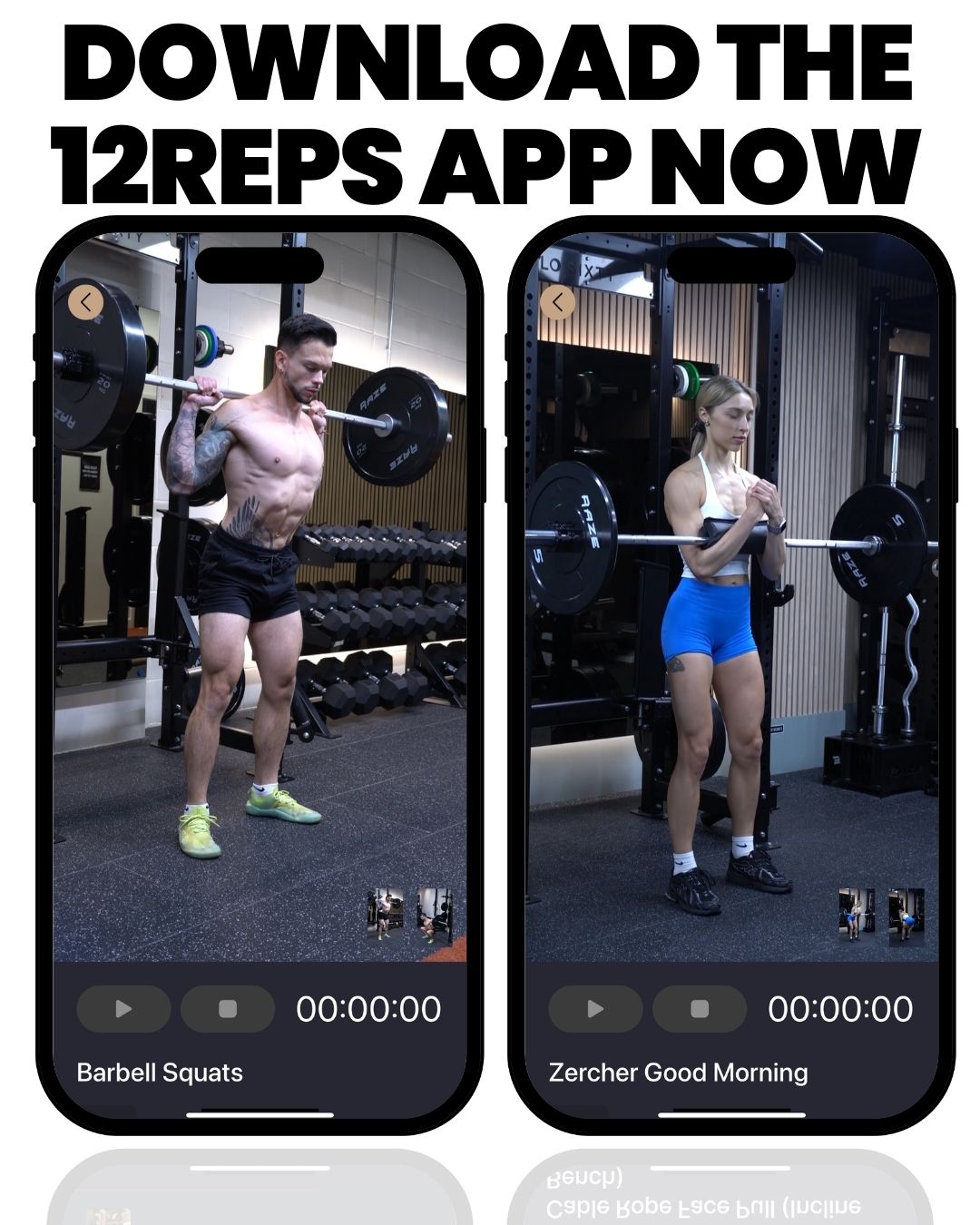
The 12REPS app gives you strength workouts built by a certified trainer, filtered by your goal, equipment, and available time. Whether you are training at home or in a commercial gym, you will have a clear plan to follow — not an algorithm-generated list, but real programming designed by Will Duru.
Start with two strength workouts this week. Keep it simple. Build confidence first. Then build from there.
Download the 12REPS app: just12reps.com