


By Will Duru, BSc (Hons) Sport and Exercise Science, Award winning Personal Trainer with over 10 years of experience in strength training
Five minutes. That is roughly how long a proper warm up takes to make the difference between a productive training session and a preventable injury.
Yet walk into any gym and you will see the same pattern repeated dozens of times per hour. Someone arrives, drops their bag, walks straight to the weights and starts lifting heavy. No preparation. No build up. Just cold muscles attempting to handle serious loads.
I have watched this approach create countless injuries over my decade of training clients. Pulled hamstrings, tweaked shoulders, strained lower backs. Almost all of them preventable with basic preparation.
This guide covers everything you need to know about warming up before strength training: the science behind why it matters, the exact protocols to follow and how to adapt your warm up to different situations.

The Science of Warming Up
Your body at rest is not prepared for intense physical effort. Several physiological changes need to occur before you can safely and effectively lift heavy weights.
Muscle temperature increases. Warm muscles are more pliable, contract more forcefully and are significantly less prone to strains and tears. Research demonstrates that raising muscle temperature by just 1 to 2 degrees Celsius improves force production and reduces injury risk substantially.
Synovial fluid spreads through your joints. This natural lubricant reduces friction between joint surfaces, protecting cartilage and allowing smoother movement. Without adequate warm up, your joints operate with less lubrication, increasing wear and discomfort over time.
Your nervous system activates. Heavy lifting requires rapid recruitment of muscle fibres and complex coordination between muscle groups. A warm up progressively brings these neural pathways online, improving the communication between your brain and muscles.
Blood flow increases. Warming up dilates blood vessels and raises heart rate, delivering more oxygen and nutrients to working muscles. This enhanced circulation supports better performance and faster recovery between sets.
Mental focus sharpens. Beyond physical preparation, a warm up provides transition time. Whatever stress or distraction you carried into the gym fades as you focus on movement and preparation.

Two Components of an Effective Warm Up
Every proper warm up contains two distinct elements:
General Warm Up
This raises your overall body temperature and heart rate through light cardiovascular activity. Walking, cycling, rowing or using a cross trainer all work well. The goal is to feel warmer and slightly out of breath without creating fatigue.
Duration: 5 to 10 minutes at a moderate pace.
Specific Warm Up
This prepares the exact muscles and movement patterns you will use in your workout. It involves performing lighter versions of your planned exercises, progressively increasing weight until you reach your working loads.
The specific warm up is where most people cut corners. They complete some cardio, then jump straight to heavy weights. This skips the crucial step of preparing specific tissues and practising movement patterns before loading them heavily.
The Complete Warm Up Protocol
Follow this systematic approach before any strength training session:
Step 1: Light Cardio (5 minutes)
Choose any low impact activity and work at a pace that elevates your heart rate without exhausting you.
Options:
- Rowing machine at easy pace
- Stationary bike
- Brisk walking on incline treadmill
- Skipping rope
- Cross trainer
You should break a light sweat by the end. If you are breathing heavily or feeling tired, you have gone too hard.
Step 2: Dynamic Mobility (5 minutes)
Move your joints through their full range of motion with controlled, flowing movements. This differs from static stretching, which involves holding positions and should be saved for after training.
Upper Body Day Mobility:
Movement | Repetitions | Target Area |
Arm circles forward | 10 each arm | Shoulders |
Arm circles backward | 10 each arm | Shoulders |
Wall slides | 10 | Scapular mobility |
Thoracic rotations | 8 each side | Upper back |
Wrist circles | 10 each direction | Wrists |
Lower Body Day Mobility:
Movement | Repetitions | Target Area |
Leg swings front to back | 10 each leg | Hip flexors, hamstrings |
Leg swings side to side | 10 each leg | Adductors, abductors |
Walking lunges | 10 total steps | Hips, quads |
Bodyweight squats | 15 | Knees, hips, ankles |
Ankle circles | 10 each direction | Ankles |
Step 3: Activation Work (3 minutes)
Target muscles that commonly underperform or play crucial stabilising roles. This “switches on” tissues that might otherwise remain dormant.
Upper Body Activation:
Exercise | Sets | Reps |
Band pull aparts | 2 | 15 |
Scapular push ups | 2 | 10 |
Band face pulls | 1 | 15 |
Lower Body Activation:
Exercise | Sets | Reps |
Glute bridges | 2 | 15 |
Clamshells | 2 | 12 each side |
Dead bugs | 2 | 8 each side |

Step 4: Exercise Specific Warm Up Sets
Before your working sets of any exercise, perform progressively heavier warm up sets of that same movement. This is the most commonly skipped element, and the most important.
How to Structure Warm Up Sets:
Start with an empty bar or very light weight. Increase load in roughly equal jumps. Decrease repetitions as weight increases. Allow more rest as sets get heavier.
Example for 100kg Squat Working Weight:
Set | Load | Reps | Rest After |
1 | 20kg (empty bar) | 10 | 30 seconds |
2 | 40kg | 8 | 45 seconds |
3 | 60kg | 5 | 60 seconds |
4 | 80kg | 3 | 90 seconds |
5 | 90kg | 1 | 2 minutes |
Working | 100kg | Programmed | Programmed |
Example for 60kg Bench Press Working Weight:
Set | Load | Reps | Rest After |
1 | 20kg (empty bar) | 10 | 30 seconds |
2 | 40kg | 6 | 45 seconds |
3 | 50kg | 3 | 60 seconds |
Working | 60kg | Programmed | Programmed |
Example for 160kg Deadlift Working Weight:
Set | Load | Reps | Rest After |
1 | 60kg | 8 | 45 seconds |
2 | 100kg | 5 | 60 seconds |
3 | 120kg | 3 | 90 seconds |
4 | 140kg | 2 | 2 minutes |
5 | 150kg | 1 | 2 minutes |
Working | 160kg | Programmed | Programmed |
The principle: heavier working weights require more warm up sets. Lighter working weights need fewer.
Six Warm Up Mistakes That Cause Problems
Mistake 1: Skipping Entirely
The most damaging error. Some people view warm ups as wasted time better spent on “real” training. This thinking ignores that the warm up enables the real training to happen safely and effectively.
Mistake 2: Static Stretching Before Lifting
Holding long stretches before strength training temporarily reduces muscle stiffness and force production. This sounds beneficial but actually impairs your ability to generate power and may increase injury risk.
Save static stretching for after your session or separate flexibility work.
Mistake 3: Excessive Cardio
Twenty or thirty minutes on the treadmill before lifting creates fatigue that undermines your strength work. By the time you reach the weights, your energy is already depleted.
Five to ten minutes is sufficient. More works against your goals.
Mistake 4: Insufficient Warm Up Sets
One set with an empty bar followed immediately by working weight is inadequate. Your muscles and nervous system need several progressively heavier sets to reach full readiness.
Mistake 5: Treating Warm Up Sets as Training
Warm up sets should not fatigue you. If you are grinding through warm up reps, reduce the weight or repetitions. These sets are preparation, not training.
Mistake 6: Identical Warm Up Every Session
Your warm up should match your workout. Upper body sessions require different preparation than lower body sessions. Heavy squat days need more extensive preparation than light accessory work.
Abbreviated Warm Up for Limited Time
When genuinely pressed for time, this condensed version takes approximately 8 minutes:
Quick Protocol:
- Cardio (2 minutes): Jumping jacks, high knees or brisk walking
- Dynamic mobility (2 minutes): 10 arm circles each direction, 10 leg swings each leg, 10 bodyweight squats
- Specific warm up (4 minutes): 2 to 3 progressively heavier sets of your first exercise
This abbreviated approach is not ideal but far superior to nothing. Use the full protocol whenever possible.
Adjustments for Special Circumstances
Cold Training Environments
Garage gyms, outdoor training areas and poorly heated facilities require extended warm ups. Your body takes longer to raise muscle temperature in cold conditions. Add extra cardio time and wear layers you can remove progressively.
Training Over Age 40
Joint stiffness increases with age. Muscles require more time to reach optimal temperature. Add 5 to 10 minutes to standard warm up recommendations and never rush through mobility work.
Early Morning Sessions
Your body is stiffest after hours of sleep. Morning lifters should allow additional time for mobility and may need extended general warm up to overcome overnight stiffness.
Transitioning Between Exercises
When moving from one exercise to another targeting different muscle groups, brief specific warm ups may be necessary. After finishing squats, for example, one or two lighter sets before heavy bench press ensures your pressing muscles are prepared.
Using Your Warm Up as Assessment
How your warm up feels provides valuable information about your readiness to train hard.
Positive signs:
- Movements feel smooth and coordinated
- Warm up weights feel lighter than expected
- No unusual stiffness or tightness
- Strong mental focus
Caution signs:
- Persistent stiffness despite mobility work
- Minor joint discomfort
- Warm up weights feel heavier than usual
- Difficulty concentrating
Modification signs:
- Sharp pain during any movement
- Significant range of motion limitation
- Extreme fatigue before reaching working weights
Your body communicates through sensation. The warm up is your opportunity to listen and adjust accordingly.
Complete Warm Up Example
Here is a full warm up before a squat focused lower body session:
General Warm Up (5 minutes): Rowing machine at conversational pace
Dynamic Mobility (5 minutes):
- Leg swings front to back: 10 each leg
- Leg swings side to side: 10 each leg
- Walking lunges: 10 steps total
- Bodyweight squats: 15 reps
- Ankle circles: 10 each direction
Activation (3 minutes):
- Glute bridges: 2 sets of 15
- Dead bugs: 2 sets of 8 each side
Specific Warm Up for 100kg Working Weight (5 minutes):
- Bar only: 10 reps
- 40kg: 8 reps
- 60kg: 5 reps
- 80kg: 3 reps
- 90kg: 1 rep
Total duration: Approximately 18 minutes
This investment ensures your body performs optimally while dramatically reducing injury risk.
A Client Who Learned the Hard Way
One of my clients, a 38 year old named James, spent his first two years of training skipping warm ups entirely. He viewed them as unnecessary delay before the “real” work.
Then he loaded his usual squat weight one morning and felt something seize in his lower back on the first rep. Six weeks of recovery followed. Six weeks of lost progress, frustration and regret over something entirely preventable.
When he returned, we built a proper warm up routine that he now follows without exception.
“I used to think warm ups were for people who did not know how to train,” he told me recently. “Now I realise they are for people who want to keep training for years without breaking down.”
His working weights are now higher than before his injury. His joints feel better than they did in his twenties. The warm up he once resented has become something he genuinely values.
Technology Support
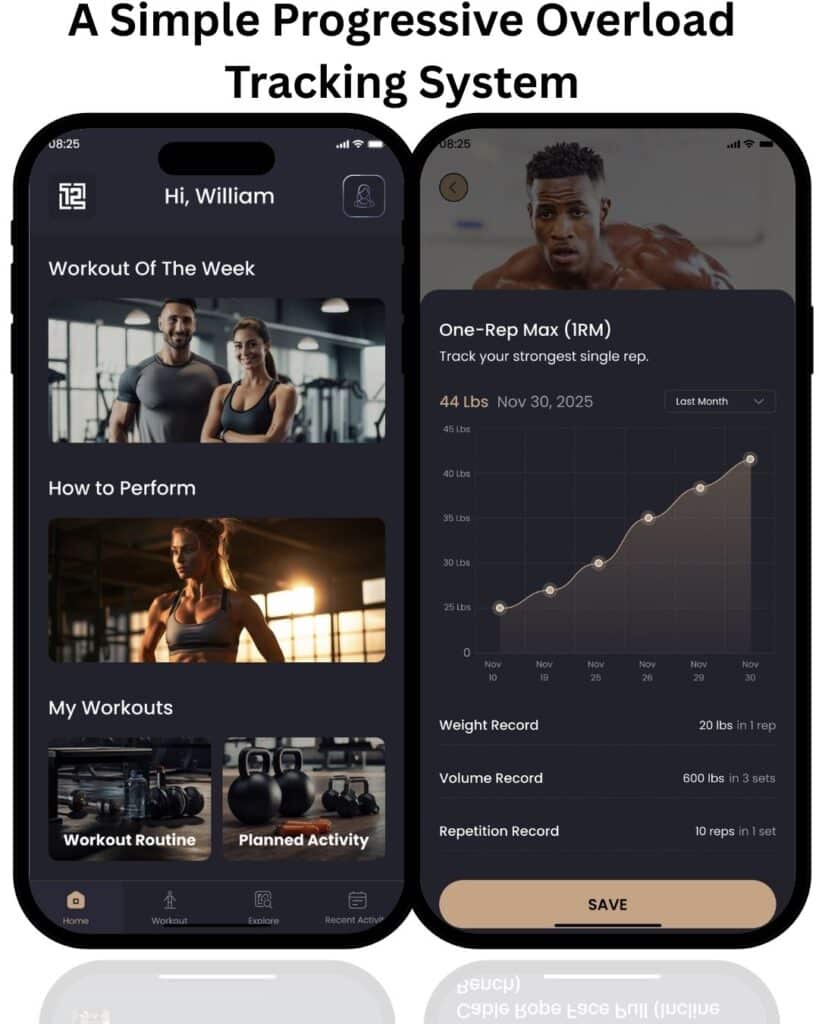
The 12REPS app includes warm up guidance matched to each workout. Rather than calculating warm up sets manually, the app provides appropriate progressions based on your working weights and tracks your preparation alongside your training.
Conclusion
Proper warm up is not optional for serious lifters. The 15 to 20 minutes invested before training returns significant dividends in performance, injury prevention and longevity.
Cold muscles, unprepared joints and dormant nervous systems are not ready for heavy loads. Taking time to raise temperature, improve mobility, activate key muscles and progressively build to working weights transforms your body’s readiness.
Skip the warm up and you may get away with it for a while. Eventually, the odds catch up. The injury that sidelines you for weeks or months will cost far more time than all those warm ups combined.
Invest the minutes. Protect your training career. Your body will perform better for it.
Related Articles on just12reps.com
| Article | Description | Link |
|---|---|---|
| Complete Beginner’s Guide to Strength Training | Foundation programme including proper warm up integration. | Read Article |
| Ultimate 12 Week Push Pull Legs | Structured programme with warm up guidance for each session. | Read Article |
| Progressive Overload Guide | How to increase weights safely over time. | Read Article |
| Strength Training for Women | Complete guide including warm up protocols for female lifters. | Read Article |
| Best Workout Planner and Tracker | Tools for planning complete sessions including warm ups. | Read Article |
References
[1] Bishop, D. (2003). Warm up I: potential mechanisms and the effects of passive warm up on exercise performance. Sports Medicine. https://link.springer.com/journal/40279
[2] Fradkin, A.J. et al. (2010). Effects of warming up on physical performance: a systematic review with meta-analysis. Journal of Strength and Conditioning Research. https://journals.lww.com/nsca-jscr/pages/default.aspx
[3] McGowan, C.J. et al. (2015). Warm up strategies for sport and exercise: mechanisms and applications. Sports Medicine. https://link.springer.com/journal/40279
[4] Behm, D.G. & Chaouachi, A. (2011). A review of the acute effects of static and dynamic stretching on performance. European Journal of Applied Physiology. https://link.springer.com/journal/421
[5] Woods, K. et al. (2007). Warm up and stretching in the prevention of muscular injury. Sports Medicine. https://link.springer.com/journal/40279
About the Author: Will Duru holds a BSc (Hons) in Sport and Exercise Science and is an award winning personal trainer with over 10 years of experience helping clients train safely and effectively. He is the creator of the 12REPS app, designed to guide users through complete training sessions from warm up to cool down.