

You’ve tried Romanian deadlifts, but they feel awkward. Your lower back hurts, you can’t feel your hamstrings working, and you’re not sure you’re doing them right.
The truth: RDLs are brilliant for hamstrings and glutes—but technique matters more than almost any other exercise.
I’m Will Duru, a personal trainer with 10+ years’ experience in London. I’ve taught hundreds of women RDLs—it’s what I use most for hamstring development, but I spend more time correcting form on this exercise than any other.
My biggest observation: Women who master RDLs build incredible hamstrings and glutes. But most struggle initially because they treat it like a squat instead of a hip hinge. Once you understand the hip hinge, everything clicks.
What Are Romanian Deadlifts?
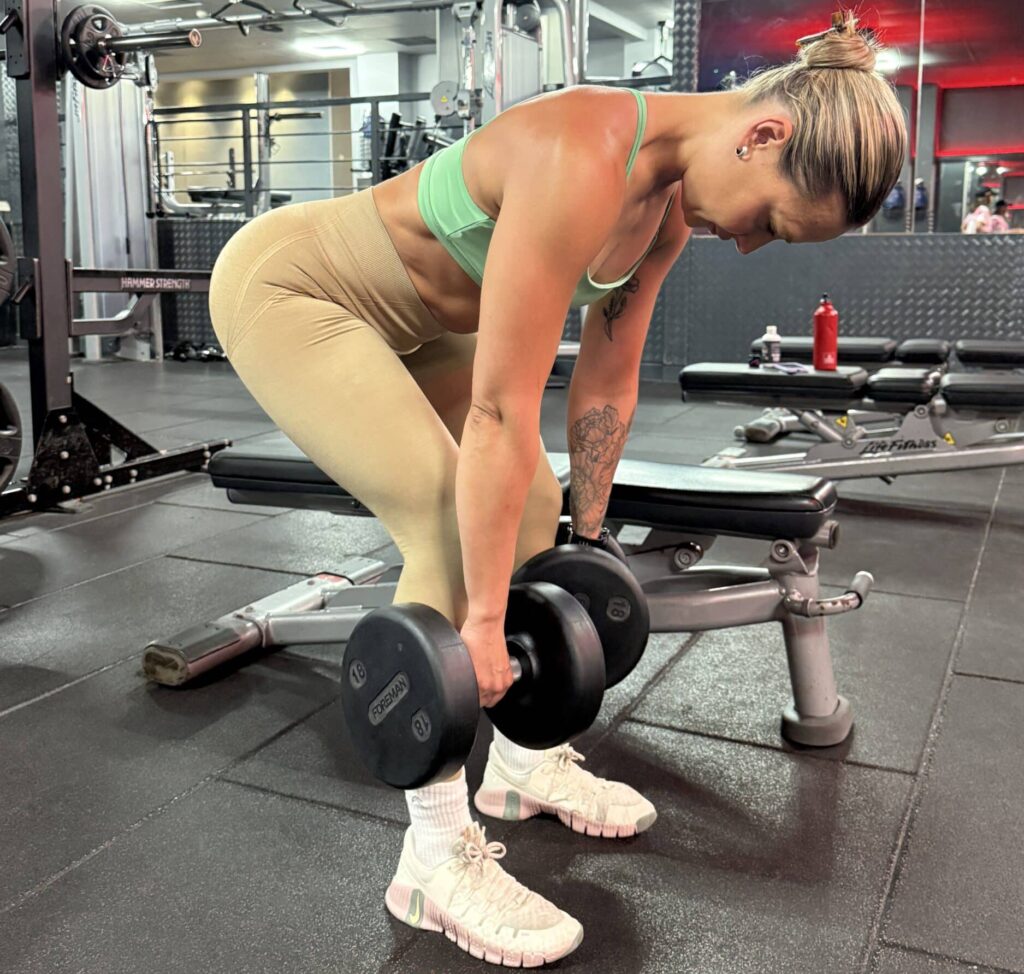
RDLs are a hip hinge exercise targeting hamstrings and glutes primarily. You start standing, push hips back whilst lowering the weight, feel a hamstring stretch, then drive hips forward to return.
Key difference from regular deadlifts:
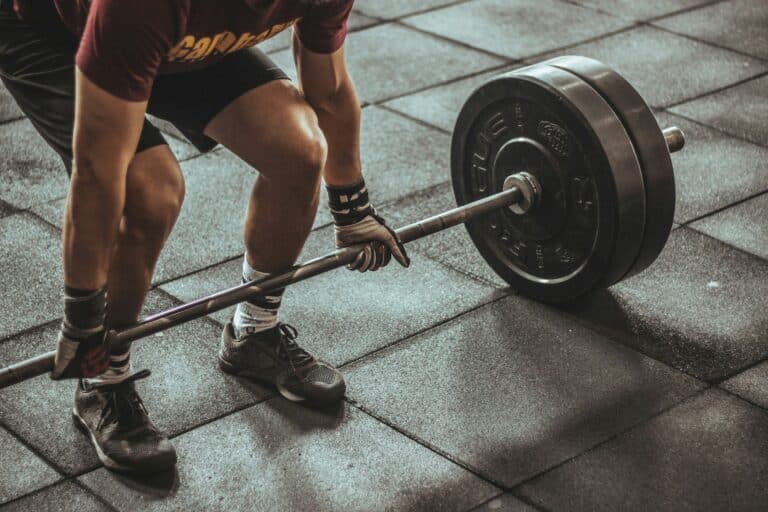
- Regular deadlift: Starts from floor, more quad involvement
- RDL: Starts from standing, hamstring-focused, less knee bend
Will’s explanation: “Regular deadlifts are about lifting weight off the ground—knees bend more, quads work hard. RDLs are about stretching and loading your hamstrings—minimal knee movement, hips do all the work. Completely different feel.”

Why RDLs Are So Effective
Primary muscles worked:
- Hamstrings (main target—eccentric loading)
- Glutes (hip extension)
- Lower back/spinal erectors (stabilisation)
- Core (bracing)
Why they’re superior for hamstrings: RDLs emphasise the eccentric (lowering) phase, creating massive hamstring stretch. This eccentric loading builds strength and size effectively.
Will’s experience: “I can build impressive hamstrings with RDLs alone. Client Katie went from barely feeling her hamstrings to RDLing 60kg—her hamstring development was dramatic. RDLs are non-negotiable in my programmes.”
Step-by-Step: How to Perform RDLs
Starting Position
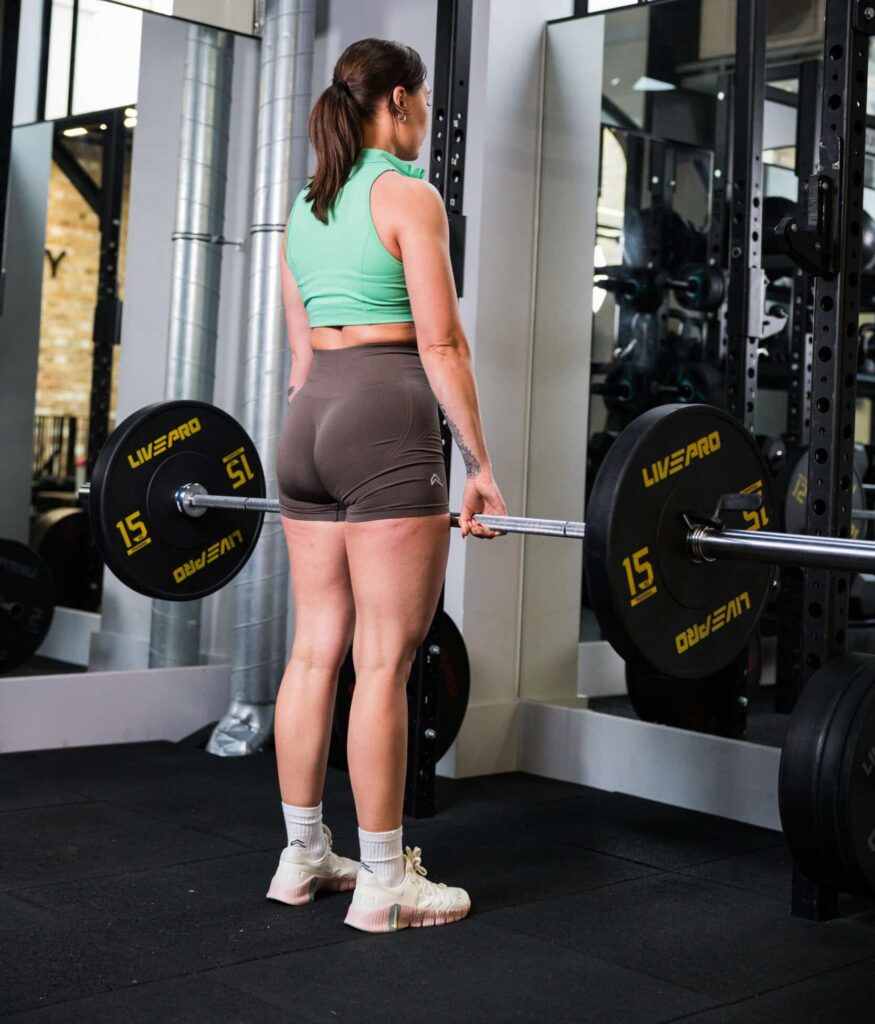
Feet: Hip-width apart Grip: Hold dumbbells or barbell in front of thighs Posture: Standing tall, shoulders back, core braced Starting weight: Empty bar (20kg) or 8-10kg dumbbells
Will’s coaching: “Master the movement with light weight first. I start every client with 8kg dumbbells until the hip hinge is perfect. Ego lifting with poor form guarantees lower back pain.”
The Descent (Eccentric Phase)
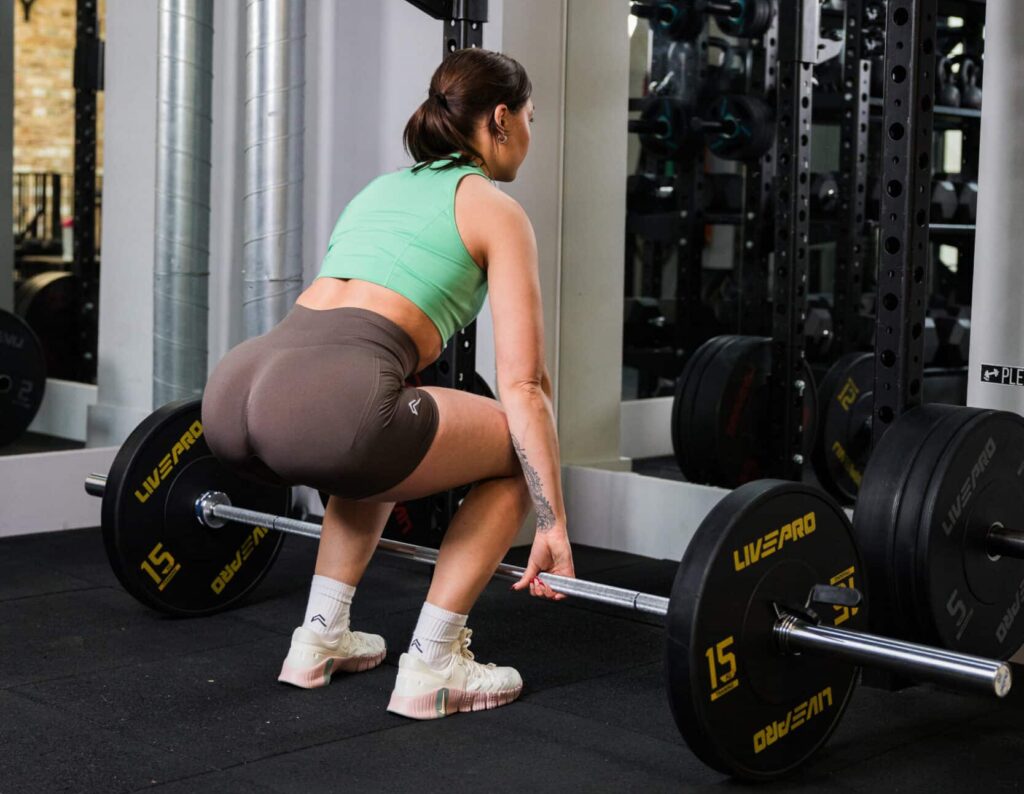
Step 1: Initiate with hips Push hips backward—imagine closing a car door with your bum whilst keeping feet planted.
Step 2: Maintain soft knees Slight knee bend (10-15 degrees)—NOT a squat. Shins stay vertical.
Step 3: Keep bar/dumbbells close Weight travels down front of legs, almost brushing thighs and shins.
Step 4: Maintain neutral spine Back stays flat—no rounding. Chest proud, shoulders back.
Step 5: Feel the hamstring stretch Lower until you feel significant stretch in hamstrings. For most women, this is when weights reach mid-shin or just below knees.
Will’s key cue: “The movement is ALL hips. If your knees are bending significantly, you’re squatting. If your back is rounding, you’ve gone too deep. The hamstring stretch tells you when to stop—that’s your range of motion.”
The Ascent (Concentric Phase)
Step 1: Drive hips forward Thrust hips forward whilst squeezing glutes hard.
Step 2: Stand tall Return to starting position, hips and knees fully extended.
Step 3: Don’t hyperextend At the top, stand tall but don’t lean back excessively.
Will’s coaching: “Finish each rep by squeezing glutes as hard as possible. Many women just stand up without glute engagement—they’re missing half the benefit. Squeeze glutes at the top every single rep.”
Common Mistakes (And Will's Fixes)
Mistake 1: Squatting Instead of Hinging
What it looks like: Knees bending significantly, shins moving forward, knees travelling past toes.
Why it’s wrong: Turns the exercise into a squat—quads work instead of hamstrings.
Will’s fix: “I tell clients: ‘Knees barely move. Imagine your knees are locked in position whilst your hips move backward and forward.’ Practice with bodyweight first—push hips back without knee movement.”
Mistake 2: Rounding the Back
What it looks like: Upper back or lower back rounding, chest dropping forward.
Why it’s dangerous: Loads spine incorrectly—high injury risk.
Will’s immediate correction: “The second I see back rounding, we reduce weight. Sometimes by 50%. I’d rather you RDL 20kg with perfect form than 50kg with a rounded back. Injury isn’t worth it.”
The fix: Reduce weight, engage core harder, chest proud throughout.
Mistake 3: Going Too Deep
What it looks like: Forcing weights to the floor, back rounding at the bottom.
Why it’s wrong: Beyond your hamstring flexibility, compromises form, loads lower back excessively.
Will’s flexibility reality: “Your range of motion is determined by your hamstring flexibility, not by some arbitrary standard. Some women reach mid-shin, some reach just below knees. Both are correct if form stays perfect. Never sacrifice form for depth.”
The fix: Lower only until you feel hamstring stretch AND can maintain neutral spine. That’s your range.
Mistake 4: Lower Back Doing All the Work
What it feels like: Burning/fatigue in lower back instead of hamstrings.
Why it happens: Not hinging properly, back working to hold position instead of hamstrings stretching under load.
Will’s diagnosis: “If lower back is sore after RDLs, form is wrong. Lower back should stabilise but not fatigue excessively. The hamstrings should be absolutely fried.”
The fix: Reduce weight significantly, focus on feeling hamstring stretch, ensure hips are pushing back not just bending forward.
Mistake 5: Weight Too Far From Body
What it looks like: Bar/dumbbells drifting forward away from legs.
Why it’s wrong: Creates long lever arm, loads lower back instead of hamstrings.
Will’s cue: “Imagine shaving your legs with the bar—it should travel that close. Dumbbells brush your thighs and shins throughout the entire movement.”
Progression Guide
Week 1-2: Master the Pattern (Light Weight)
Weight: 8-10kg dumbbells or empty bar Sets/Reps: 3 sets × 10 reps Focus: Perfect hip hinge, feeling hamstring stretch
Will’s coaching: “These two weeks are purely about learning the movement. The weight feels ridiculously light—that’s the point. Perfect the pattern now, add weight later.”
Week 3-4: Add Weight Gradually
Weight: 12-15kg dumbbells or 30-35kg barbell Sets/Reps: 3 sets × 8-10 reps Focus: Maintaining form whilst increasing load
Week 5-8: Build Strength
Weight: 15-20kg dumbbells or 40-50kg barbell Sets/Reps: 4 sets × 8 reps Focus: Progressive overload, hamstring stretch
Will’s typical progression: “Client starts week 1 with 8kg dumbbells. Week 8 she’s RDLing 20kg dumbbells or 50kg barbell. Her hamstrings are visibly developing and she’s feeling them work properly.”
Month 3-6: Strength Development
Weight: 20-30kg dumbbells or 60-80kg barbell Sets/Reps: 4 sets × 6-8 reps
Will’s long-term client results: “Client who masters RDLs and progresses consistently for 6 months typically goes from 40kg to 75-80kg barbell. Their hamstring and glute development is dramatic—visible definition, strength, firmness.”
Barbell vs Dumbbell RDLs
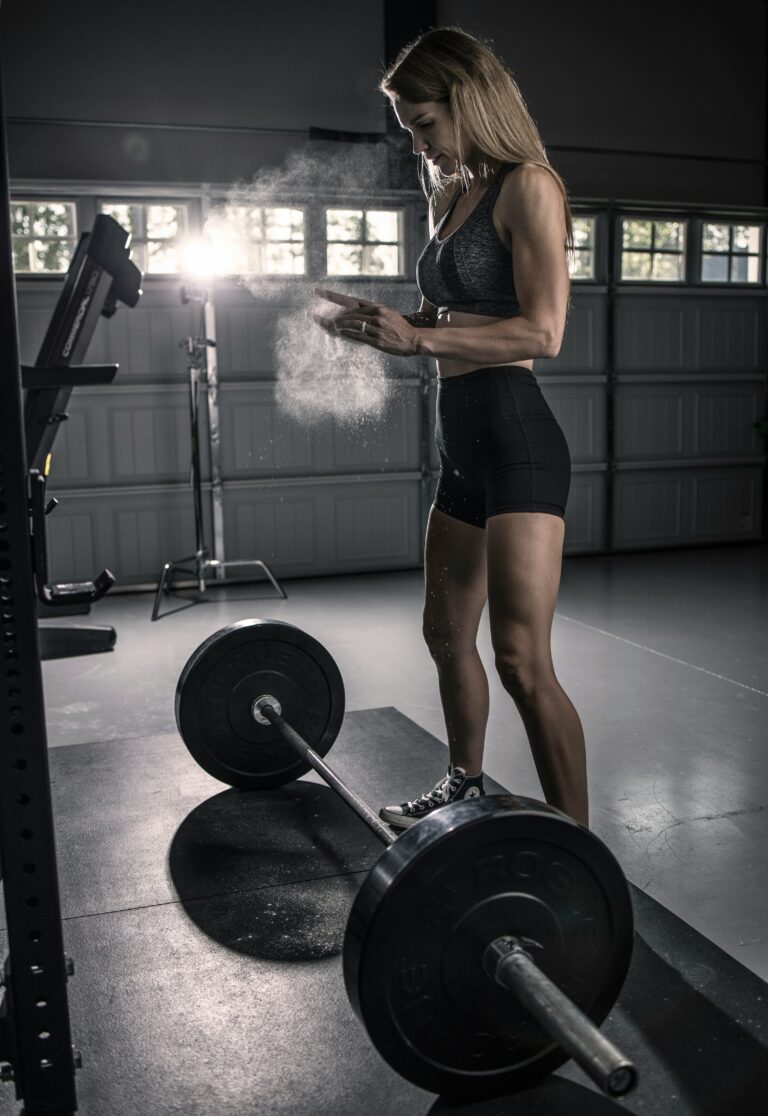
Barbell RDLs:
✅ Can load heavier
✅ Better for pure strength
⚠️ Fixed bar path
Dumbbell RDLs:
✅ More natural movement path
✅ Works balance/coordination
✅ Identifies strength imbalances
⚠️ Limited by grip strength
Will’s recommendation: “Start with dumbbells—more natural movement, easier to feel hamstrings working. Once you’re RDLing 25kg dumbbells comfortably, switch to barbell for heavier loading.”
Where RDLs Fit in Your Programme
Frequency: 1-2 times weekly Placement: After squats/deadlifts, before isolation exercises Volume: 10-16 sets total weekly for hamstrings (RDLs + other hamstring work)
Will’s typical lower body day:
- Squats: 4 sets × 6-8 reps
- RDLs: 4 sets × 8 reps (main hamstring work)
- Hip thrusts: 3 sets × 10 reps
- Leg curls: 3 sets × 12 reps
Will’s programming note: “RDLs are the main hamstring builder in my programmes. Everything else is supplementary. Master RDLs and your hamstring development is sorted.”
The Bottom Line
Romanian deadlifts are the best exercise for hamstring development—but technique is critical.
Key points:
✅ Hip hinge movement, NOT a squat
✅ Minimal knee bend, shins stay vertical
✅ Push hips back, feel hamstring stretch
✅ Drive hips forward, squeeze glutes at top
✅ Weight stays close to body throughout
✅ Lower only as far as flexibility allows whilst maintaining form
Common mistakes to avoid:
❌ Squatting instead of hinging (knees bending too much)
❌ Rounding the back (reduce weight immediately)
❌ Going too deep (beyond hamstring flexibility)
❌ Lower back taking over (hamstrings should be exhausted, not back)
❌ Weight drifting away from body (keep bar/dumbbells close)
Will’s decade of experience summarised:
✅ “RDLs are what I use most for hamstring development—nothing else compares”
✅ “Master the movement with 8kg dumbbells first. Perfect the pattern, then add weight”
✅ “If lower back is sore after RDLs, form is wrong. Hamstrings should be fried”
✅ “Your range of motion is determined by flexibility. Some reach mid-shin, some just below knees—both correct if form is perfect”
✅ “Squeeze glutes hard at the top every rep. Most women just stand up without glute engagement—they’re missing half the benefit”
✅ “Client who masters RDLs and progresses from 40kg to 75kg in 6 months? Their hamstring development is dramatic—visible definition, strength, firmness”
Progression:
✅ Weeks 1-2: 8-10kg dumbbells, 3×10 (master pattern)
✅ Weeks 3-4: 12-15kg dumbbells, 3×8-10 (add weight)
✅ Weeks 5-8: 15-20kg dumbbells or 40-50kg barbell, 4×8
✅ Months 3-6: 20-30kg dumbbells or 60-80kg barbell, 4×6-8
Try 12REPS free for 7 days. Get structured programmes with RDLs programmed correctly for optimal hamstring and glute development—plus video demonstrations of perfect technique.
Stop struggling with RDLs. Master the hip hinge pattern with light weight first, progress gradually, and watch your hamstrings and glutes transform. Form first, weight second—always.
References
- Schoenfeld, B.J., Grgic, J. (2020). Effects of Range of Motion on Muscle Development During Resistance Training Interventions: A Systematic Review. SAGE Open Medicine, 8. https://doi.org/10.1177/2050312120901559
- Bourne, M.N., Duhig, S.J., Timmins, R.G., et al. (2017). Impact of the Nordic Hamstring and Hip Extension Exercises on Hamstring Architecture and Morphology: Implications for Injury Prevention. British Journal of Sports Medicine, 51(5), 469-477. https://doi.org/10.1136/bjsports-2016-096130
- Schoenfeld, B.J., Contreras, B., Vigotsky, A.D., Peterson, M. (2016). Differential Effects of Heavy Versus Moderate Loads on Measures of Strength and Hypertrophy in Resistance-Trained Men. Journal of Sports Sciences, 34(24), 2220-2226. https://doi.org/10.1080/02640414.2016.1210197