


Written by Will Duru, BSc (Hons) Sport and Exercise Science, award-winning Personal Trainer with over 10 years of experience in strength training and optimising recovery .
A good pull workout trains your back from two directions: rows, which pull toward your torso, and pull-ups or pulldowns, which pull from overhead. Put the exercises you most want to improve first, while you’re fresh. This five-exercise session starts with two rows, then pull-ups, a single-arm row and the lat pulldown.
A dedicated pull session gives your lats, mid-back, rear shoulders and biceps focused work. It also gives you a clear place to track your back strength each week.
If muscle size is your main goal, pair this with our back workout to build muscle, which covers weekly sets and protein.
The Pull Workout
| Order | Exercise | Pull type | Sets | Reps | Rest |
|---|---|---|---|---|---|
| 1 | Kettlebell gorilla row | Row | 5 (1 warm-up + 4 working) | 8–12 per arm | 90–120 seconds |
| 2 | Barbell bent-over row | Row | 5 (1 warm-up + 4 working) | 8–12 | 2–3 minutes |
| 3 | Pull-ups | Overhead | 5 (1 warm-up + 4 working) | 8–12 | 2–3 minutes |
| 4 | Dumbbell single-arm row | Row | 5 (1 warm-up + 4 working) | 8–12 per arm | 90–120 seconds |
| 5 | Lat pulldown | Overhead | 5 (1 warm-up + 4 working) | 8–12 | 60–90 seconds |
Start each exercise with one lighter warm-up set, then do four working sets. If 8 pull-ups is out of reach, use an assisted version.
How to Order a Pull Workout
Exercise order changes what you get better at. A 2021 meta-analysis found that exercises done early in a session showed bigger strength gains. Muscle growth was similar whatever the order (Nunes and colleagues, 2021).
The American College of Sports Medicine also recommends doing large-muscle, multi-joint exercises before smaller, single-joint ones (ACSM, 2009). For a pull workout, that gives you a simple rule:
- First: free-weight rows. They need the most balance and bracing, so do them fresh.
- Middle: pull-ups. Your hardest bodyweight lift comes while you still have energy.
- Last: single-arm row and lat pulldown. These are stable and easy to adjust, so they work well when you’re tired.
If pull-ups are your main goal, move them to the start. Your biggest strength gains tend to come from what you do first.
Why Use Both Rows and Overhead Pulls?
Rows bring your elbows back from in front of you. Pull-ups and pulldowns bring them down from overhead. Your lats help in both, because they extend, adduct and internally rotate the upper arm (StatPearls, 2023). Rows also load the muscles between your shoulder blades more directly.
How to Do Each Exercise
1. Kettlebell Gorilla Row
The gorilla row trains your lats and mid-back from a wide, hinged stance. You row one kettlebell while the other stays on the floor, so your core works to stop you twisting.
- Place two kettlebells between your feet. Take a wide stance with your toes slightly out.
- Hinge at the hips with a flat back and grip both handles.
- Row one kettlebell toward your hip while the other stays on the floor.
- Lower it with control and switch sides.
Kettlebells go up in big jumps, so add reps before you move to the next size.
Video: Kettlebell gorilla row. Watch the wide stance and the hip hinge before your first set.
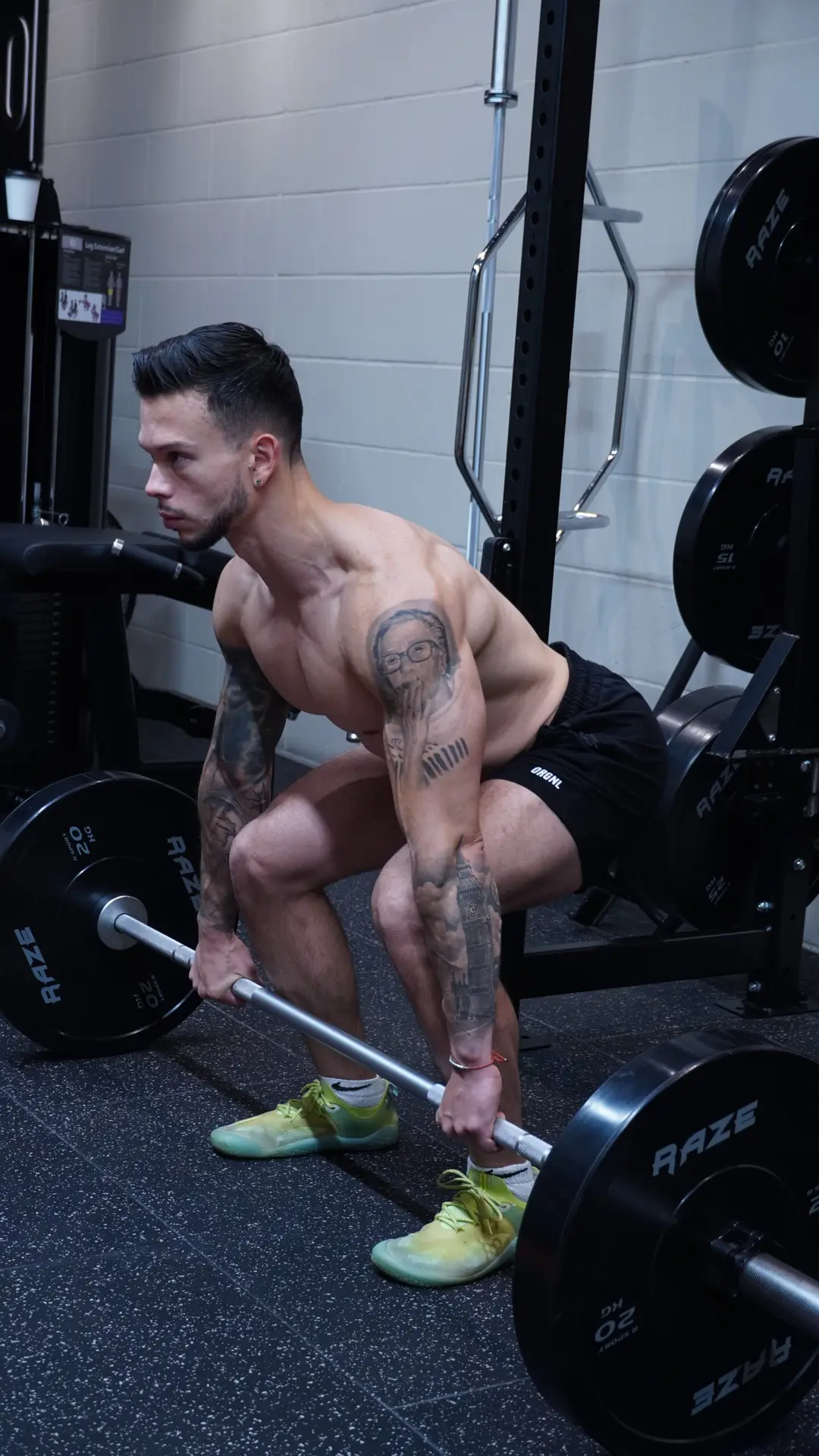
2. Barbell Bent-Over Row
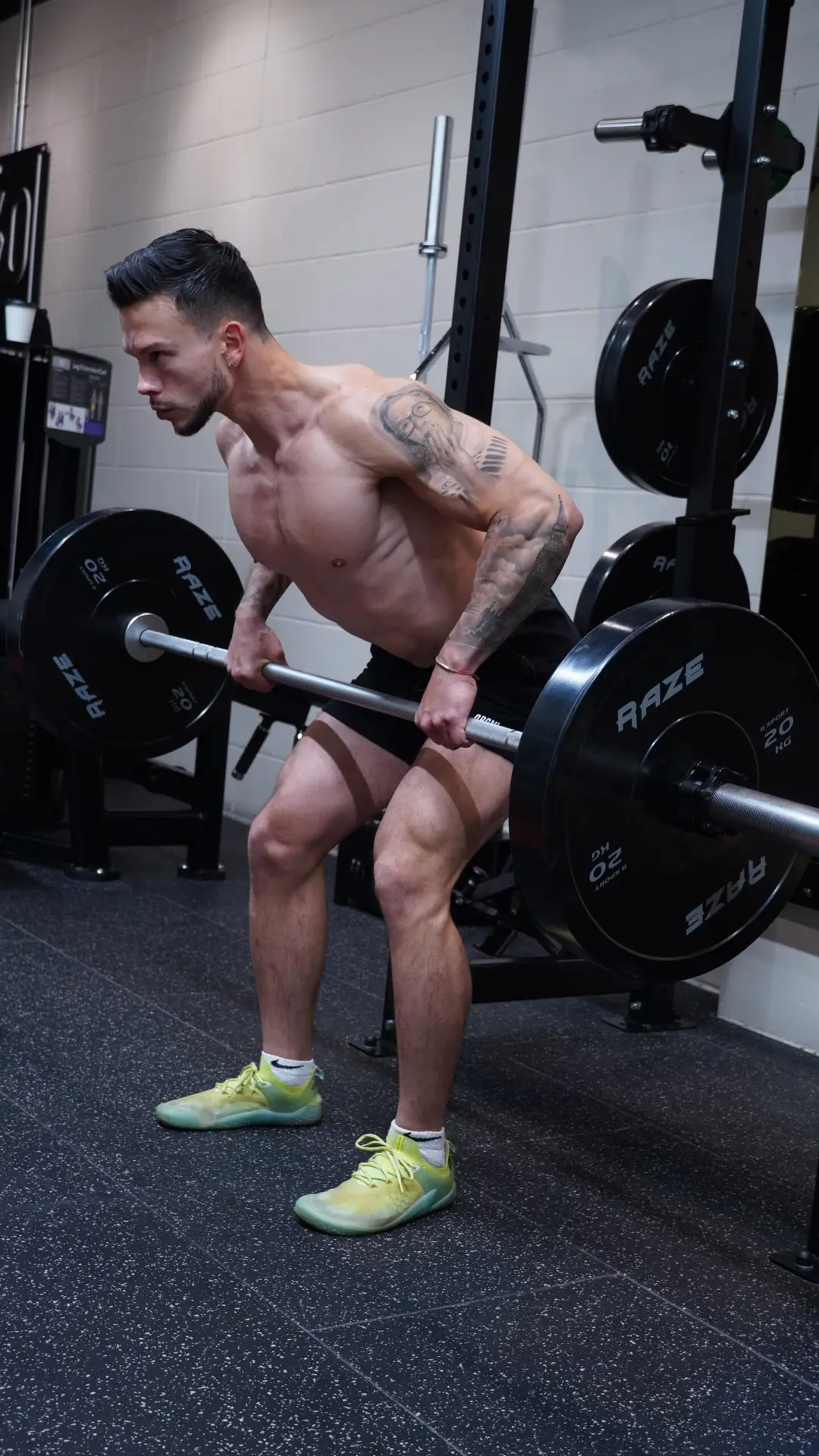
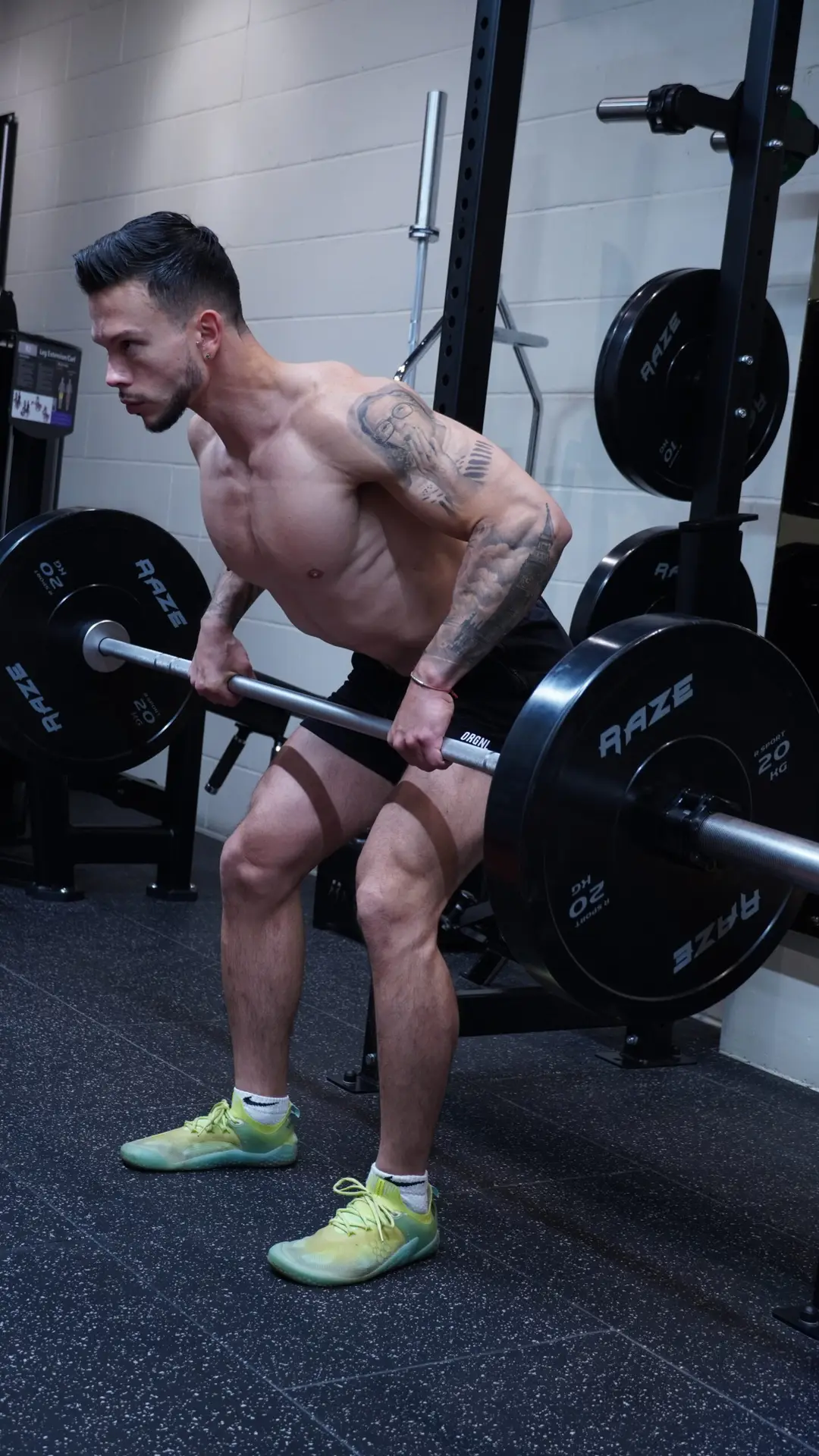
The barbell row is the heaviest exercise in this session. It trains your lats, rhomboids, middle traps and rear shoulders.
- Stand with your feet hip-width apart. Take an overhand grip slightly wider than your shoulders.
- Hinge until your torso is about 45° from upright, and keep it there for the whole set.
- Brace your core, then pull your shoulder blades back and drive your elbows toward your hips.
- Touch the bar to your lower chest or upper stomach, then lower it with control.
Your lower back works hard here. A small study found the standing bent-over row loaded the lower back more than a cable row or an inverted row (Fenwick and colleagues, 2009). Use a weight you can row without your torso rising.
More detail: barbell bent-over row exercise guide.
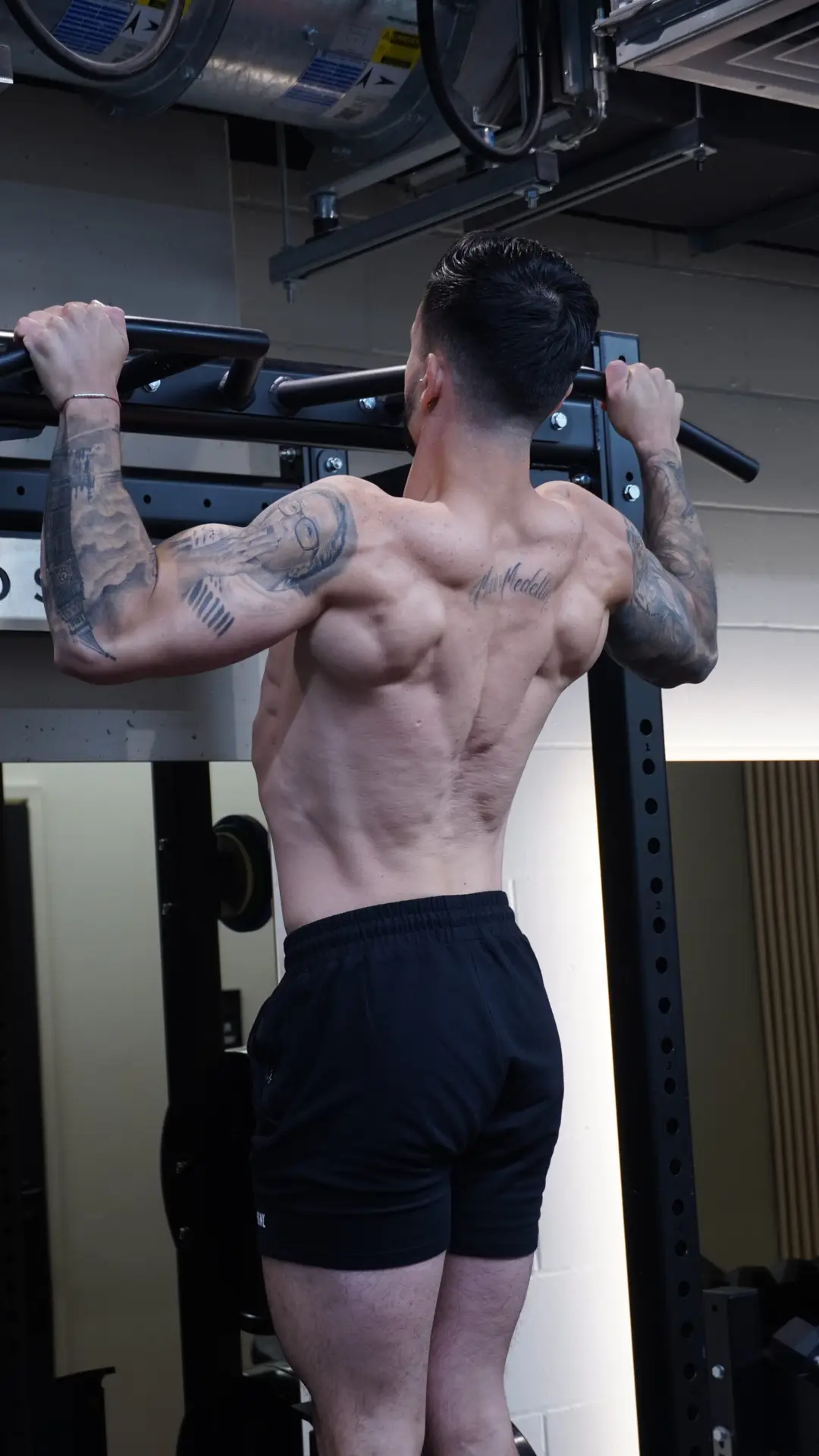
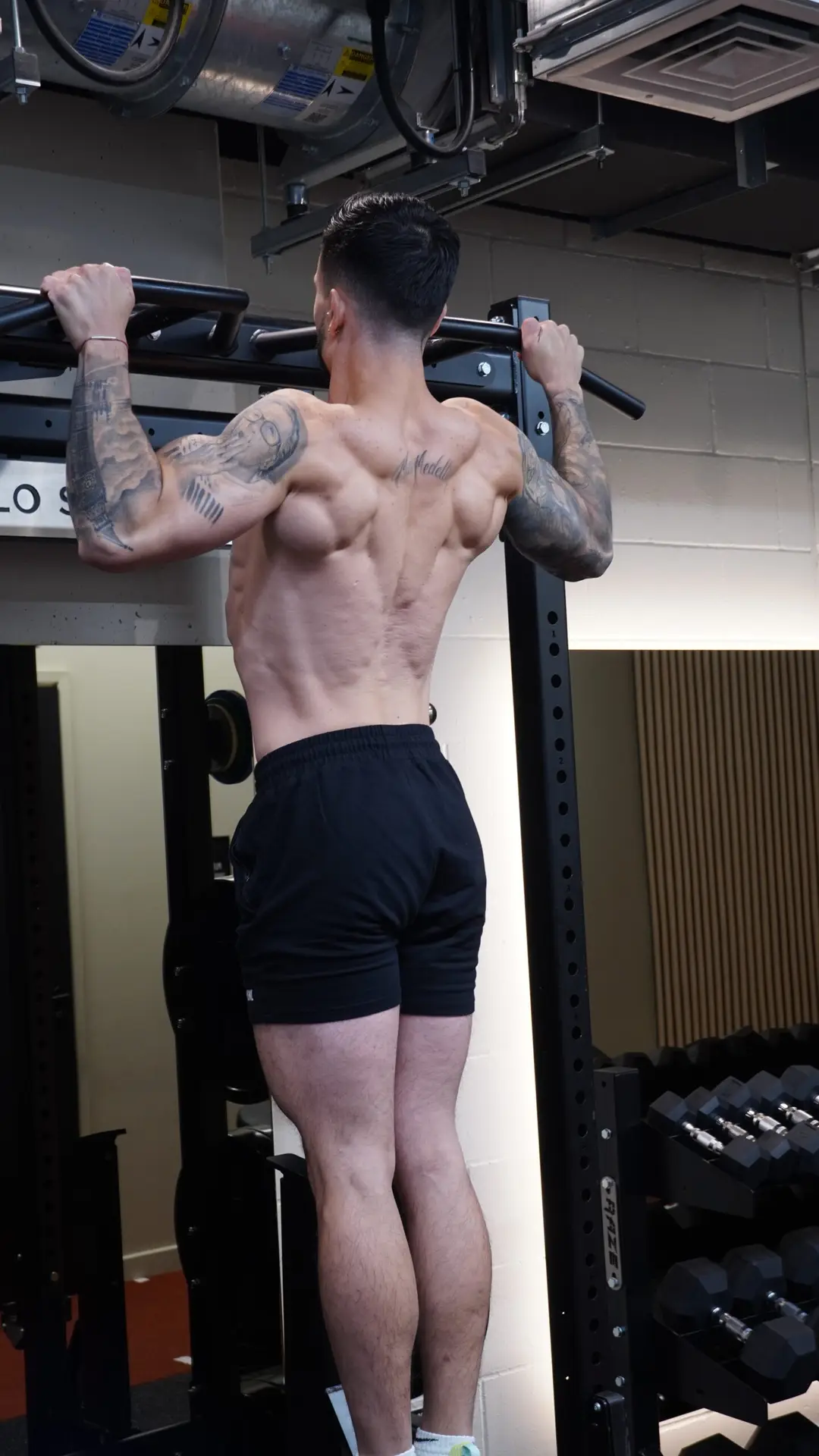
3. Pull-Ups
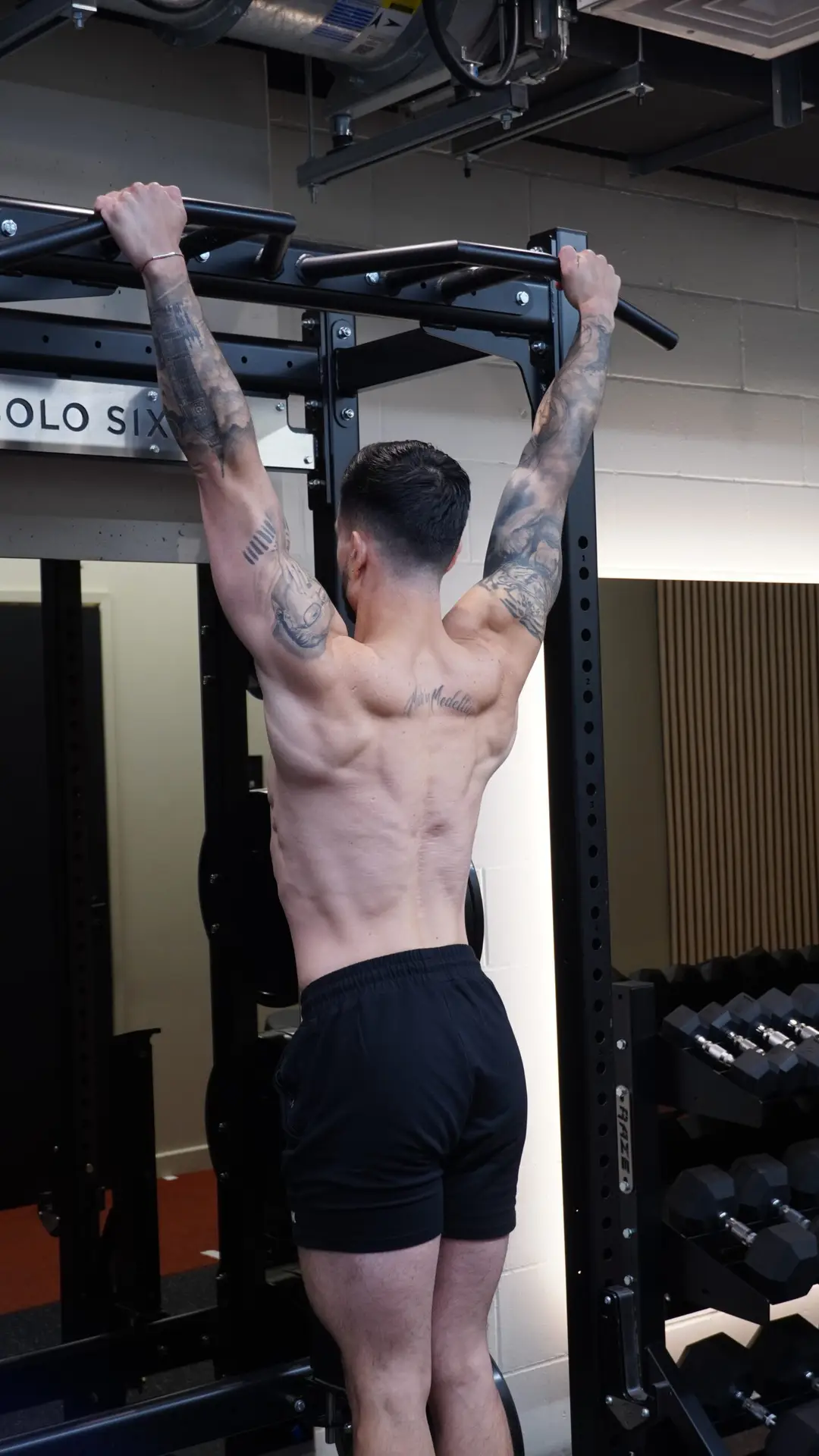
The pull-up is your main overhead pull. It trains your lats, mid-back and biceps, and it tests how strong you are for your body weight.
- Hang from the bar with your palms facing away, hands slightly wider than your shoulders.
- Set your shoulders by pulling them down slightly before you move.
- Drive your elbows down and back, and bring your chest toward the bar.
- Pull until your chin clears the bar, then lower all the way down with control.
Can’t do 8 yet? Use a resistance band or an assisted pull-up machine. Our first pull-up guide shows how to build up. If 12 reps feels easy, add weight with a belt or vest.
Video: Pull-ups. See the full hang at the bottom and the chin-over-bar finish.
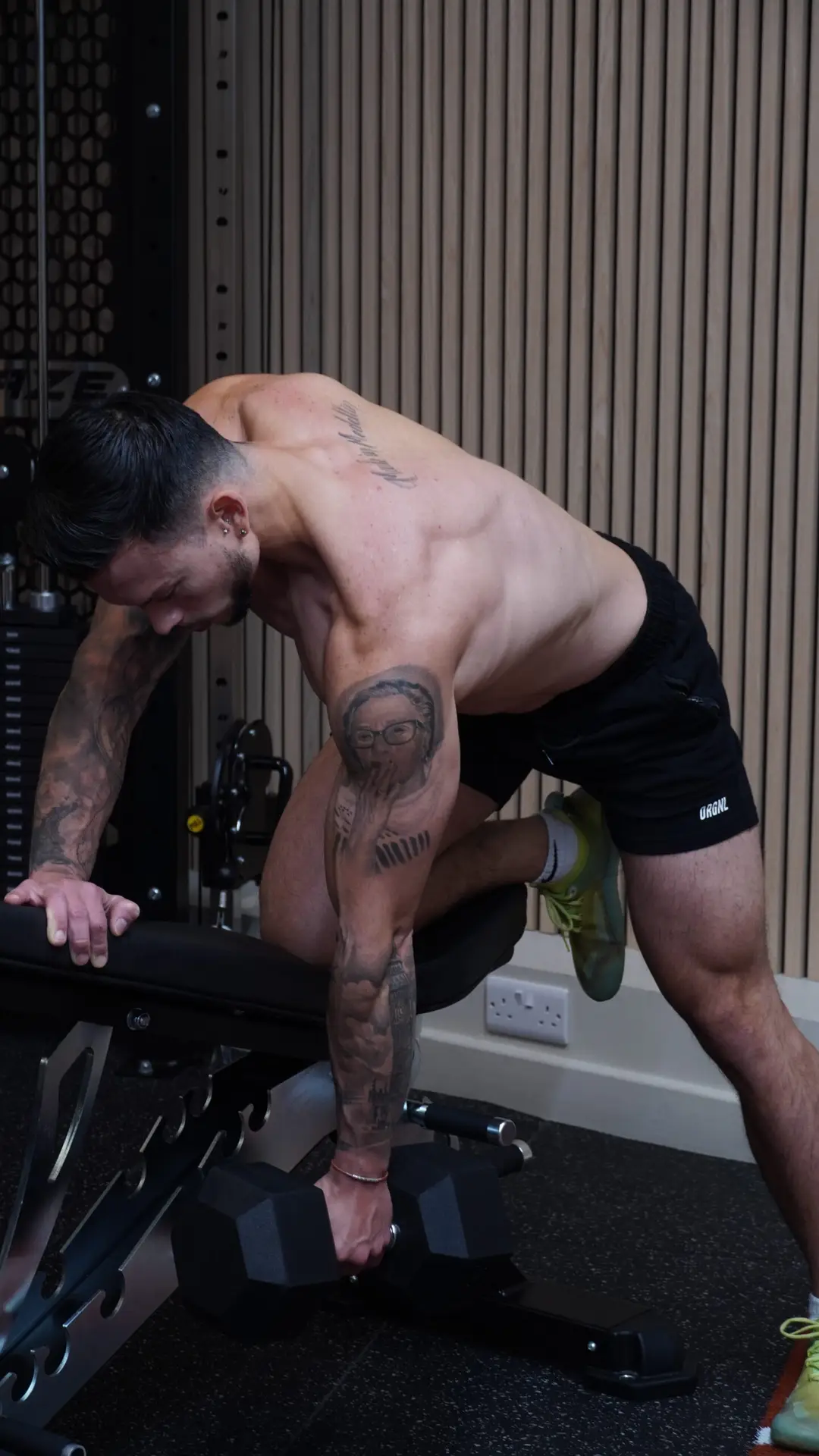
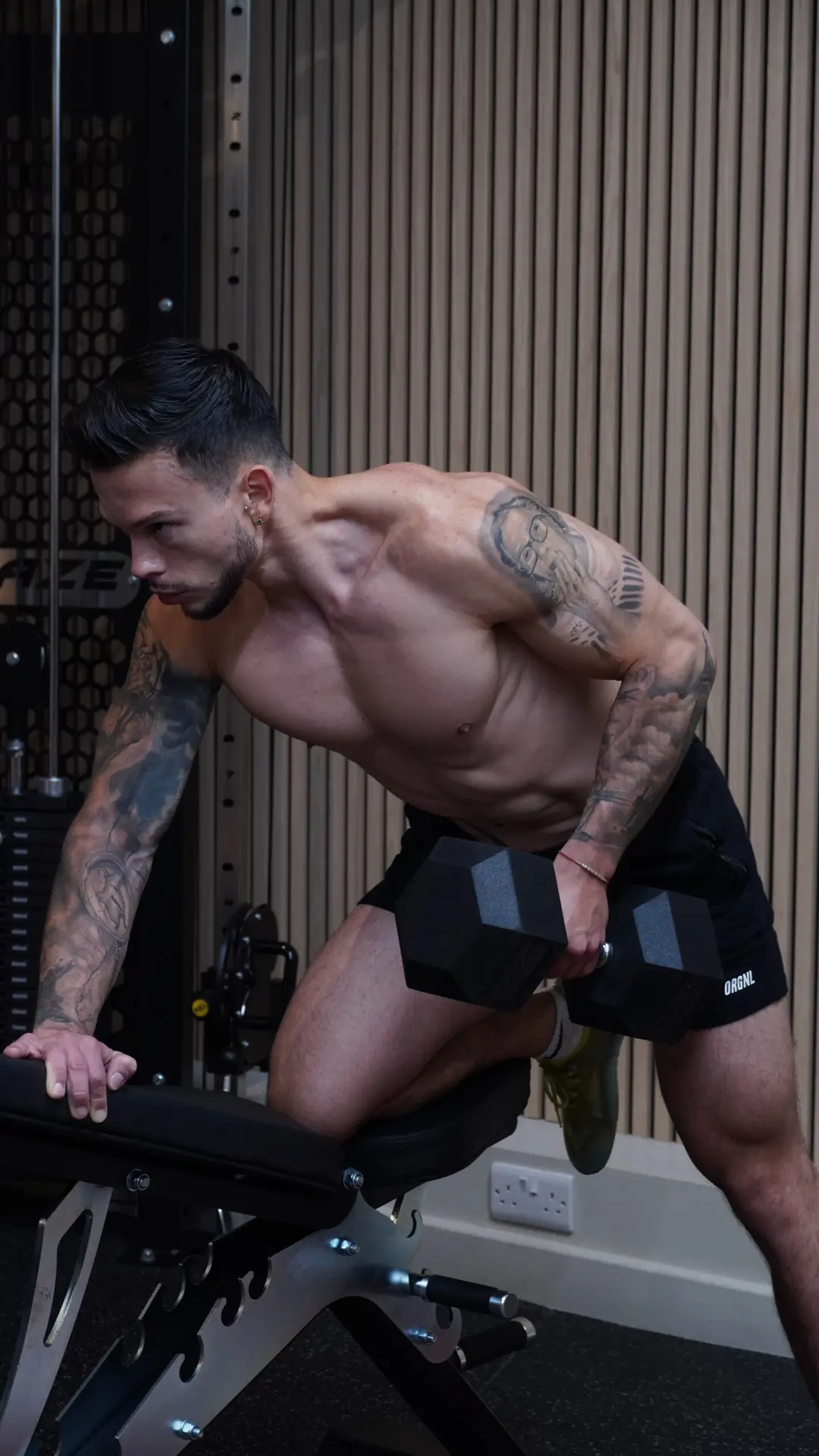
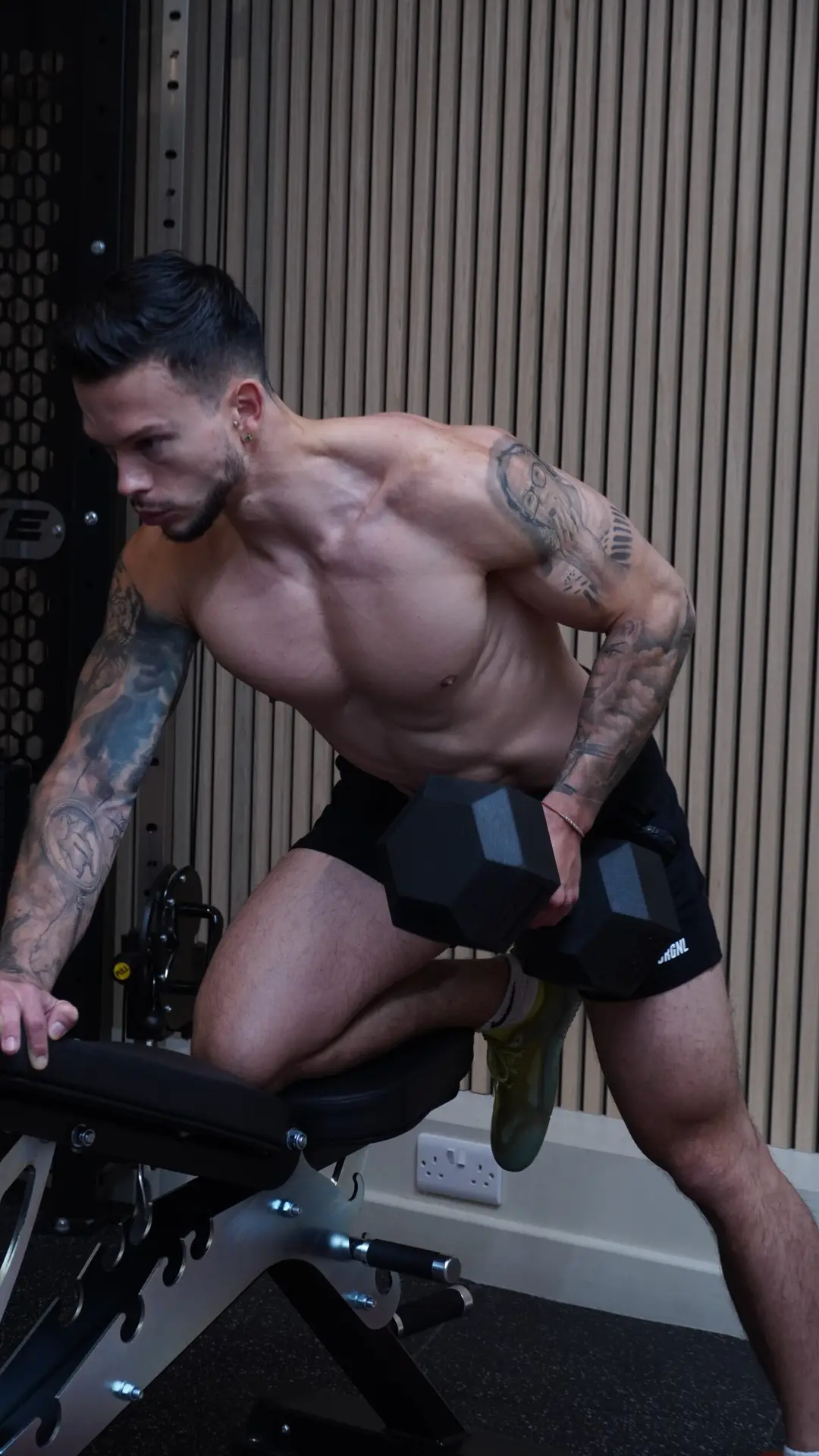
4. Dumbbell Single-Arm Row
The single-arm row trains one side at a time. That makes it easier to notice if one side is weaker.
- Place your inside knee and hand on a bench. Step your outside leg back to make a stable base.
- Let the dumbbell hang so you feel a stretch along your side.
- Pull your shoulder blade back, then drive your elbow back toward your hip.
- Pause at the top, then lower with control.
Note any difference between sides in strength or range of motion. Then adjust your training to bring the weaker side up.
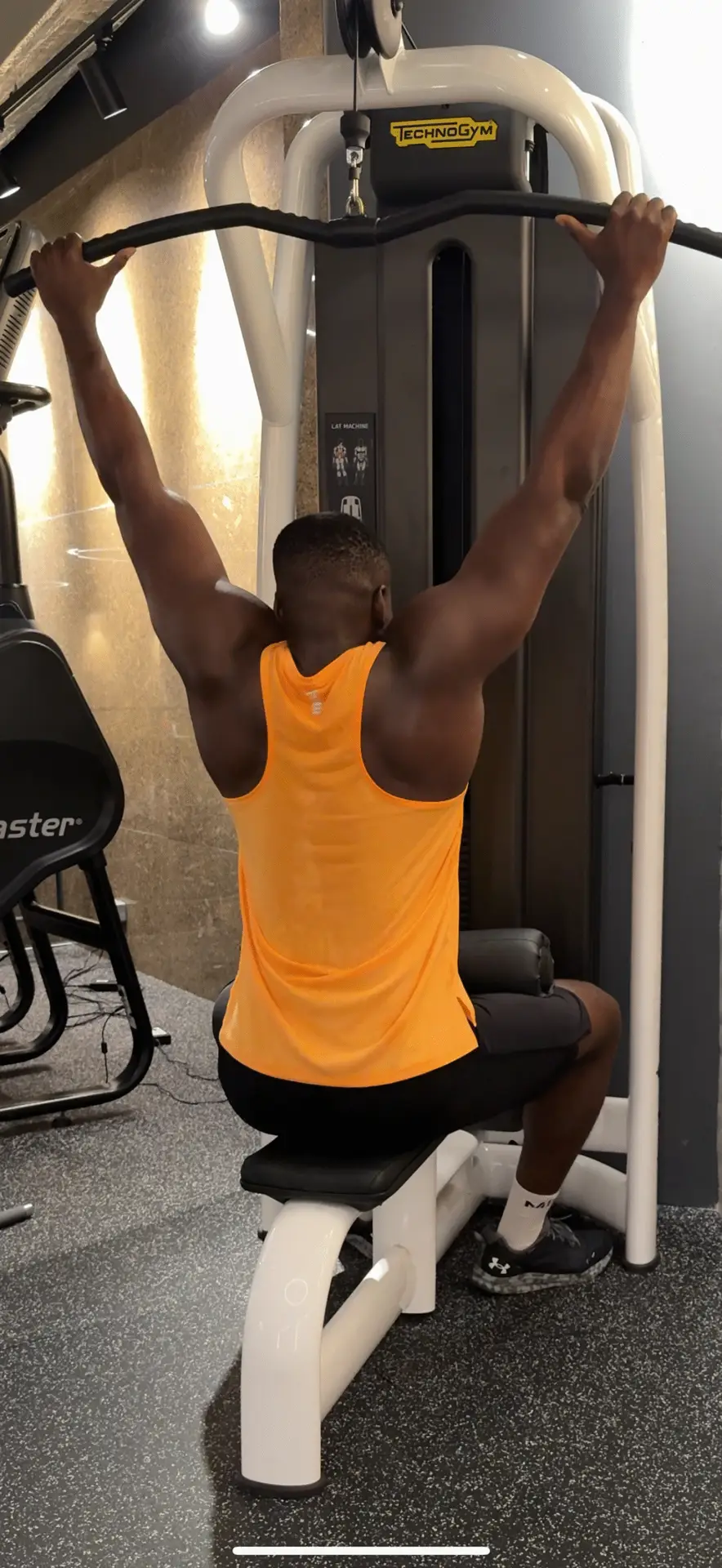
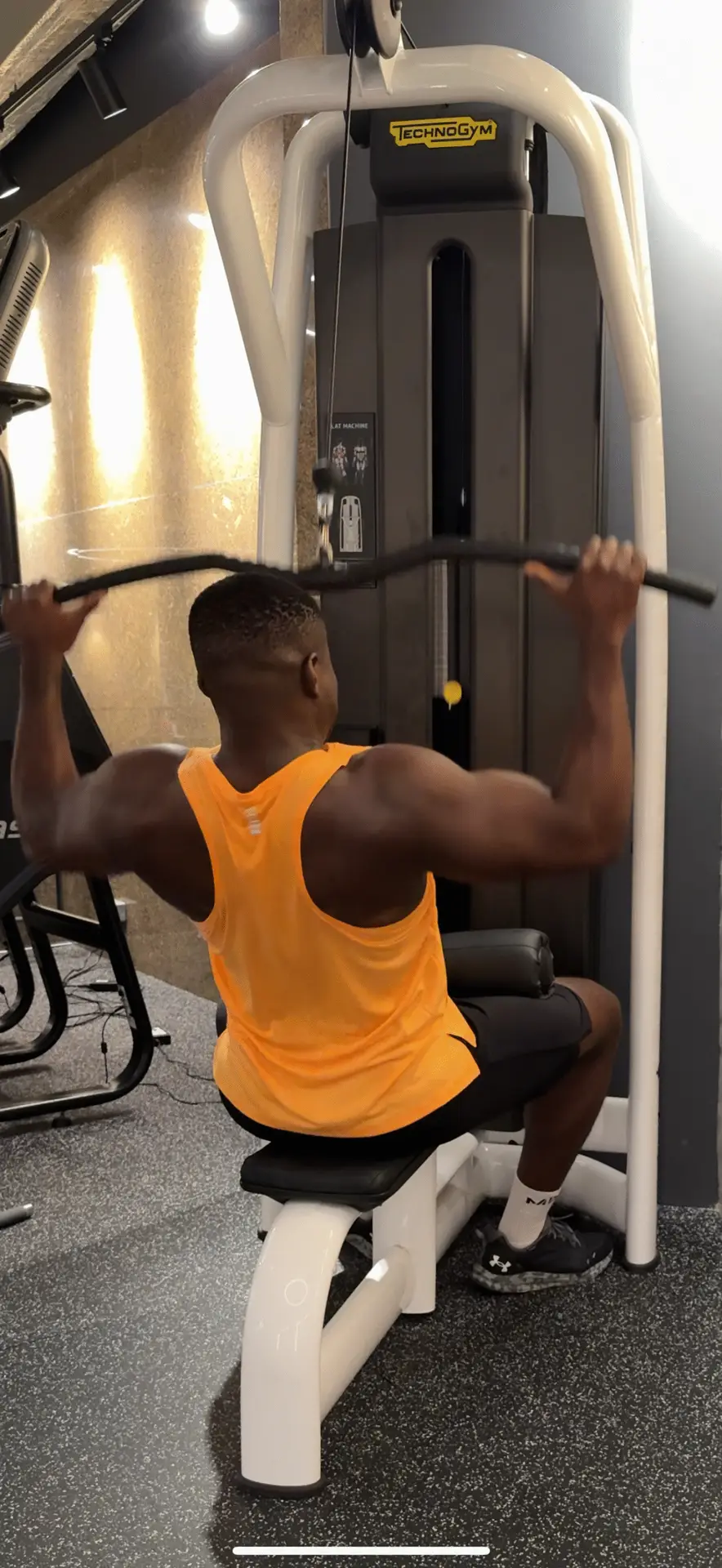
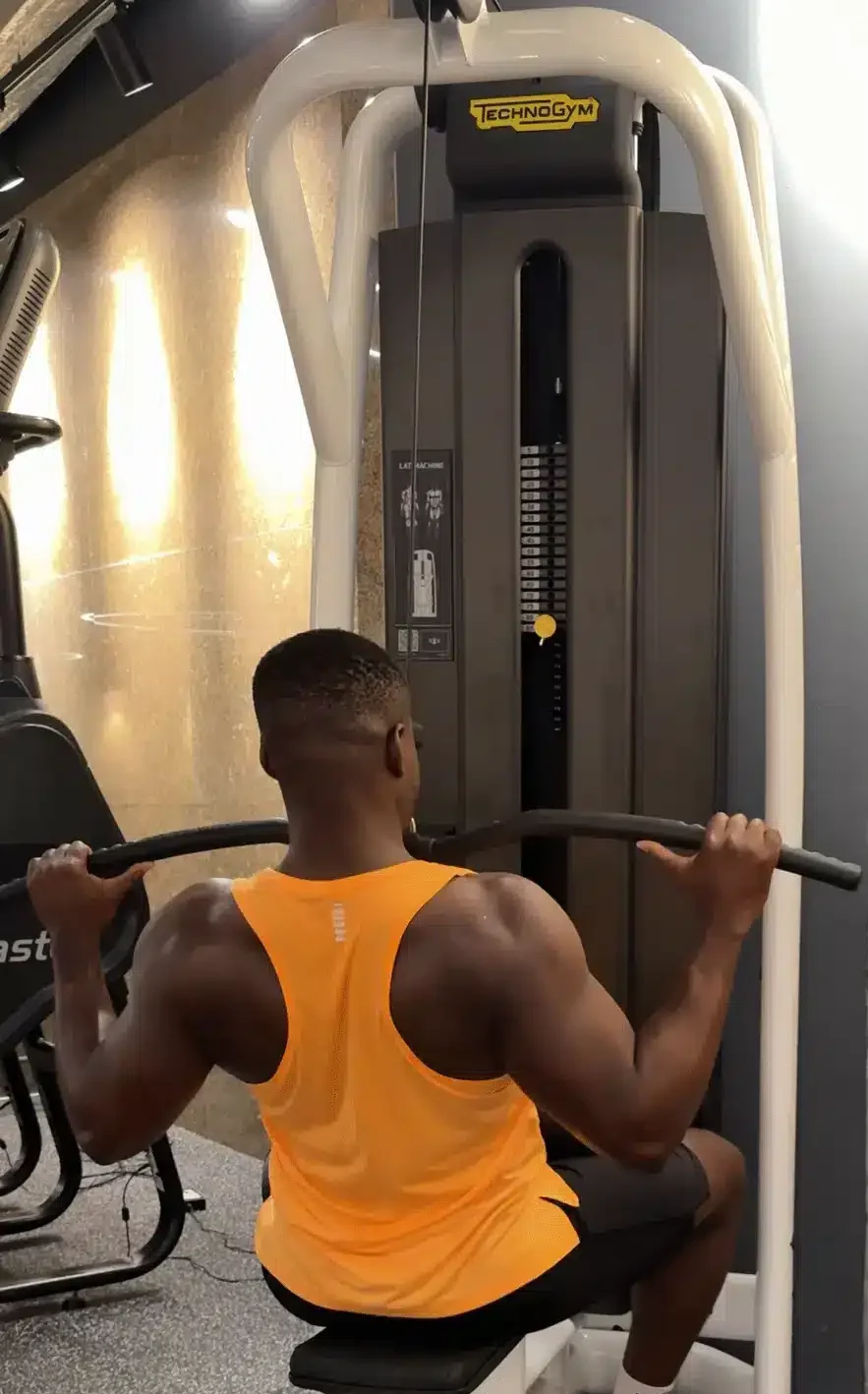
5. Lat Pulldown
The lat pulldown finishes the session. It’s an overhead pull where you choose the load, which also makes it useful for building toward pull-ups.
- Adjust the thigh pad so your legs stay down as you pull.
- Take an overhand grip wide enough to feel a stretch at the top.
- Sit tall and pull the bar to your upper chest, in front of your face. Think of driving your elbows into your back pockets.
- Squeeze briefly at the bottom, then let the bar rise with control.
Grip type matters a little. One study found an overhand grip produced more lat activity than an underhand grip, whatever the grip width (Lusk and colleagues, 2010).
More detail: lat pulldown exercise guide.
How to Progress Your Pull Workout
Progressive overload means making the work slightly harder over time. With pulling, that doesn’t always mean more weight.
- Rows and pulldown: when you hit 12 reps on all four working sets with good form, add a small amount of weight. The ACSM suggests a 2 to 10% increase at that point (ACSM, 2009).
- Pull-ups: use less assistance first, then add reps, then add weight.
- Gorilla row: add reps before moving up a kettlebell size.
Lower each rep with control, but don’t overdo slow tempos. A meta-analysis found similar muscle growth with rep durations from 0.5 to 8 seconds (Schoenfeld and colleagues, 2015).
How Long to Rest on Pull Day
The rest times in the table give your back and grip time to recover before the next set. A review suggests 1 to 2 minutes for newer lifters and 2 minutes or more for trained lifters (Iversen and colleagues, 2021).
A 2024 meta-analysis also found a small growth benefit for resting longer than 60 seconds (Singer and colleagues, 2024). Read more in our guide on how long to rest between sets.
Follow This Pull Workout in 12REPS
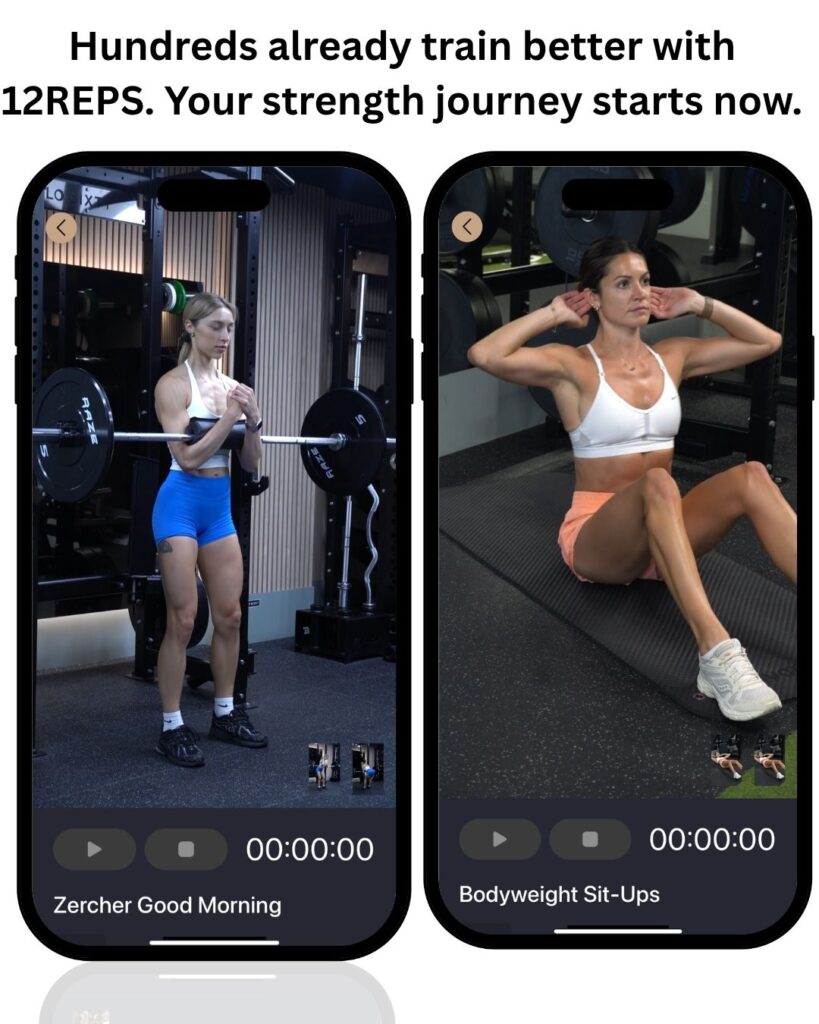
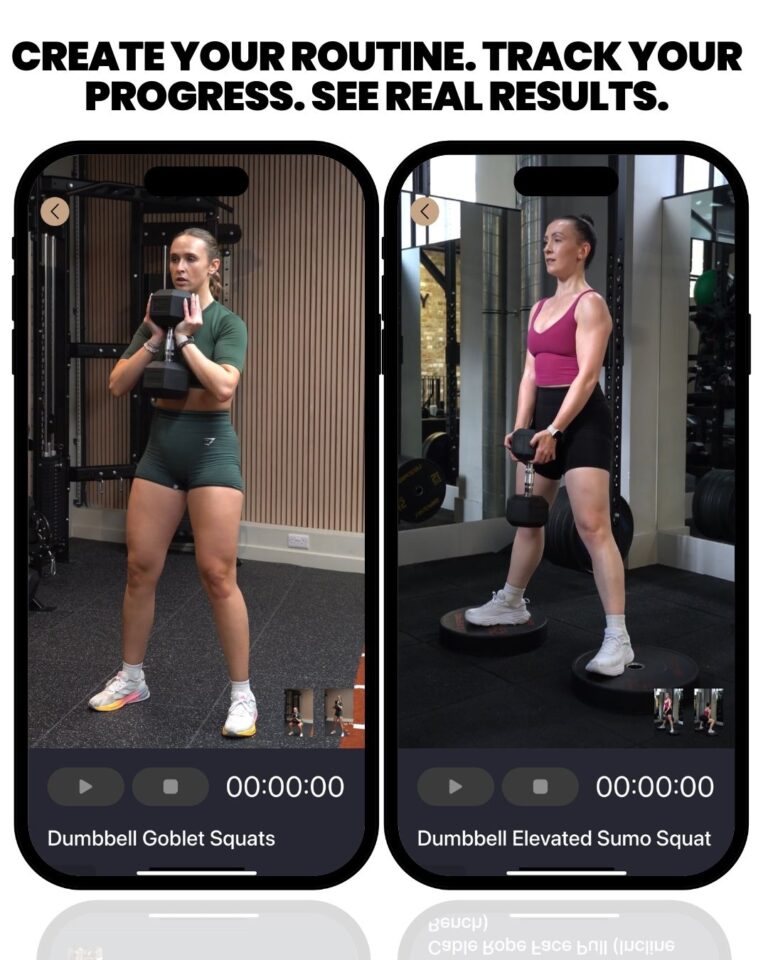
If you want each session set out for you, 12REPS plans training around your goal, your equipment and your time. You can watch a trainer demo before each exercise, log your reps and weight, and see what you lifted last time.
Pull Workout FAQs
Should I do pull-ups or lat pulldowns first?
Do first whichever one you most want to improve. Pull-ups usually come first because they’re harder, and pulldowns are easy to adjust when you’re tired.
Does a pull workout train my biceps?
Yes. Every row and pulldown bends your elbows, so your biceps work in every exercise here.
What should I train on the other days?
Pair this with a pushing day, such as our chest and back workout, or a back and triceps workout if you prefer that split.
Sources
- Anatomy, Back, Latissimus Dorsi. Jeno SH, Varacallo MA. StatPearls Publishing (NCBI Bookshelf), 2023. https://www.ncbi.nlm.nih.gov/books/NBK448120/
- What influence does resistance exercise order have on muscular strength gains and muscle hypertrophy? A systematic review and meta-analysis. Nunes JP, Grgic J, Cunha PM, et al. European Journal of Sport Science, 2021. https://doi.org/10.1080/17461391.2020.1733672
- American College of Sports Medicine position stand. Progression models in resistance training for healthy adults. American College of Sports Medicine. Medicine & Science in Sports & Exercise, 2009. https://pubmed.ncbi.nlm.nih.gov/19204579/
- Comparison of different rowing exercises: trunk muscle activation and lumbar spine motion, load, and stiffness. Fenwick CMJ, Brown SHM, McGill SM. Journal of Strength and Conditioning Research, 2009. https://pubmed.ncbi.nlm.nih.gov/19197209/
- Grip width and forearm orientation effects on muscle activity during the lat pull-down. Lusk SJ, Hale BD, Russell DM. Journal of Strength and Conditioning Research, 2010. https://doi.org/10.1519/JSC.0b013e3181ddb0ab
- Effect of Repetition Duration During Resistance Training on Muscle Hypertrophy: A Systematic Review and Meta-Analysis. Schoenfeld BJ, Ogborn DI, Krieger JW. Sports Medicine, 2015. https://doi.org/10.1007/s40279-015-0304-0
- No Time to Lift? Designing Time-Efficient Training Programs for Strength and Hypertrophy: A Narrative Review. Iversen VM, Norum M, Schoenfeld BJ, Fimland MS. Sports Medicine, 2021. https://pubmed.ncbi.nlm.nih.gov/34125411/
- Give it a rest: a systematic review with Bayesian meta-analysis on the effect of inter-set rest interval duration on muscle hypertrophy. Singer A, Wolf M, Generoso L, et al. Frontiers in Sports and Active Living, 2024. https://doi.org/10.3389/fspor.2024.1429789