

You’ve seen “PPL” mentioned everywhere. In gym forums. On fitness Instagram. In workout programmes. Everyone seems to be doing push/pull/legs splits.
But what actually is it? How does it work? And more importantly—should you be doing it?
Here’s what you need to know: push/pull/legs is one of the most effective training splits for building muscle and strength. But it’s not suitable for everyone, and it’s often misunderstood.
I’m Will Duru, a personal trainer with over 10 years’ experience in London. I’ve programmed countless push/pull/legs routines for women. When it’s appropriate, it produces exceptional results. When it’s not, it wastes time and creates frustration.
This guide explains exactly what push/pull/legs is, who it works for, and how to implement it properly.
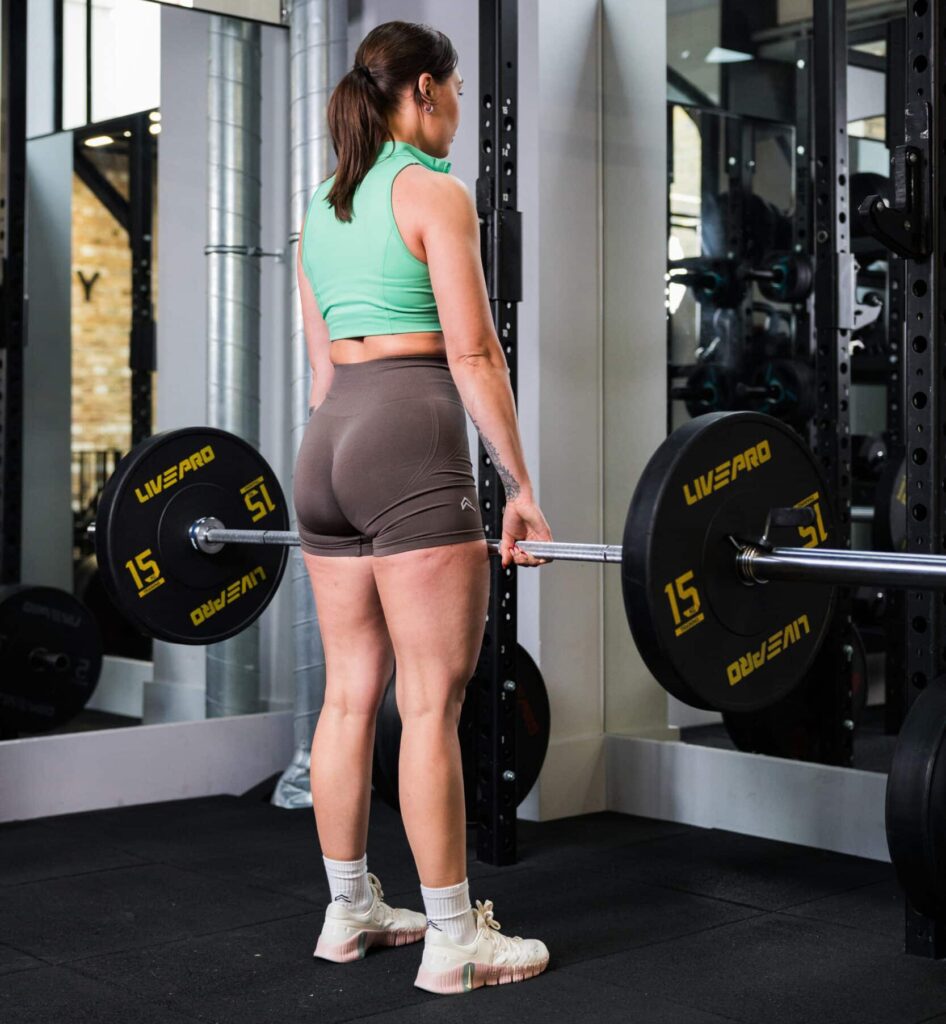
What Is Push/Pull/Legs?
Push/pull/legs (PPL) is a training split that divides your body into three groups based on movement patterns:
Push day: You train all upper body muscles involved in pushing movements. This includes chest, shoulders, and triceps.
Pull day: You train all upper body muscles involved in pulling movements. This includes back and biceps.
Legs day: You train all lower body muscles. This includes quads, hamstrings, glutes, and calves.
Each muscle group is trained on its own dedicated day
Example weekly schedule:
- Monday: Push (chest, shoulders, triceps)
- Tuesday: Pull (back, biceps)
- Wednesday: Legs (quads, hamstrings, glutes, calves)
- Thursday: Rest
- Friday: Push
- Saturday: Pull
- Sunday: Legs
This is a 6-day version where you cycle through the split twice weekly, training each muscle group twice per week.
The brilliance of this split is its simplicity: pushing muscles train together, pulling muscles train together, legs train separately. No confusion about which exercises go where.
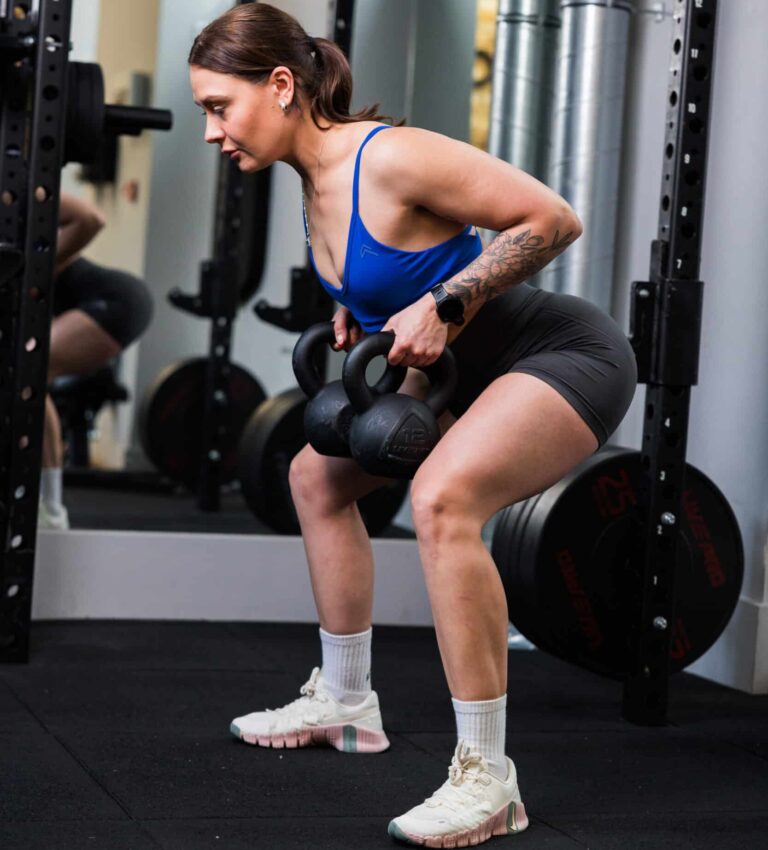
Why Push/Pull/Legs Works
PPL isn’t randomly popular. It’s effective for specific reasons.
1. Related Muscle Groups Train Together
When you bench press (push exercise), you’re working chest, shoulders, and triceps simultaneously. When you overhead press, you’re again working shoulders and triceps.
Training these together in one session creates maximum synergy. You’re not wasting individual training sessions on muscles that always work together anyway.
Similarly with pulling: when you do rows, your back and biceps work together. Training them in the same session maximises efficiency.
2. Minimal Overlap Between Sessions
Because related muscles train together, there’s minimal overlap between workouts. Your chest, shoulders, and triceps get completely rested whilst you train back and biceps the next day.
This facilitates better recovery than splits where you might train shoulders one day, then chest the next—creating incomplete recovery because triceps are involved in both.
3. Higher Training Frequency
A proper PPL split trains each muscle group twice weekly. Research consistently shows training muscles twice weekly produces superior growth compared to once weekly.
You’re providing frequent stimulus for adaptation whilst allowing adequate recovery between sessions.
4. Clear Progression Tracking
Because you’re repeating the same workouts twice weekly, progression is straightforward. You can see exactly whether you’re getting stronger on key exercises week over week.
This beats random “chest day” programming where exercises change constantly and you can’t track meaningful progress.
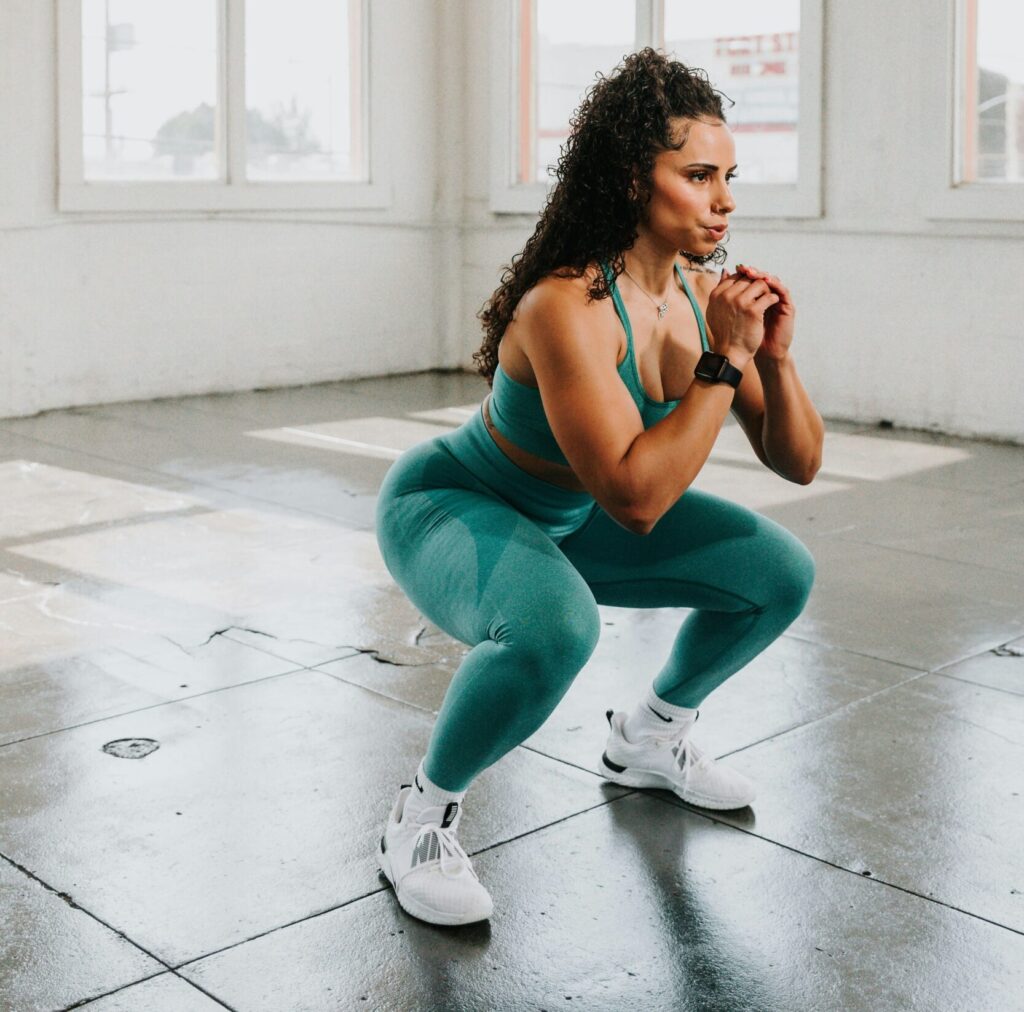
Who Should Use Push/Pull/Legs?
PPL works brilliantly for specific populations. It fails miserably for others.
PPL Works If You:
Can train 5-6 days weekly consistently: PPL requires high frequency. If you can only train 3-4 days weekly, other splits work better.
Have been training consistently for 6+ months: You understand proper form on compound movements. You can push yourself hard without constant supervision. You’ve built base strength levels.
Want to emphasise upper body development: PPL provides substantial upper body volume with two dedicated upper body days weekly.
Have 60-75 minutes per session: PPL sessions aren’t quick. You’re training multiple muscle groups per session with adequate volume.
Recover well: Training 5-6 days weekly demands good recovery capacity. This requires proper sleep, nutrition, and stress management.
PPL Doesn’t Work If You:
Train 3 days weekly or less: With only 3 sessions weekly, you’d train each muscle group once per week—suboptimal for growth. Full-body routines work better for 3-day schedules.
Are a complete beginner: If you’re in your first 6 months of training, full-body routines produce better results with less complexity.
Want to emphasise lower body development: PPL provides only one leg day weekly (or two if doing the 6-day version). If glute and leg development is your priority, upper/lower splits or programmes with multiple leg days work better.
Have limited time: If you only have 30-40 minutes per session, PPL’s volume requirements don’t fit.
Struggle with recovery: Training 5-6 days weekly whilst managing work, family, and life stress requires robust recovery capacity.
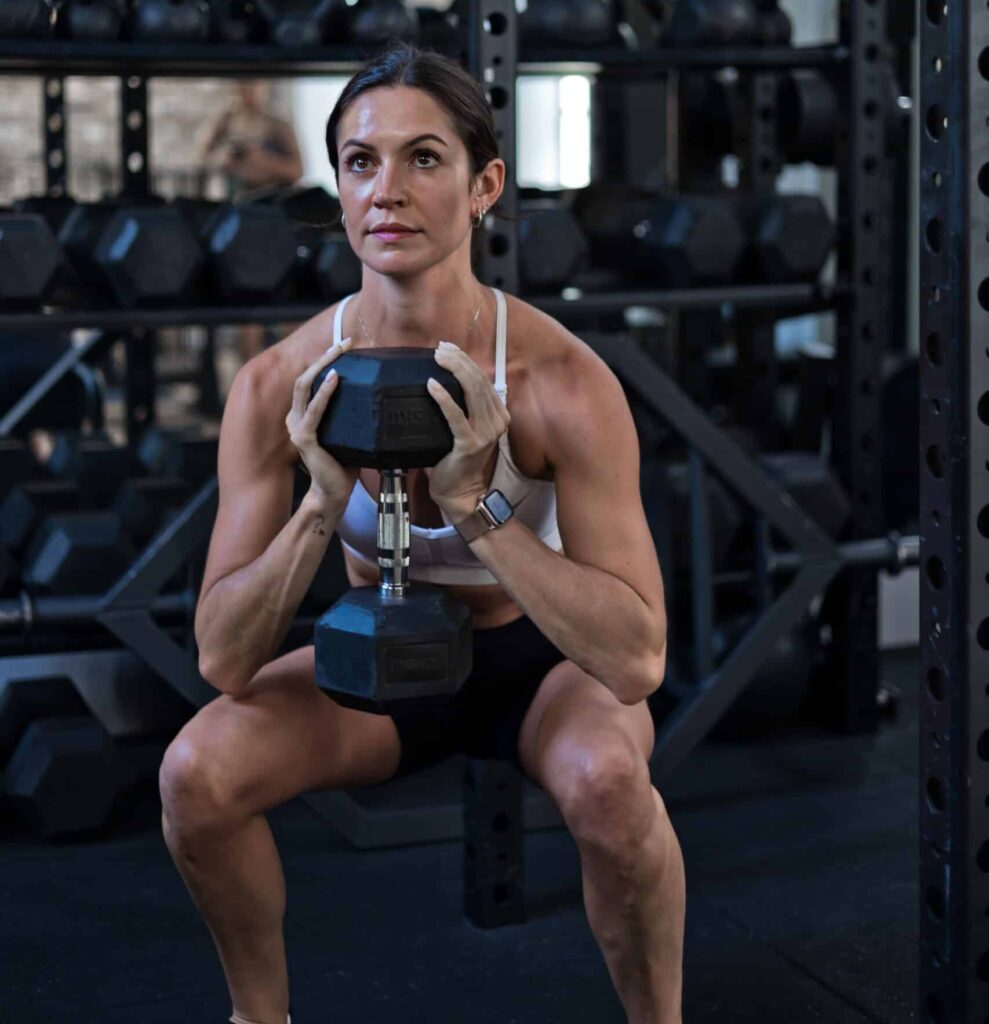
The Two Main PPL Variations
There are two primary ways to structure push/pull/legs.
3-Day PPL (Once Through)
Structure: Push, Pull, Legs, repeated once weekly.
Schedule example:
- Monday: Push
- Wednesday: Pull
- Friday: Legs
Training frequency: Each muscle group trained once weekly.
Who it’s for: This isn’t ideal for anyone. Training muscles once weekly is suboptimal for growth. If you can only train 3 days weekly, full-body routines produce better results.
The only time 3-day PPL makes sense is for very advanced lifters who need substantial recovery between sessions due to extreme training intensity. This doesn’t describe most women.
6-Day PPL (Twice Through)
Structure: Push, Pull, Legs, Push, Pull, Legs, with one rest day weekly.
Schedule example:
- Monday: Push
- Tuesday: Pull
- Wednesday: Legs
- Thursday: Push
- Friday: Pull
- Saturday: Legs
- Sunday: Rest
Training frequency: Each muscle group trained twice weekly.
Who it’s for: Intermediate to advanced lifters who can commit to 6 training days weekly and recover adequately.
This is the version that produces excellent results when executed properly.
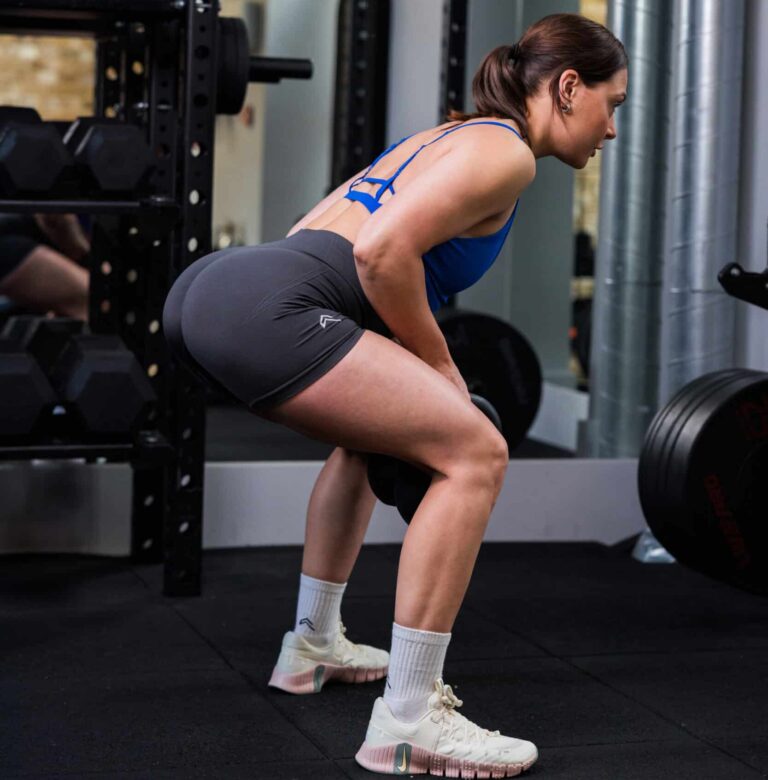
Sample Push/Pull/Legs Routine
Here’s a practical 6-day PPL routine designed for women.
Push Day A
Barbell bench press: 4 sets × 6-8 reps Seated dumbbell shoulder press: 3 sets × 8-10 reps Incline dumbbell press: 3 sets × 10-12 reps Lateral raises: 3 sets × 12-15 reps Tricep rope pushdowns: 3 sets × 12-15 reps Overhead tricep extension: 2 sets × 12-15 reps
Focus: Heavier pressing movements early, lighter isolation work later.
Pull Day A
Deadlifts: 4 sets × 5-6 reps Pull-ups (or assisted): 3 sets × 6-10 reps Barbell rows: 3 sets × 8-10 reps Face pulls: 3 sets × 12-15 reps Dumbbell bicep curls: 3 sets × 10-12 reps Hammer curls: 2 sets × 12-15 reps
Focus: Heavy posterior chain work early, upper back and arms later.
Legs Day A
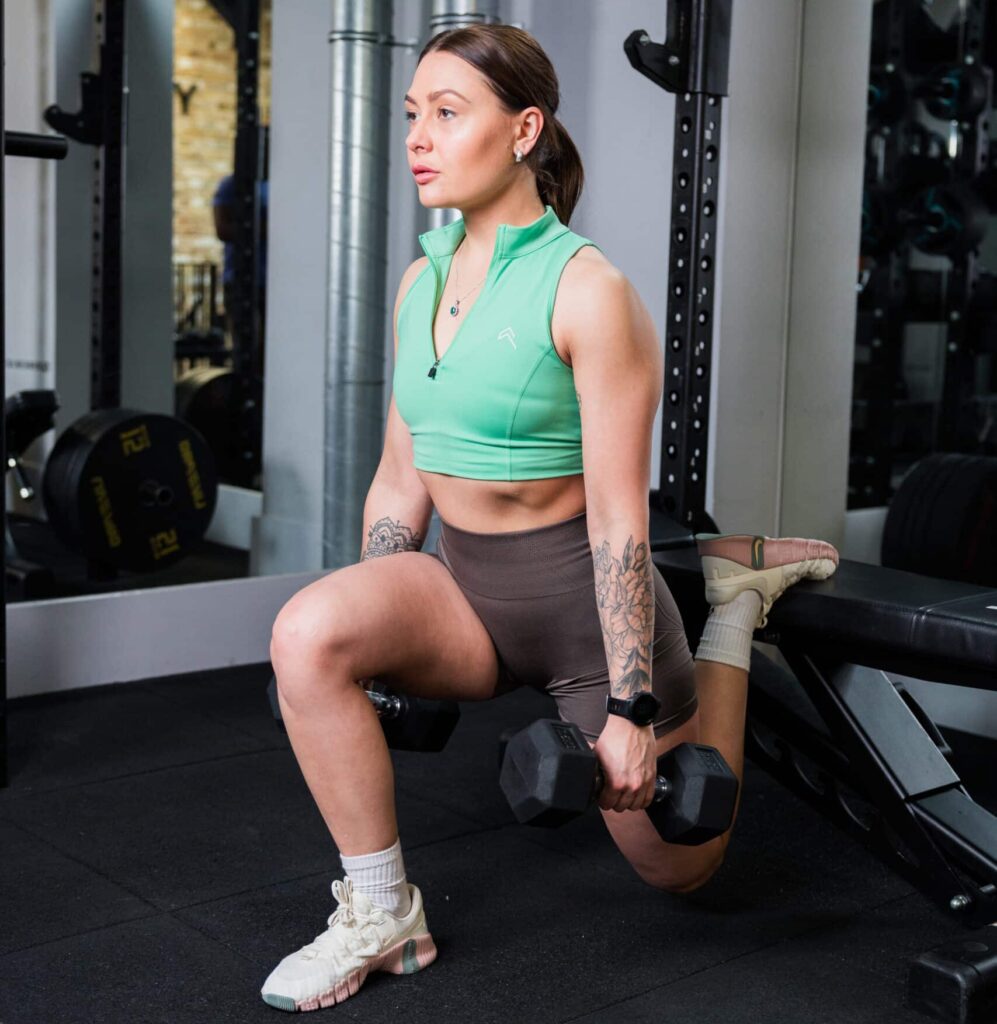
Barbell squats: 4 sets × 6-8 reps Romanian deadlifts: 3 sets × 8-10 reps Leg press: 3 sets × 12-15 reps Walking lunges: 3 sets × 12 steps each leg Leg curls: 3 sets × 12-15 reps Calf raises: 4 sets × 15-20 reps
Focus: Quad and glute emphasis with hamstring work.
Push Day B
Dumbbell bench press: 4 sets × 8-10 reps Overhead press (barbell or dumbbell): 3 sets × 8-10 reps Cable flyes: 3 sets × 12-15 reps Arnold press: 3 sets × 10-12 reps Dips (or assisted): 3 sets × 8-12 reps Tricep overhead extension:3 sets × 12-15 reps
Focus: Variation from Push A whilst hitting same muscle groups.
Pull Day B
Barbell rows: 4 sets × 6-8 reps Lat pulldowns: 3 sets × 10-12 reps Seated cable rows: 3 sets × 10-12 reps Dumbbell rows: 3 sets × 10-12 reps (each arm) Rear delt flyes: 3 sets × 12-15 reps Cable bicep curls: 3 sets × 12-15 reps
Focus: Different rowing angles, lat emphasis.
Legs Day B
Bulgarian split squats: 4 sets × 8-10 reps (each leg) Hip thrusts: 4 sets × 10-12 reps Leg press: 3 sets × 15-20 repsStep-ups: 3 sets × 12 reps (each leg) Leg extensions: 3 sets × 15-20 reps Seated calf raises: 4 sets × 15-20 reps
Focus: Unilateral work, glute emphasis, quad isolation.
Core work: Add 2-3 core exercises to the end of your shortest workout day, typically 2-3 times weekly.
Programming Variables
Volume
Push sessions: 16-20 total sets for chest/shoulders/triceps combined Pull sessions: 16-20 total sets for back/biceps combined
Leg sessions: 16-22 total sets for all lower body muscles
This provides adequate stimulus without excessive fatigue.
Intensity
Compound movements (squats, deadlifts, bench press, rows): Train closer to failure, typically 1-3 reps shy of complete failure.
Isolation movements (lateral raises, bicep curls, leg extensions): Can train closer to or at failure safely.
Progression
Track key compound lifts: Monitor your top-set weights on squats, deadlifts, bench press, rows, and overhead press.
Aim for weekly progression: Add weight, add reps, or add sets gradually over time.
Deload every 6-8 weeks: Reduce volume and intensity by 40-50% for one week to facilitate recovery.
Common PPL Mistakes
I see the same errors repeatedly with women implementing PPL.
Mistake 1: Training 3-4 Days Weekly
You do Push/Pull/Legs once weekly, training each muscle group once per week. This is suboptimal.
Solution: If you can only train 3-4 days weekly, do full-body routines or upper/lower splits instead.
Mistake 2: Inadequate Leg Volume
You do one leg day weekly with 12 total sets, wondering why glutes and legs don’t develop.
Solution: If doing 6-day PPL, ensure leg days have adequate volume (18-22 sets). If leg development is your priority, PPL isn’t ideal—choose a split with more leg frequency.
Mistake 3: Randomising Exercises
You constantly change exercises, never repeating the same movements. You can’t track progression.
Solution: Keep core exercises consistent for 8-12 weeks minimum. Progression requires repetition.
Mistake 4: Training to Complete Failure Every Set
You grind every set to absolute failure, accumulating excessive fatigue.
Solution: Leave 1-3 reps in reserve on most sets. Failure training has its place but shouldn’t dominate your training.
Mistake 5: Insufficient Recovery
You train 6 days weekly whilst sleeping 5-6 hours, eating inadequately, and managing high stress. Recovery suffers.
Solution: PPL demands robust recovery. Prioritise 7-9 hours sleep, adequate protein (1.6-2.2g per kg bodyweight), and stress management.
PPL vs Other Splits
How does PPL compare to alternatives?
PPL vs Full-Body
Full-body wins if: You train 3-4 days weekly, you’re a beginner, you want simplicity.
PPL wins if: You train 5-6 days weekly, you’re intermediate/advanced, you want higher per-muscle volume.
PPL vs Upper/Lower
Upper/Lower wins if: You train 4 days weekly, you want to emphasise legs more, you prefer shorter sessions.
PPL wins if: You train 6 days weekly, you want to emphasise upper body, you enjoy the movement pattern organisation.
PPL vs Bro Split (Chest/Back/Shoulders/Arms/Legs)
Bro split wins if: Never. Training muscles once weekly is suboptimal for natural lifters.
PPL wins: Always, if comparing proper 6-day PPL to traditional bro splits.

Should YOU Do Push/Pull/Legs?
Answer these questions honestly:
Can you commit to training 5-6 days weekly consistently?
- Yes → Continue
- No → Choose 3-4 day split instead
Have you been training consistently for 6+ months?
- Yes → Continue
- No → Start with full-body routine
Do you have 60-75 minutes per session?
- Yes → Continue
- No → Choose more time-efficient split
Do you recover well from training (good sleep, nutrition, stress management)?
- Yes → PPL could work for you
- No → Improve recovery first or choose lower-frequency split
Is upper body development as important as lower body?
- Yes → PPL works well
- No, legs are priority → Choose upper/lower split with multiple leg days
If you answered positively to all questions, PPL is worth implementing.
How to Start PPL
If PPL suits your situation, implement it properly:
Week 1-2: Use lighter weights to learn the programme. Focus on movement quality, not pushing limits.
Week 3-4: Increase weights to challenging loads. You should reach 1-3 reps shy of failure on most working sets.
Week 5-8: Continue progressive overload. Add weight, reps, or sets gradually.
Week 9: Deload week. Reduce volume and intensity by 40-50%. Maintain movement patterns without accumulating fatigue.
Week 10+: Resume progressive training block.
Track key compound movements weekly. If you’re consistently adding weight or reps, the programme is working.
The Bottom Line
Push/pull/legs is an exceptionally effective training split when properly implemented by the right person.
It works brilliantly if you: ✅ Train 5-6 days weekly consistently ✅ Have 6+ months training experience ✅ Recover well from training ✅ Have 60-75 minutes per session ✅ Want balanced upper body development
It doesn’t work if you: ❌ Train 3-4 days weekly or less ❌ Are a complete beginner ❌ Prioritise leg development heavily ❌ Have limited session time ❌ Struggle with recovery
Don’t force yourself into PPL because it’s popular. Choose the split that fits your actual schedule, recovery capacity, and goals.
If PPL suits you, it’s one of the most effective ways to train. If it doesn’t, that’s fine—other splits work equally well when matched to your situation.
Training consistency and progressive overload matter far more than which split you follow.
References
- Schoenfeld, B.J., Grgic, J. and Krieger, J. (2019). How Many Times Per Week Should a Muscle Be Trained to Maximize Muscle Hypertrophy? A Systematic Review and Meta-Analysis. Journal of Sports Sciences, 37(11), pp.1286-1295.
- Schoenfeld, B.J., Ogborn, D. and Krieger, J.W. (2017). Dose-Response Relationship Between Weekly Resistance Training Volume and Increases in Muscle Mass: A Systematic Review and Meta-Analysis. Journal of Sports Medicine and Physical Fitness, 57(6), pp.1073-1082.
- Wernbom, M., Augustsson, J. and Thomeé, R. (2007). The Influence of Frequency, Intensity, Volume and Mode of Strength Training on Whole Muscle Cross-Sectional Area in Humans. Sports Medicine, 37(3), pp.225-264.
- Ralston, G.W., Kilgore, L., Wyatt, F.B. and Baker, J.S. (2017). The Effect of Weekly Set Volume on Strength Gain: A Meta-Analysis. Sports Medicine, 47(12), pp.2585-2601.
- Grgic, J., Schoenfeld, B.J., Davies, T.B., Lazinica, B., Krieger, J.W. and Pedisic, Z. (2018). Effect of Resistance Training Frequency on Gains in Muscular Strength: A Systematic Review and Meta-Analysis. Sports Medicine, 48(5), pp.1207-1220.