

You look at your chest in the mirror. Flat. Undefined. The same as it was six months ago despite benching twice weekly.
Meanwhile, you see other men with impressive, muscular chests. Defined pecs that fill out t-shirts. Visible upper chest creating that shelf-like appearance. You wonder: what are they doing that you’re not?
The truth: Building a bigger chest isn’t about benching more frequently. It’s about hitting your chest from multiple angles, progressive overload on key movements, sufficient volume, and proper form that actually targets the pecs.
I’m Will Duru, a personal trainer with 10+ years’ experience in London. I’ve helped hundreds of men transform flat, undefined chests into muscular, impressive pecs that completely change their physique.
What I’ve learned: Most men waste years doing endless flat bench press with poor form, never hitting upper chest, and wondering why growth stalls. Real chest development requires strategic exercise selection, consistent progressive overload, and understanding chest anatomy.
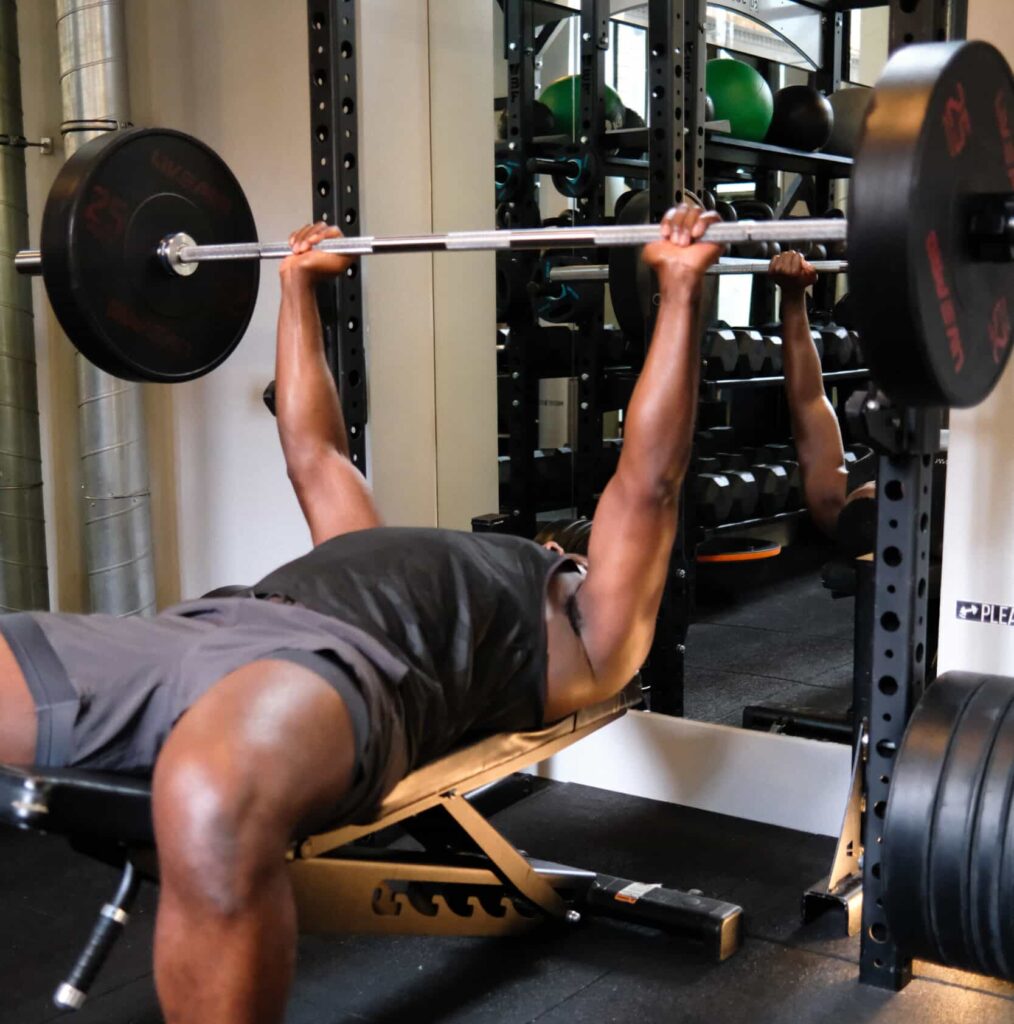
Why Your Chest Isn't Growing (The Truth)
Problem 1: Only Doing Flat Bench Press
What most men do: Flat barbell bench press every chest session. Maybe 4 sets, maybe 5. Week after week. Month after month.
Why it fails: Your chest has three distinct regions (upper, middle, lower). Flat bench primarily hits middle chest. Your upper chest (clavicular head) gets minimal stimulation. The result? Underdeveloped upper pecs, no shelf-like appearance, chest looks flat even when you’ve built some size.
The anatomy: Your pectoralis major has two heads. The sternocostal head (middle to lower chest) and the clavicular head (upper chest). They require different angles to maximally stimulate. Flat pressing emphasises sternocostal, neglects clavicular.
Will’s observation: “Client benching 100kg for reps. Impressive middle chest development. But upper chest completely flat. We add incline pressing 2 to 3 times weekly. Six months later, upper chest transformed. Total chest appearance dramatically improved. Upper chest development changes everything.”
Problem 2: Fixed Barbell Grip Limiting Range of Motion
What research shows: Barbell bench press locks your hands at fixed width. This limits how deep you can stretch the pecs at bottom of rep (bar hits chest, movement stops) and prevents hands coming together at top (pec function is horizontal adduction, bringing arms across body).
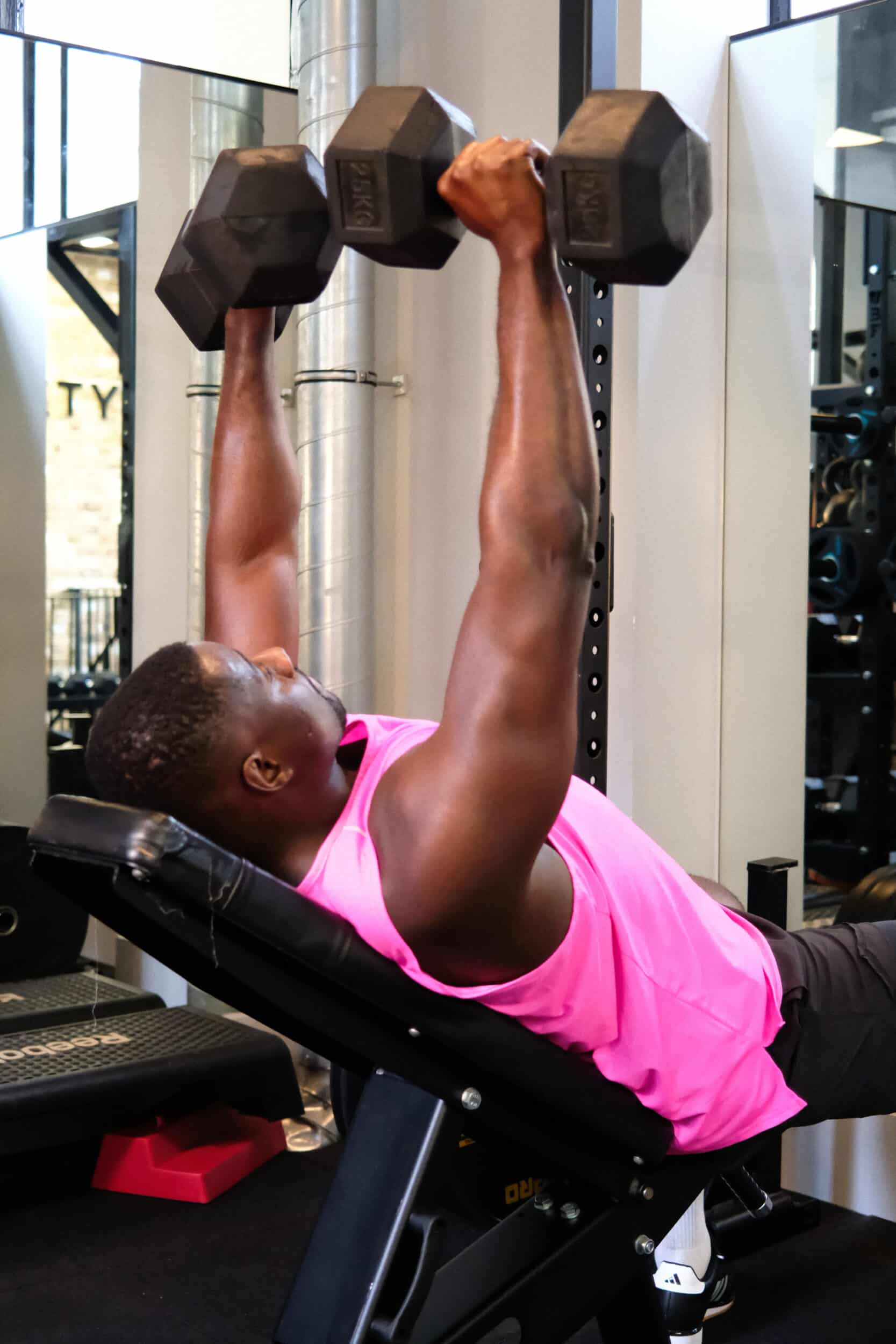
Why dumbbells are superior for growth: Dumbbells allow deeper stretch at bottom (hands can drop below chest level), hands can come together at top (maximises pec contraction), natural rotation through movement (reduces shoulder stress), independent arm work (corrects imbalances).
The practical difference: Client benching 80kg barbell gets limited pec stretch. Same client using 32kg dumbbells each hand gets significantly greater stretch at bottom, better contraction at top. More range of motion equals more muscle growth stimulus.
Will’s dumbbell recommendation: “I programme dumbbell pressing for every client focused on chest growth. Barbell has its place for strength, but dumbbells build more chest mass. Client switched from barbell only to 50/50 split barbell and dumbbell. Chest growth accelerated immediately.”
Problem 3: Neglecting Isolation Movements
What compound pressing misses: Bench press, incline press, dips are all compound movements involving chest, shoulders, and triceps. For some men, shoulders and triceps take over, chest gets insufficient stimulus.
Why isolation matters: Cable flies, dumbbell flies, pec deck force the chest to work without significant tricep or shoulder involvement. This ensures your pecs are actually getting worked, not just assisting whilst other muscles do the heavy lifting.
The growth principle: You need both. Compound pressing moves heavy weight, creates overall stimulus. Isolation movements target the pecs specifically, ensure they’re actually growing, create metabolic stress and muscle pump.
Will’s isolation prescription: “Every chest workout finishes with isolation. Cable flies or pec deck, 3 to 4 sets, 12 to 15 reps. Client doing only pressing movements built decent strength but minimal chest size. Add isolation work, chest finally starts growing.”
Problem 4: No Progressive Overload System
What most men do: Bench 60kg for 10, 9, 8 reps. Next week, same weight, similar reps. Month later, still the same. No tracking, no progression plan, no systematic increase.
Why growth stops: Your body adapts to stimulus. If stimulus never increases, your body has zero reason to grow. Progressive overload (gradually increasing weight, reps, or volume over time) is THE fundamental requirement for muscle growth.
The tracking problem: Without tracking every workout, you don’t know if you’re progressing. You think you are, but you’re actually doing similar weights and reps for months.
Will’s progressive overload rule: “Every client tracks every workout. Client not tracking makes zero progress 3 months. Client tracking with clear progression plan increases bench press 60kg to 90kg in 6 months whilst building obvious chest mass. Tracking and progression are non-negotiable.”
The Complete Chest Anatomy (What You Need to Know)
Upper Chest (Clavicular Head)
Location: Attaches to your clavicle (collarbone), runs down and across to upper arm.
Function: Brings arm up and across body (like throwing a ball overhand).
Best exercises: Incline barbell press (30 to 45 degrees), incline dumbbell press, low to high cable flies.
Why it matters: Upper chest development creates that shelf-like appearance. This is what makes chest look impressive in t-shirts. Most underdeveloped region for men who only flat bench.
Will’s upper chest focus: “I programme incline pressing every chest session for clients wanting bigger chest. Upper chest is priority. Client doing only flat bench has flat appearance. Client doing 50% incline work has impressive, full chest.”
Middle and Lower Chest (Sternocostal Head)
Location: Attaches to your sternum (breastbone) and ribs, runs across to upper arm.
Function: Brings arm down and across body (like throwing a ball underhand).
Best exercises: Flat barbell press, flat dumbbell press, dips, decline press.
Why it matters: This is the mass of your chest. Well-developed sternocostal head creates thickness and width. Combined with upper chest development, you get complete impressive pecs.
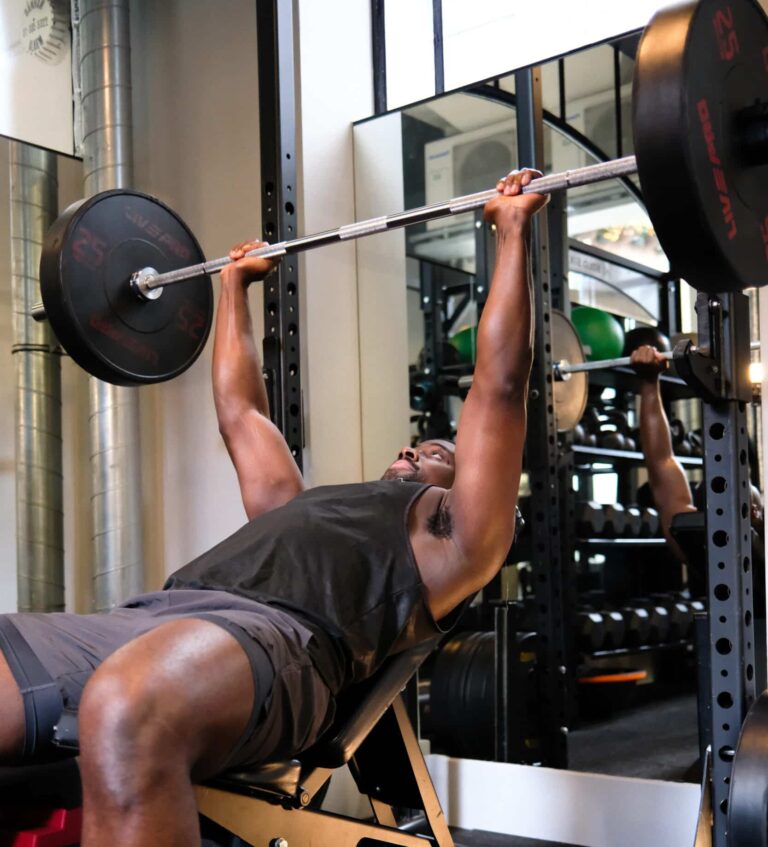
The Optimal Chest Training Split
Exercise Selection (What to Include)
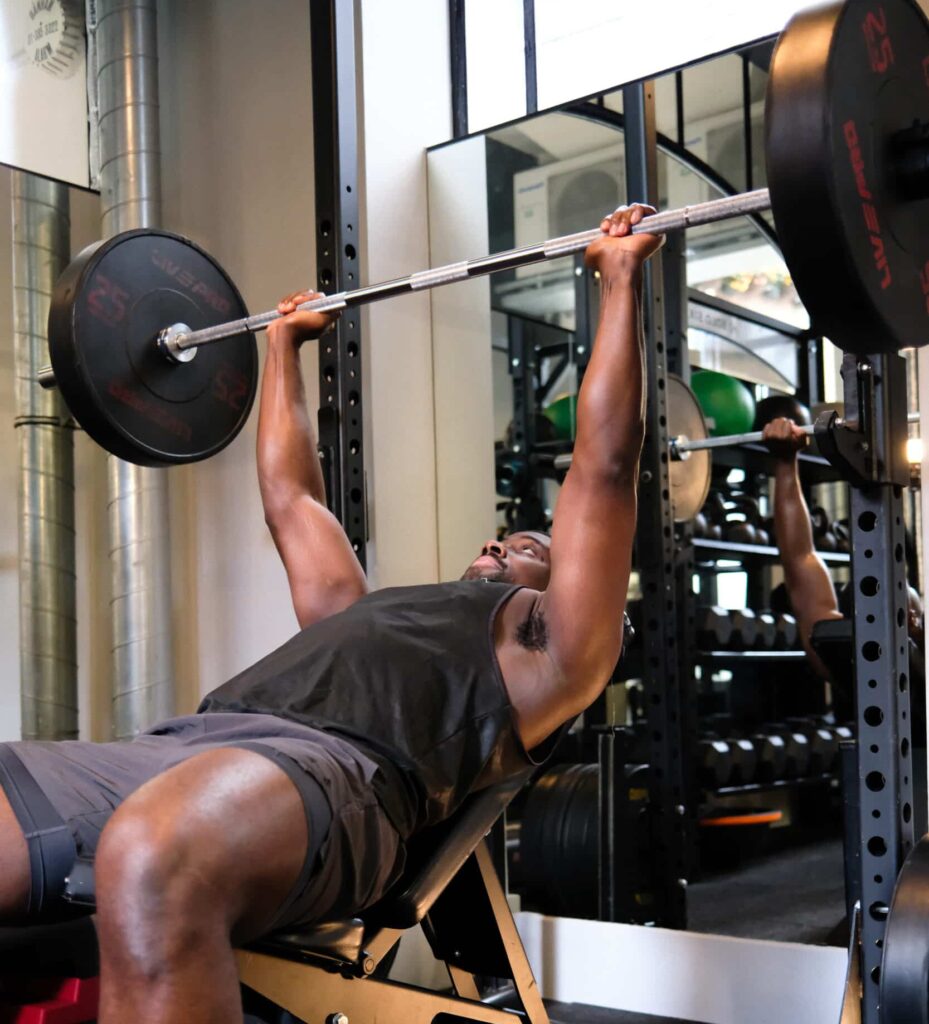
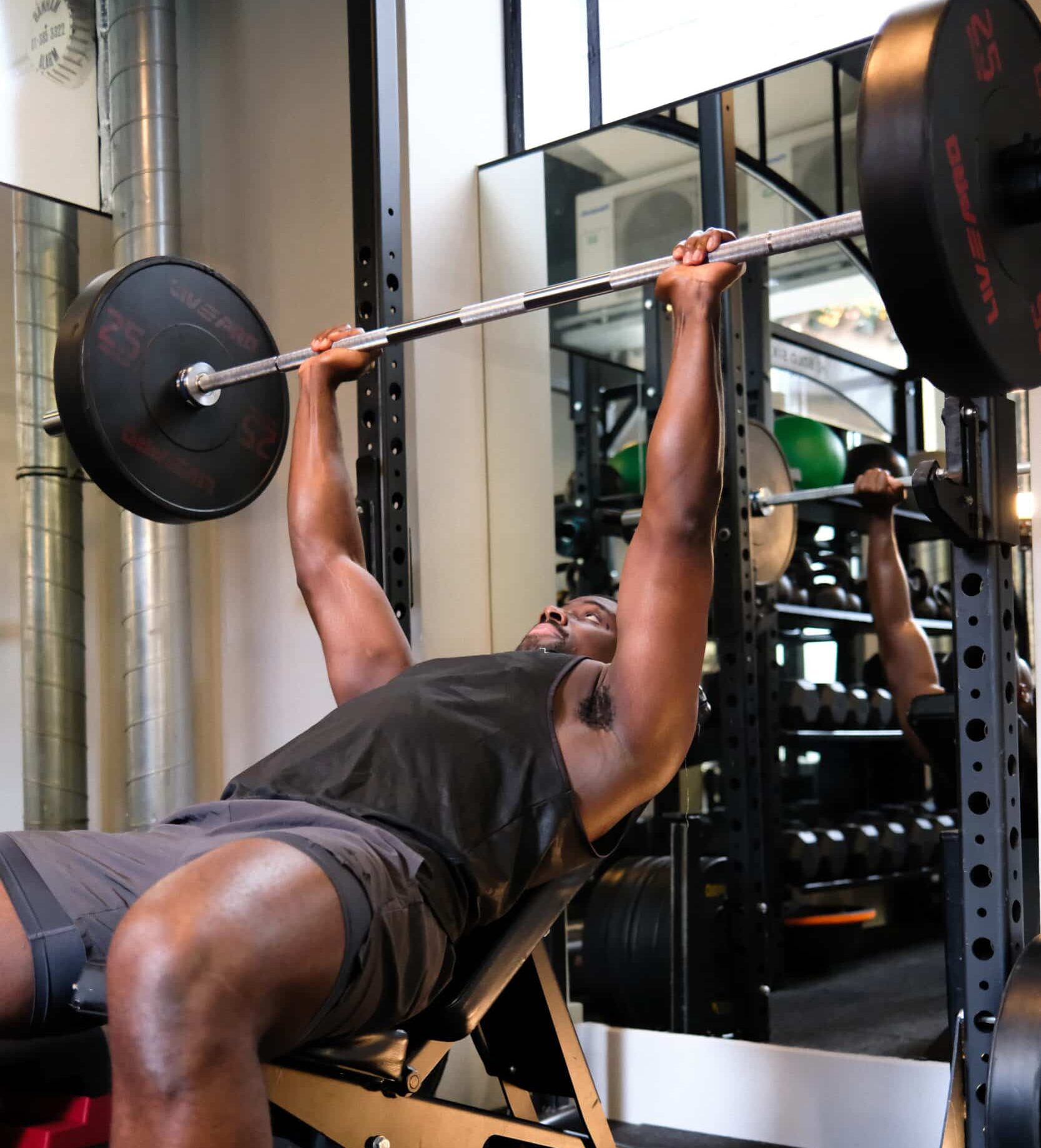
Incline pressing (30 to 45 degrees):
- Incline barbell bench press
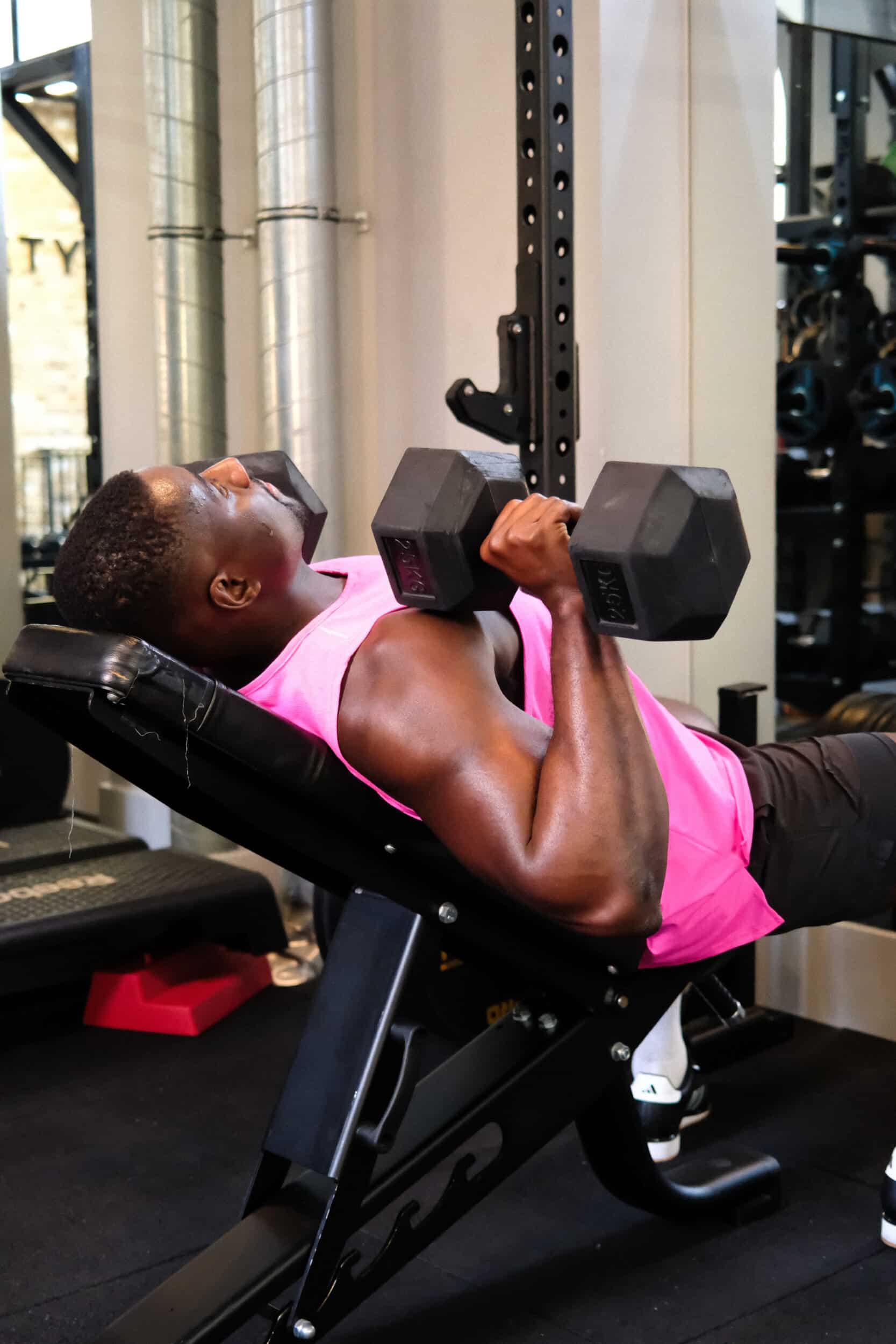
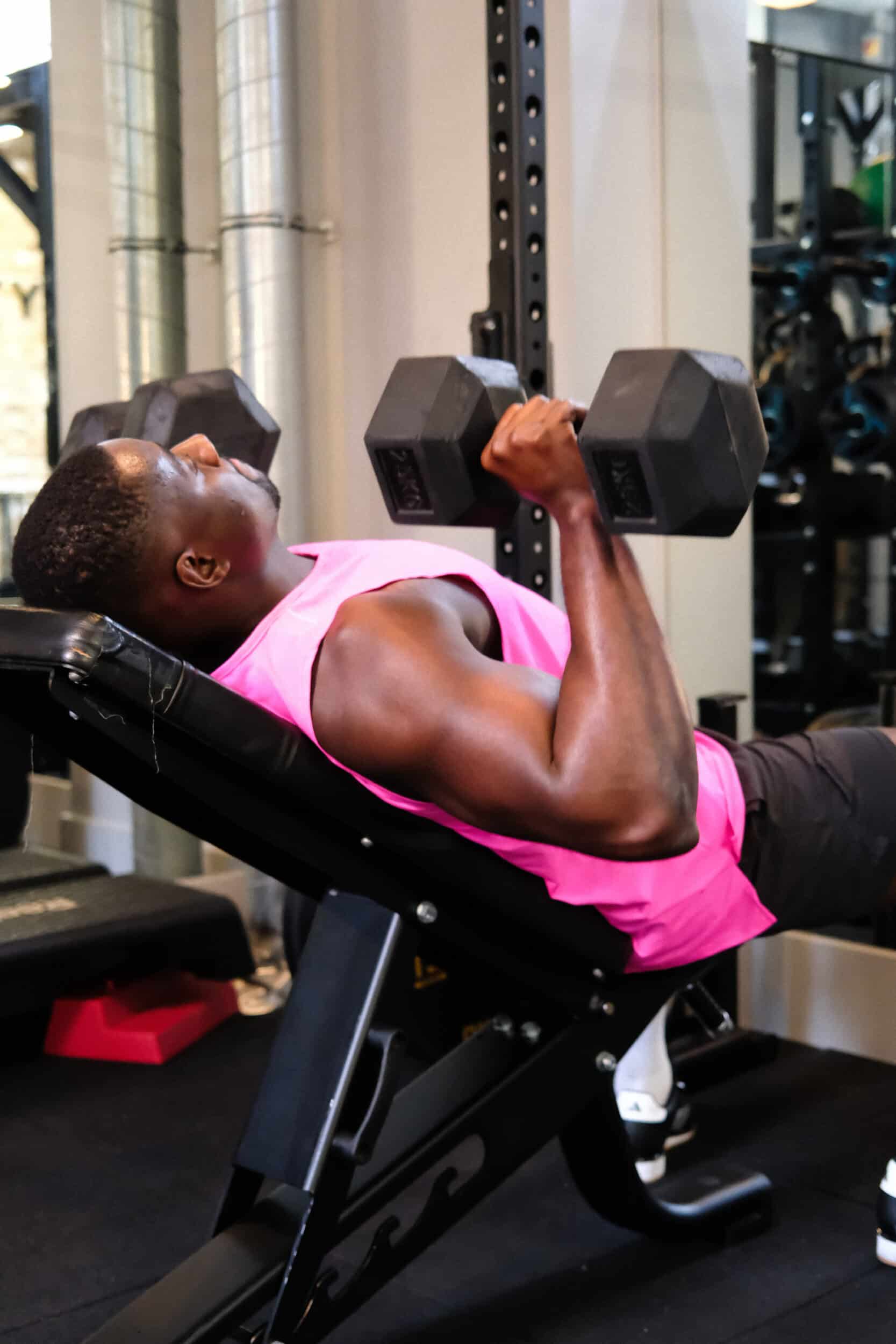
- Incline dumbbell press
- Incline machine press
Purpose: Upper chest development (clavicular head), creating shelf-like appearance.
Will’s incline angle: “30 to 45 degrees is optimal. Steeper than 45 degrees becomes more shoulder press than chest press. Client using 60 degree incline complains shoulders burning, chest barely working. Drop to 30 degrees, chest immediately feels it.”
Flat pressing:
- Flat barbell bench press
- Flat dumbbell press
- Machine press
Purpose: Overall chest mass (primarily sternocostal head), strength development.
Dips (chest emphasis):
- Bodyweight dips (leaning forward)
- Weighted dips (belt, dumbbell between legs)
Purpose: Lower chest and overall mass, bodyweight progression milestone.
Isolation movements:
- Cable flies (various angles)
- Dumbbell flies (flat, incline)
- Pec deck machine
Purpose: Direct pec targeting without tricep or shoulder takeover, muscle pump, metabolic stress.
Volume (How Many Sets Per Week)
Research-backed volume for chest growth: 12 to 20 sets per week targeting chest muscles.
How this breaks down:
- Beginner (0 to 12 months): 12 to 14 sets weekly
- Intermediate (1 to 3 years): 14 to 18 sets weekly
- Advanced (3+ years): 16 to 20 sets weekly
Example intermediate weekly volume:
- Workout 1 (Monday): Incline barbell 4 sets, flat dumbbell 3 sets, cable flies 3 sets = 10 sets
- Workout 2 (Thursday): Flat barbell 4 sets, incline dumbbell 3 sets, pec deck 3 sets = 10 sets
- Total: 20 sets weekly
Will’s volume guidance: “More isn’t better. Client doing 30 sets weekly, chest never recovered, growth stalled. Reduce to 18 sets weekly, chest finally grows. Quality sets with progression matter more than volume.”
Frequency (How Often to Train Chest)
Research-backed frequency: Training each muscle group twice weekly produces superior growth compared to once weekly.
Optimal chest frequency: 2 times weekly with 48 to 72 hours between sessions.
Example weekly split:
- Monday: Chest and triceps
- Tuesday: Back and biceps
- Wednesday: Rest or cardio
- Thursday: Chest and shoulders
- Friday: Legs
- Weekend: Rest
Why twice weekly works: First session creates muscle damage and growth stimulus. By 48 to 72 hours, muscle is recovered and ready for second stimulus. Two growth stimuli weekly versus one weekly equals significantly more growth over time.
Will’s frequency experience: “Client training chest once weekly (Mondays only). Slow growth, frustrating progress. Switch to twice weekly (Monday and Thursday). Chest growth accelerates immediately. Frequency matters enormously.”
The Complete Chest Workout Programme
Workout A (Monday): Upper Chest Focus
1. Incline Barbell Bench Press
- Sets: 4
- Reps: 6 to 8
- Rest: 3 minutes
- Tempo: 2 second lower, 1 second pause on chest, explosive press up
Why first: Incline barbell allows heaviest weight on upper chest. Do this fresh when energy and strength highest.
Will’s form cue: “Bar should touch upper chest near collarbone, not mid chest. Path is slightly back towards face. Keep shoulder blades retracted throughout. Don’t arch excessively, defeats purpose of incline.”
2. Flat Dumbbell Press
- Sets: 3
- Reps: 8 to 10
- Rest: 2.5 minutes
- Tempo: 2 second lower to deep stretch, 1 second pause, explosive press
Why second: Dumbbells allow greater range of motion than barbell. After heavy incline work, this hammers middle chest with superior stretch.
Will’s form cue: “Lower dumbbells until you feel deep stretch in chest (significantly below chest level). At top, don’t bang dumbbells together, just bring close. Maintain constant tension on pecs.”
3. Dips (Chest Emphasis)
- Sets: 3
- Reps: 8 to 12 (add weight when hitting 12)
- Rest: 2 minutes
- Tempo: Controlled lower (2 to 3 seconds), explosive press up
Why third: Bodyweight dips hit lower chest and overall mass. After pressing work, this finishes chest with different angle.
Will’s form cue: “Lean forward significantly (torso 20 to 30 degrees forward from vertical). This puts emphasis on chest rather than triceps. Lower until upper arms roughly parallel to floor. Don’t go too deep, risks shoulder injury.”
4. Incline Cable Flies
- Sets: 3
- Reps: 12 to 15
- Rest: 90 seconds
- Tempo: Slow eccentric (3 seconds), squeeze contraction (1 second hold)
Why last: Isolation finisher for upper chest. After all pressing work, cables provide constant tension throughout range of motion. Creates massive pump.
Will’s form cue: “Set cables at lowest position, fly up and together. Focus entirely on squeezing pecs, not moving big weight. Slow controlled movement, feel every rep. This isn’t about ego, it’s about growth.”
Total sets: 13 (perfect intermediate volume for single session)
Workout B (Thursday): Overall Mass Focus
1. Flat Barbell Bench Press
- Sets: 4
- Reps: 6 to 8
- Rest: 3 minutes
- Tempo: Controlled lower (2 seconds), brief pause on chest, explosive press
Why first: Classic mass builder. Do heavy flat bench fresh for maximum weight and strength progression.
Will’s form cue: “Bar should touch lower chest (nipple line or slightly below). Elbows at roughly 45 degrees from torso (not flared 90 degrees). Drive through legs, keep core tight, explosive press.”
2. Incline Dumbbell Press
- Sets: 3
- Reps: 8 to 10
- Rest: 2.5 minutes
- Tempo: 2 second lower, 1 second pause, explosive press
Why second: Upper chest gets worked again with dumbbells allowing natural movement and deep stretch.
Will’s form cue: “Set bench 30 to 40 degrees. Lower dumbbells until you feel significant stretch in upper chest. Press up and slightly together at top. Don’t let dumbbells drift out wide at top.”
3. Machine Press or Hammer Strength Press
- Sets: 3
- Reps: 10 to 12
- Rest: 2 minutes
- Tempo: Controlled movement throughout
Why third: Machines allow you to push to near failure safely without needing spotter. After heavy free weights, this provides additional volume with reduced injury risk.
Will’s form cue: “Set seat so handles are roughly mid chest height. Press straight out, don’t lock elbows completely at top. Squeeze pecs hard at contraction. Control negative slowly.”
4. Pec Deck or Cable Flies (Flat)
- Sets: 3
- Reps: 12 to 15
- Rest: 90 seconds
- Tempo: Slow eccentric (3 seconds), squeeze contraction (2 second hold)
Why last: Isolation finisher hitting entire chest. After all pressing, this creates metabolic stress and pump for growth.
Will’s form cue: “Set pec deck so arms roughly parallel to floor. Squeeze handles together in front of you, hold contraction 2 full seconds. Slowly return to stretch position. Every rep should burn.”
Total sets: 13 (perfect intermediate volume)
Weekly total: 26 sets (ideal intermediate range for maximum growth)
This Is Where 12REPS Solves The Consistency Problem
The biggest challenge with chest training: actually executing the plan consistently with proper progressive overload.
Most men fail at chest building because:
- They don’t have structured workouts ready to execute
- They forget what weight they used last session
- They have no system for when to increase weight
- They waste time in gym deciding what to do
12REPS eliminates every one of these problems:
Solution 1: Instant Chest Workout Generation
What 12REPS does:
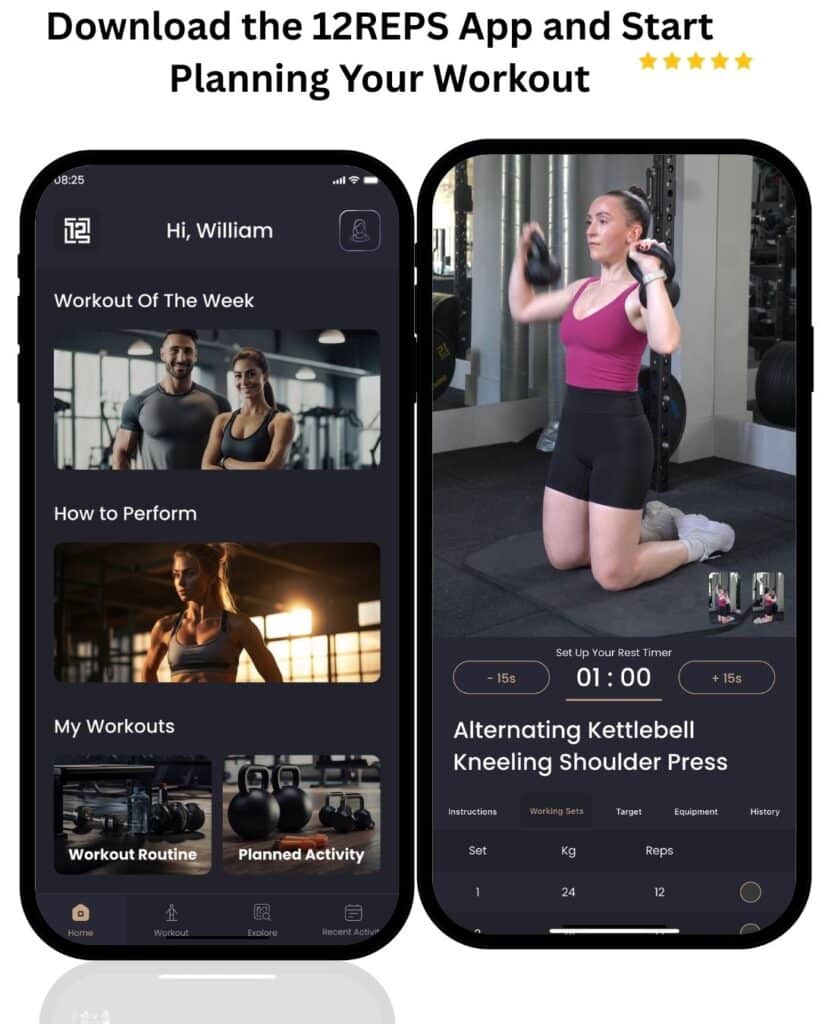
Answer quick questions (goal, experience, equipment available), and app generates complete chest workouts instantly. No guessing what exercises to do, no wandering around gym wondering what’s next.
How it works for chest:
- Select goal: “Build bigger chest”
- Input experience: “Intermediate”
- Choose equipment: “Full gym access”
- Get instant workout: Complete chest session with incline press, flat press, dips, flies
If you only have dumbbells at home, app generates dumbbell chest variations. If you’re in hotel gym with limited equipment, app adapts. Your workout always matches YOUR available equipment.
Will’s workout generation benefit: “Client wastes 10 minutes every session deciding exercises. 12REPS solves this. Open app, chest workout ready. Incline barbell 4 sets, flat dumbbell 3 sets, cable flies 3 sets. Execute it. Track it. Progress. That’s how chest growth works.”
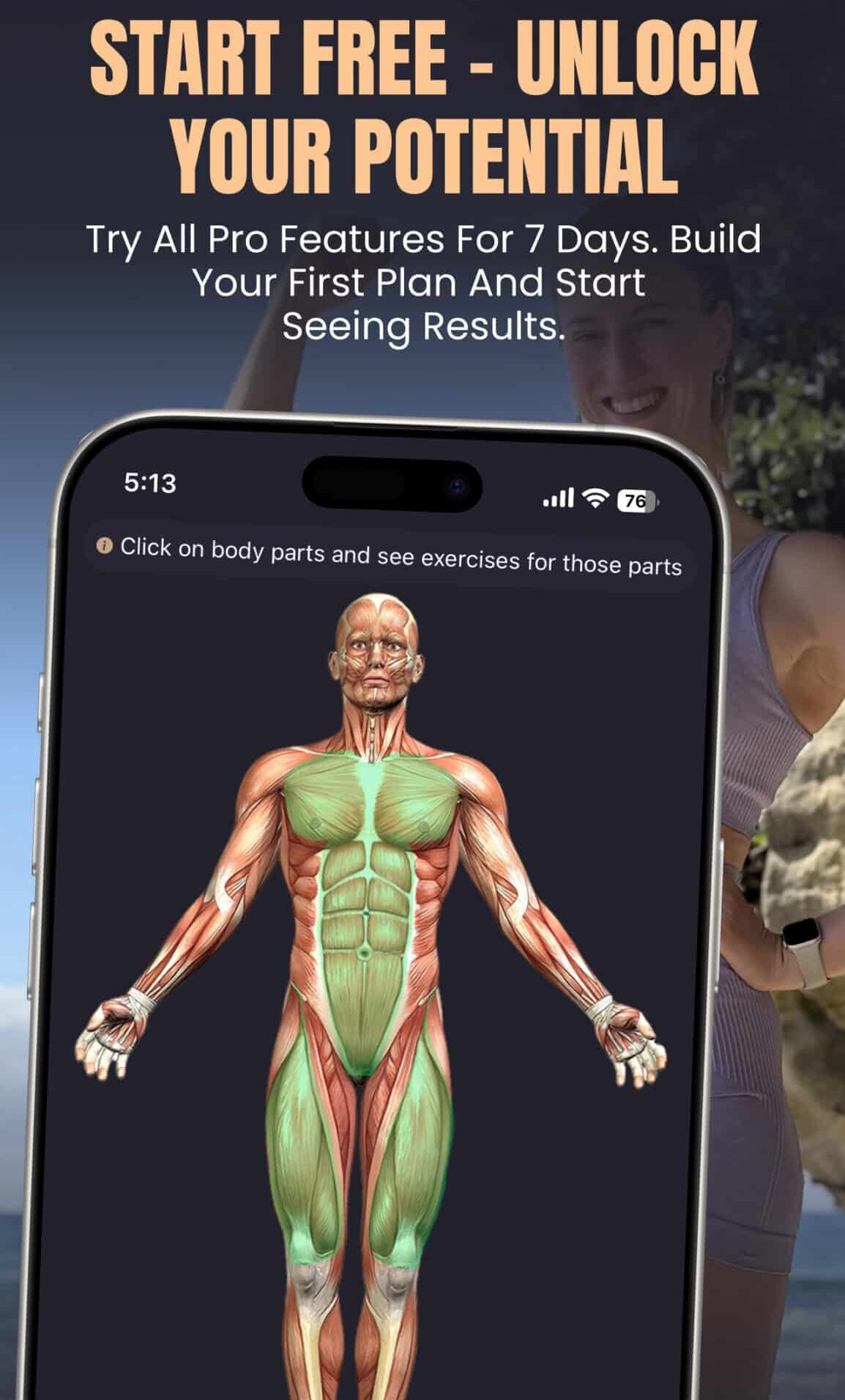
Try 12REPS free for 7 days. Get instant chest workouts generated for YOUR equipment. Stop wandering gym with no plan. Start executing structured chest training immediately.
Solution 2: Effortless Progressive Overload Tracking
What 12REPS provides:
Log every chest workout in seconds. App shows you exactly what you lifted last session and what to aim for this session.
How tracking works for bench press:
- Last chest workout: Incline barbell 70kg × 8, 7, 6 reps
- Today’s target: Beat last session (aim for 70kg × 8, 8, 7 or 8, 7, 7)
- Log actual performance: 70kg × 8, 8, 7 (progression achieved)
- App tracks everything: You see chest strength increasing weekly
Why tracking is critical: You can’t remember what you benched last Thursday. Was it 70kg for 8, 8, 7 or 70kg for 8, 7, 7? Without knowing, you can’t systematically progress. With 12REPS tracking, you know exactly what to beat.
Will’s tracking requirement: “Every client tracks workouts. Client not tracking does random weights, bench press stuck at 80kg for 4 months. Client tracking with 12REPS progresses from 60kg to 95kg in 8 months. Tracking equals chest growth.”
Try 12REPS free for 7 days. Log your chest workouts in seconds. See your performance history. Know exactly what to beat each session. Progressive overload guaranteed.
Solution 3: Automatic Weight Progression Recommendations
What 12REPS automates:
App gives you weight recommendations based on your performance history. When you consistently hit targets, it tells you to increase weight.
How progression works:
- Week 1: Incline bench 70kg × 8, 7, 6 reps (app notes this)
- Week 2: Target 70kg × 8, 8, 7 reps (slight improvement)
- Week 3: Hit 70kg × 8, 8, 8 reps (target met, all sets hit 8 reps)
- Week 4: App recommends 72.5kg × 6, 6, 5 reps (progression continues)
Why automatic recommendations matter: Progressive overload is essential for chest growth. 12REPS handles this intelligently. You execute workouts, track performance, app ensures you progress systematically.
Real client example: Tom started incline benching 50kg when beginning chest focus. Six months later, 12REPS had progressed him to 80kg. His upper chest transformed from flat to impressive shelf-like appearance. Progressive overload made the difference.
Will’s progression system: “If client’s incline bench isn’t increasing every 2 to 4 weeks, something wrong with programme or recovery. 12REPS tracking shows this immediately. Stalled progress visible, adjustments made.”
Try 12REPS free for 7 days. Get automatic weight recommendations for all chest exercises. Stop guessing when to increase. Let app handle progressive overload based on your actual performance.
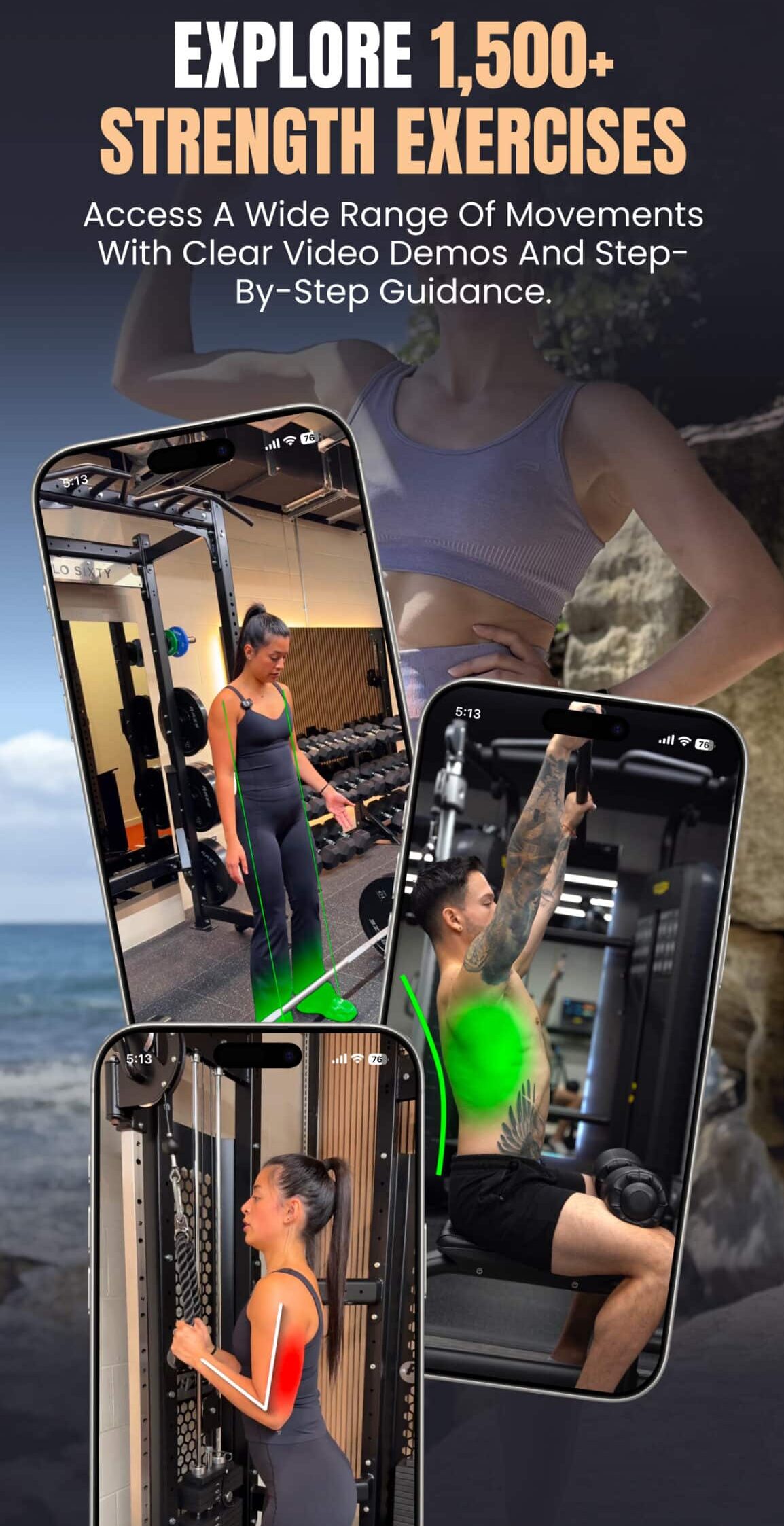
Solution 4: 1,500+ Exercise Library for Perfect Form
What 12REPS provides:
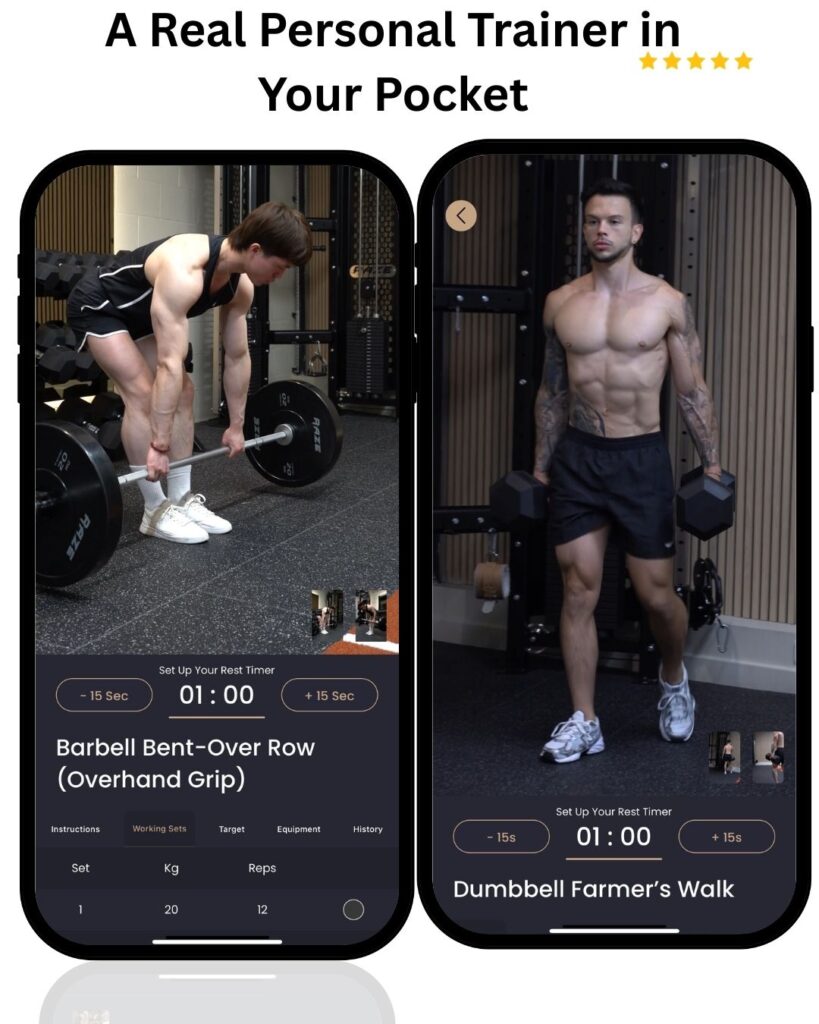
Every chest exercise includes professional video demonstration. You see exactly how to perform incline press, flat press, dips, flies with perfect form.
How exercise library works:
- Search “chest exercises”
- Filter by equipment (barbell, dumbbell, cable, machine, bodyweight)
- Watch video demo (proper form, common mistakes, Will’s coaching cues)
- Add to workout or follow generated programme
Why video demos matter for chest: Poor bench press form builds shoulders and triceps, not chest. Proper form (bar path, elbow angle, shoulder blade position, depth) maximises pec stimulus whilst minimising injury risk.
Will’s form requirement: “Poor form equals poor chest development and potential shoulder injury. 12REPS video library shows proper technique for incline press, flat press, flies, dips. Clients watch demos, learn form, execute properly, chest grows safely.”
Your Chest Growth Timeline (What to Expect)
Months 1 to 3: Foundation and Neural Adaptation
What’s happening:
- Learning proper form on key movements (incline press, flat press, dips, flies)
- Strength increasing rapidly (primarily neurological, not muscle growth yet)
- Minimal visible chest changes (frustrating but normal)
Typical strength progression:
- Incline bench: 50kg to 65kg
- Flat bench: 60kg to 80kg
- Dips: Bodyweight 8 reps to bodyweight 12 reps
Visual changes: Slight chest fullness, maybe colleagues notice you’re training, but nothing dramatic yet.
Will’s month 1 to 3 reality: “Client James frustrated month 2. ‘Chest looks same.’ But incline bench up 15kg already. I explain nervous system adapting first, muscle growth coming. Month 4 to 6, chest finally visibly grows. Timeline expectations critical.”
Months 4 to 6: Visible Growth Phase
What’s happening:
- Actual muscle growth now occurring (hypertrophy phase)
- Upper chest developing (shelf-like appearance emerging)
- Overall chest thickness increasing
- Strength still progressing steadily
Typical strength progression:
- Incline bench: 65kg to 80kg
- Flat bench: 80kg to 95kg
- Dips: Bodyweight 12 reps to +10kg × 10 reps
Visual changes: Colleagues definitely notice. “You been training chest?” T-shirts fitting differently across chest. Clear upper chest development visible in mirror.
Will’s month 4 to 6 transformation: “Same client James, month 5. Upper chest obviously developed, overall chest filling out t-shirts. From flat undefined chest to legitimate pec development. This is when clients get excited, progress becomes visible.”
Months 7 to 12: Impressive Chest Development
What’s happening:
- Well-developed upper and middle chest
- Defined pec line visible
- Impressive thickness and width
- Strength at intermediate to advanced levels
Typical year 1 strength:
- Incline bench: 80kg to 95kg+
- Flat bench: 95kg to 110kg+
- Dips: +15kg to +25kg × 10 reps
Visual changes: Chest is now a standout body part. Genuinely impressive pec development. People ask what your chest routine is.
Will’s year 1 chest development: “Client Tom, started with flat undefined chest, could barely incline bench 45kg. Month 12: incline benching 85kg, flat benching 105kg, upper chest shelf-like, overall chest thick and wide. Complete transformation. Year 1 with proper training changes everything.”
Common Chest Training Mistakes (Avoid These)
Mistake 1: Only Training Flat Bench
Why it’s terrible: Underdeveloped upper chest (clavicular head), unbalanced appearance, chest looks flat even with some size.
The fix: Every chest session includes incline pressing. Minimum 50% of pressing volume should be incline work (30 to 45 degrees).
Will’s incline emphasis: “Client doing only flat bench for 18 months. Decent middle chest, completely flat upper chest. Add incline pressing as priority. Six months later, upper chest transformed. Ratio matters: 50% incline, 50% flat.”
Mistake 2: Neglecting Progressive Overload
Why it’s terrible: Your chest has zero reason to grow if stimulus never increases. Same weights, same reps, same chest size month after month.
The fix: Track every workout. Aim to beat previous performance (more weight, more reps, or more sets) every 2 to 4 weeks. Use 12REPS to automate this.
Will’s progression requirement: “Client benching same weights 5 months, zero chest growth. Implement tracking and systematic progression. Next 6 months, chest grows dramatically. Progressive overload is non-negotiable.”
Mistake 3: Poor Form Letting Shoulders Take Over
Why it’s terrible: Bench pressing with flared elbows (90 degrees from torso), excessive arching, bouncing bar off chest, not controlling negative. Your shoulders and triceps do all the work, chest barely stimulated.
The fix: Learn proper form via 12REPS video library. Elbows at 45 degrees, controlled 2 second negative, pause on chest, explosive press, maintain shoulder blade retraction throughout.
Will’s form correction: “Client complaining chest not growing despite benching 90kg. Watch his form: elbows flared, bouncing bar, no control. Fix form, drop to 70kg with proper technique. Chest immediately feels it. Within 3 months, back to 90kg with correct form, chest actually growing now.”
Mistake 4: Insufficient Volume
Why it’s terrible: Chest needs 12 to 20 sets weekly for optimal growth. Client doing 6 sets weekly wonders why chest isn’t growing.
The fix: Programme 12 to 20 sets weekly across two sessions. Beginners start lower end (12 to 14 sets), intermediates middle (14 to 18 sets), advanced higher (16 to 20 sets).
Will’s volume guidance: “Client doing 8 sets weekly, minimal growth. Increase to 16 sets (two sessions, 8 sets each). Chest growth accelerates immediately. Volume matters, but quality matters more.”
The Bottom Line
Building a bigger chest requires:
✅ Hitting chest from multiple angles (incline for upper chest, flat for middle, dips for lower)
✅ Progressive overload on key movements (weights increasing every 2 to 4 weeks)
✅ Sufficient weekly volume (12 to 20 sets depending on experience level)
✅ Training chest twice weekly (superior to once weekly frequency)
✅ Proper form (actually targeting pecs, not shoulders and triceps)
✅ Consistent tracking (knowing what to beat each session)
✅ Patience (visible changes take 4 to 6 months, impressive development 8 to 12 months)
Will’s decade of chest training experience:
✅ “Upper chest development changes everything. Client doing only flat bench has flat appearance. Client doing 50% incline work has impressive, full chest with shelf-like upper pec development”
✅ “Dumbbells build more chest mass than barbell for most clients. Greater range of motion, better stretch, superior contraction. Programme 50/50 barbell and dumbbell work”
✅ “Every chest workout finishes with isolation. Cable flies or pec deck ensure chest actually worked, not just assisted whilst shoulders and triceps did heavy lifting”
✅ “Client tracking workouts with systematic progression increases incline bench 50kg to 85kg in 8 months. Client not tracking stays stuck at same weights for months. Tracking equals growth”
✅ “Proper bench press form matters enormously. Elbows at 45 degrees, controlled negative, pause on chest, explosive press. Poor form builds shoulders, proper form builds chest”
✅ “Training chest twice weekly produces significantly better growth than once weekly. Two growth stimuli weekly versus one equals dramatically more development over time”
✅ “Client Tom month 12: incline benching 85kg from 45kg, flat benching 105kg from 60kg, upper chest shelf-like, overall chest thick and wide. Complete chest transformation with proper programming”
Why 12REPS solves the execution challenge:
✅ Instant chest workout generation (based on YOUR equipment, no wandering gym wondering what to do)
✅ Effortless tracking (log sets, reps, weights in seconds, see performance history)
✅ Automatic progressive overload (app recommends when to increase weight based on your performance)
✅ 1,500+ exercise video library (learn perfect form on incline press, flat press, dips, flies)
✅ Equipment flexibility (works with full gym, home dumbbells, hotel gym, bodyweight only)
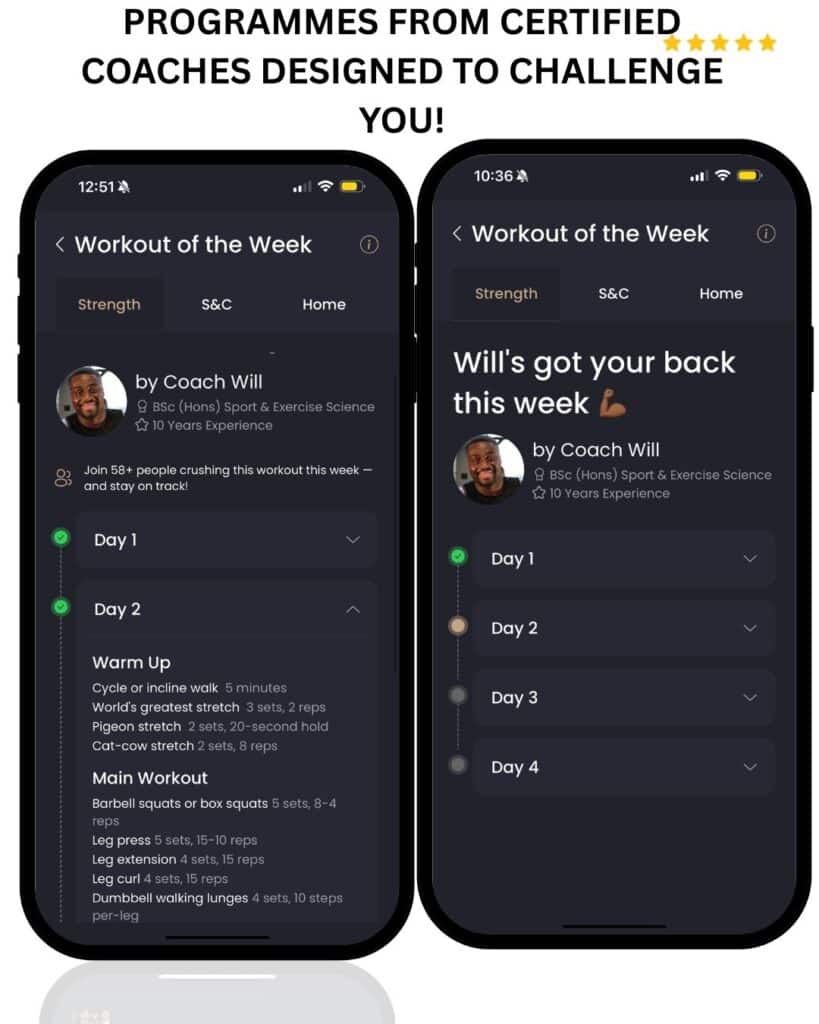
✅ Will Duru’s expertise (every workout created by certified trainer with 10+ years experience)
Try 12REPS free for 7 days. Get instant chest workouts, track every session, ensure progressive overload on incline bench, flat bench, dips. Stop doing random chest sessions with no structure. Start building impressive, muscular pecs with intelligent training.
Stop neglecting upper chest. Stop benching same weights for months. Get structured chest programming. Download 12REPS. Follow incline and flat pressing with progressive overload. Add isolation work. Track everything. Watch your chest transform over 6 to 12 months.