


By Will Duru, BSc (Hons) Sport and Exercise Science Award-winning Personal Trainer with over 10 years of experience in strength training and optimising recovery.
You’ve embraced strength training, but now you’re facing a new puzzle: how often should you actually do it? Is more always better? Should you be training five, six, or even seven days per week? Or is there a magic number of days for seeing results without burning out?
In my experience training busy women in the City of London, this is a huge point of confusion. Some feel guilty for not training every day, convinced they’re not doing enough. Others worry they’re overtraining and sabotaging their progress. I recently had a client, Emma, who was frustrated because she was training six days a week but not seeing the results she expected. When we cut her down to three focused strength sessions plus one active recovery day, her progress exploded. My passion is to help you find the minimum effective dose—the least amount of training you can do to get the best possible results.
Forget the “all or nothing” mindset. This guide will give you clear, evidence-based recommendations for your training frequency, whether you’re a complete beginner or a seasoned lifter. More importantly, I’ll show you how to structure your week for optimal recovery and sustainable progress.

The Science of Recovery and Growth
Before we talk about specific numbers, you need to understand a fundamental truth about how your body builds strength.
Muscle Protein Synthesis
Muscles don’t actually grow during your workout. When you lift weights, you create tiny micro-tears in your muscle fibers. It might sound damaging, but this is exactly what triggers the adaptation process. The magic happens in the twenty-four to forty-eight hours after your workout, when your body repairs these tears and rebuilds the muscle tissue stronger and slightly denser than before. This process is called muscle protein synthesis, and it’s the foundation of all strength gains.
This is why what you do between workouts is just as important as the workouts themselves. Sleep, nutrition, and rest are not optional extras, they’re essential components of getting stronger.
The Importance of Rest
Training the same muscle group every single day is counterproductive. More is not always better. If you don’t give your muscles adequate time to recover, you’re perpetually breaking them down without giving them the chance to rebuild stronger. The result? Stagnation, fatigue, increased injury risk, and frustration when you’re not seeing progress despite your effort.
Think of it like this: if you tear a piece of fabric and then keep pulling on it before it can be repaired, you’ll just make the tear worse. But if you let someone mend it properly, it can come back even stronger than before. Your muscles work the same way.
Research on Training Frequency
Scientific research provides clear guidance here. Studies examining training frequency consistently show that hitting each muscle group twice per week produces optimal results for muscle growth in most people. Training a muscle group once per week can produce gains, but it’s generally less effective than twice weekly. Training the same muscles more than twice per week doesn’t typically provide additional benefits and can interfere with recovery.
This doesn’t necessarily mean you need to train only two days per week, it means that however you structure your routine, each major muscle group should be trained approximately twice weekly for best results.

Recommendations Based on Your Goals and Level
Let’s get specific. Here are my recommendations based on training experience and goals.
For the Beginner (Goal: Build a Foundation & Consistency)
Recommendation: 2-3 strength training days per week, using a full-body routine, plus 1 active recovery day.
Why this works: This frequency allows you to learn the fundamental movement patterns, build a base of strength, and establish the habit of showing up consistently, all while giving your body ample time to recover. As a beginner, you’re learning new motor patterns and your nervous system is adapting significantly. You don’t need high volume to see progress, you need consistency and proper recovery.
Sample Schedule:
Two-day option:
- Monday: Full-Body Strength
- Thursday: Full-Body Strength
- Saturday: Active Recovery (mobility, yoga, deep breathing)
Three-day option:
- Monday: Lower-body
- Wednesday: Upper-body
- Friday: Full-Body Strength
- Sunday: Active Recovery (mobility, yoga, deep breathing)
What I tell my beginner clients: “Your primary goal right now isn’t to destroy yourself in the gym. It’s to build a sustainable habit and learn proper form. Two to three focused sessions per week, where you’re truly present and working with good technique, will deliver better results than five mediocre sessions where you’re just going through the motions.”
The active recovery day: This is crucial and often overlooked. I always advise my female clients to include one dedicated active recovery day per week. This isn’t sitting on the couch—it’s intentional movement that promotes recovery. Spend thirty to forty-five minutes on mobility work, gentle yoga flows, and deep breathing exercises. This helps reduce muscle soreness, improves flexibility, manages stress, and maintains your movement habit without taxing your recovery systems.
For the Intermediate (Goal: Maximize Muscle Growth & Strength)
Recommendation: 3-4 strength training days per week, using an upper/lower split or a push/pull/legs routine, plus 1 active recovery day.
Why this works: At this stage, you need increased volume and intensity to continue progressing. Your body has adapted to basic training, so you need more targeted work for each muscle group. A split routine allows you to increase the volume per muscle group while still maintaining adequate recovery. Hitting each muscle group twice per week is the sweet spot supported by research.
Sample Schedule:
Upper/Lower Split (4 days):
- Monday: Upper Body
- Tuesday: Lower Body
- Thursday: Upper Body
- Friday: Lower Body
- Sunday: Active Recovery (mobility, yoga, deep breathing)
Push/Pull/Legs (3 days):
- Monday: Push (chest, shoulders, triceps)
- Wednesday: Pull (back, biceps)
- Friday: Legs
- Saturday: Active Recovery (mobility, yoga, deep breathing)
What I tell my intermediate clients: “You’ve built your foundation. Now it’s time to add structure and intensity. The split routine allows you to work harder on each muscle group because you’re not trying to train everything in one session. But don’t skip that active recovery day, it’s what allows you to train hard consistently.”
For the Advanced / Time-Crunched (Goal: Maintain or Specialised Training)
Recommendation: This varies significantly based on specific goals.
Advanced lifters with specific goals: 4-5 days per week with specialised programming targeting particular muscle groups or strength goals. At this level, you likely know your body well and may be following periodised programs with varying intensities.
Time-crunched individuals wanting to maintain strength: 2-3 well-structured days per week can absolutely maintain your strength and muscle mass. The key is making those sessions count with compound movements and sufficient intensity. Add your active recovery day, and you have a sustainable long-term approach.
The Role of a Workout Tracker
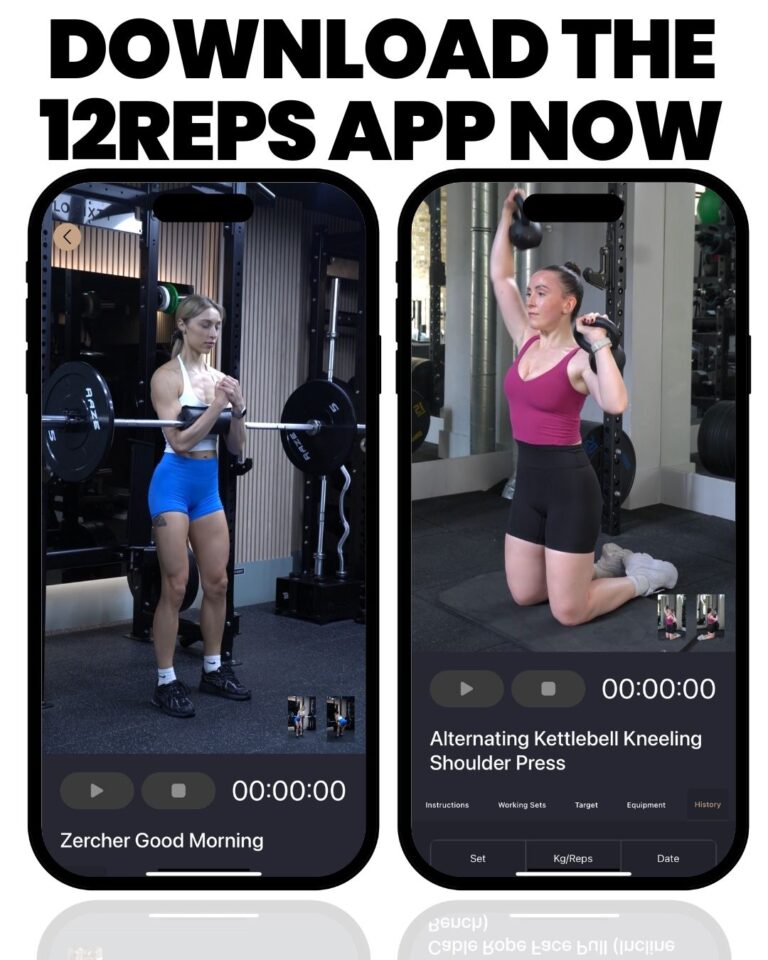
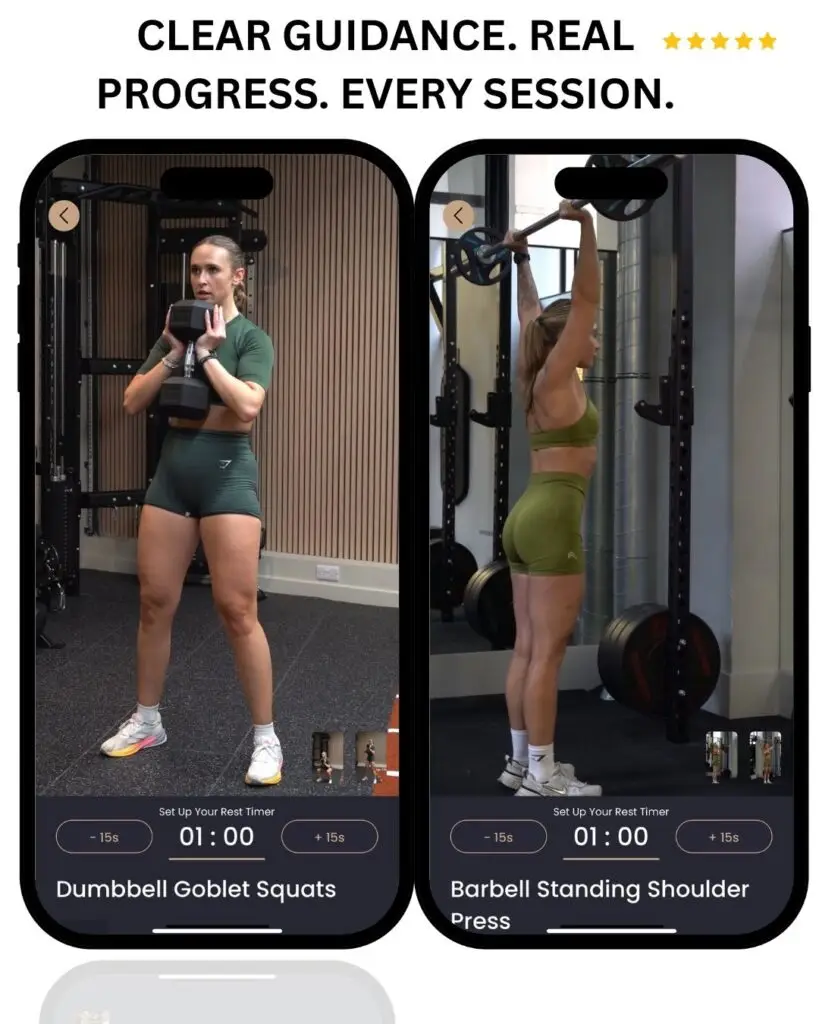
Your schedule needs structure and accountability. The 12reps app is the best strength training app for planning and logging your weekly workouts. You can build your weekly schedule, see your training frequency at a glance, and track whether you’re hitting each muscle group with appropriate frequency. Download it for a free trial and experience how much easier it is to maintain consistency when you have a clear plan.
Quality Over Quantity
Let’s address a critical point: what you do during your workouts matters far more than how many days per week you train.
The Importance of Intensity
A forty-five-minute focused, intense workout where you’re fully present, lifting challenging weights with excellent form, and pushing yourself appropriately is far better than two hours of half-hearted training where you’re distracted, resting too long between sets, and not challenging yourself.
I’d rather have a client train three days per week with genuine intensity and focus than five days per week where they’re just going through the motions. The quality of your training sessions determines your results, not just the quantity.
Listen to Your Body
Some weeks you’ll feel full of energy and ready to tackle every workout with enthusiasm. Other weeks, stress from work, poor sleep, or life demands will leave you feeling depleted. It’s not only okay to take an extra rest day when you genuinely need it, it’s smart training.
Being rigid about always hitting a specific number of training days regardless of how you feel is a recipe for burnout or injury. Flexibility within structure is key to longevity in fitness. If you’re scheduled to train but you’re exhausted, consider making that day an active recovery day instead, or simply taking complete rest. One missed workout won’t derail your progress, but pushing through when your body is telling you to rest can.
Conclusion
The perfect training frequency is the one you can stick to consistently. Don’t let the pursuit of the “perfect” program be the enemy of the good. Pick a schedule that fits your life, your recovery capacity, and your current training level, and then show up and do the work.
To recap: beginners thrive on two to three full-body sessions per week, intermediate lifters see excellent results with three to four sessions using split routines, and advanced lifters or those pressed for time can maintain strength with two to three focused sessions. Regardless of your level, include one active recovery day each week for mobility, yoga, and deep breathing work.
Remember that consistency over months and years matters more than perfection in any single week. Life will occasionally interfere with your ideal schedule. That’s normal. What matters is your pattern over time, not any individual week.
Plan your training week in your workout log and commit to it. Build in that active recovery day. Track your sessions. And trust that showing up consistently with appropriate frequency and intensity will deliver the results you’re seeking. Consistency is your superpower.