




By Will Duru, BSc (Hons) Sport and Exercise Science Award-winning Personal Trainer with over 10 years of experience in strength training and optimising recovery
You’ve been putting in the work at the gym, and you’re asking the big question: “When will I actually see results?” In a world of instant gratification, where we can order food with a tap and stream any film immediately, it’s hard to stay patient with a process that unfolds over weeks and months. But understanding the realistic timeline of progress is key to staying motivated and not giving up prematurely.
I get this question from almost every new client I train in the City of London. They want to know the magic date when they’ll wake up with their dream body, or at minimum, when they can expect to see something, anything, change. My passion is to help them shift their focus from obsessing over a single destination to celebrating the small wins along the journey. The truth is, the results are happening long before you might see them in the mirror.
This article will give you a realistic, science-backed timeline for what results you can expect and when, from the immediate neurological gains that happen in your first few weeks to the long-term aesthetic changes that develop over months of consistent training.

The First 2 to 4 Weeks: The Invisible Wins
What’s Happening
The first results you’ll experience are neurological, not muscular. Your body is getting smarter. Your brain is learning how to communicate with your muscles more efficiently, recruiting more muscle fibres and coordinating movement patterns better. You’re not necessarily building bigger muscles yet, but you’re learning how to use the ones you have more effectively.
This neural adaptation is why beginners often see rapid strength gains in their first few weeks. You might add 2kg to your squat every week initially, not because you’ve built that much new muscle, but because your nervous system is becoming more efficient at the movement.
What You’ll Feel
During these first few weeks, you’ll notice improved coordination and balance. Exercises that felt awkward and clumsy at first will start to feel more natural. The goblet squat that had you wobbling will become stable. The row that had you guessing where to position your body will start to feel intuitive.
You might feel a bit stronger, able to lift slightly more weight or complete an extra rep or two. You’ll also likely experience delayed onset muscle soreness, especially after your first few sessions. This soreness is normal and typically decreases as your body adapts.
The Importance of Tracking
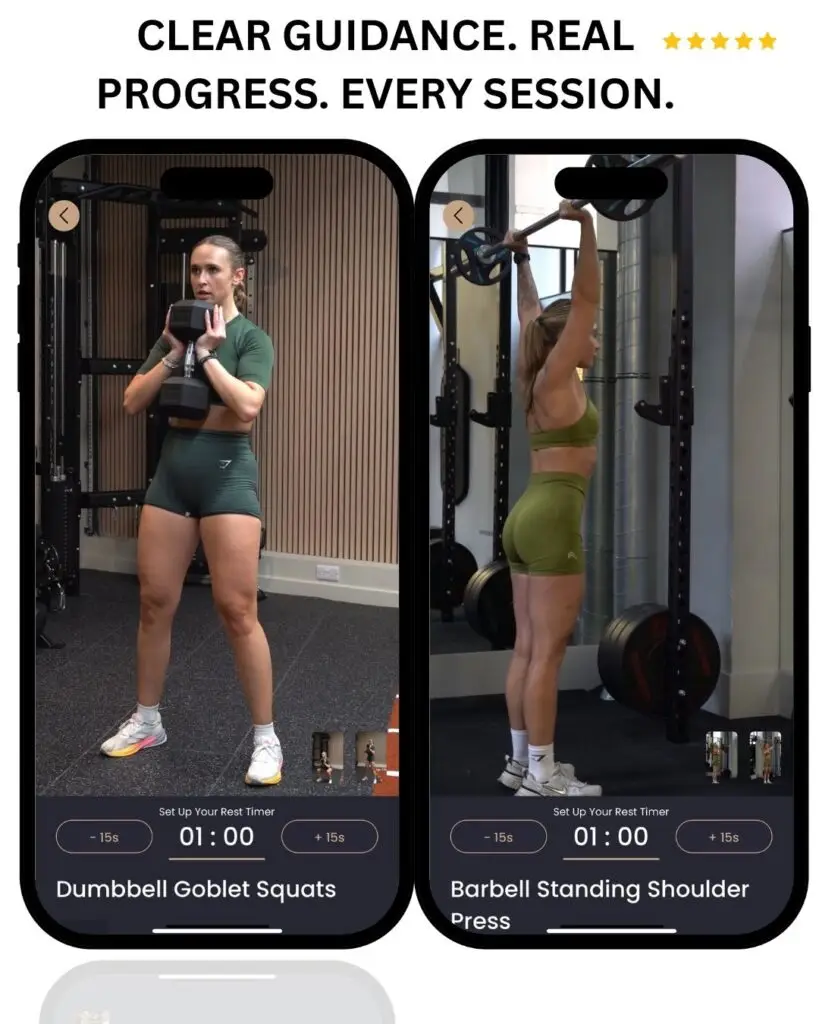
This is precisely why you must use a workout tracker from day one. The 12reps app will show you these invisible wins that you might otherwise miss. Seeing that you lifted 8kg last week and 9kg this week is concrete proof that you’re making progress, even if you don’t see changes in the mirror yet. It’s the best strength training app for maintaining motivation through this early phase. Download it for a free trial and start documenting every victory.
Weeks 4 to 8: The First Visible Changes
What’s Happening
This is when muscle hypertrophy, the actual growth of muscle tissue, starts to become more significant. Your body has built the neural foundation, and now it’s starting to lay down new muscle protein. Research shows that measurable increases in muscle size typically begin around the four to six week mark for beginners following a consistent programme.
What You’ll See and Feel
Your muscles may feel firmer or harder to the touch, even if they don’t look dramatically different yet. This is increased muscle density and tone. You might notice some subtle changes in the mirror, perhaps a bit more definition in your arms or shoulders, or your legs looking slightly more shaped.
Your clothes might start to fit differently. Interestingly, this doesn’t always mean they feel looser. If you’re building muscle, some clothes might feel tighter in certain areas like your shoulders or thighs, whilst potentially feeling looser around your waist if you’re also losing fat.
You’ll definitely be lifting heavier than when you started. The weights that challenged you in week one should feel noticeably easier now, and you should have progressed to heavier loads.

Factors That Influence Your Timeline
Several factors affect how quickly you’ll see results:
Consistency: This is the number one factor. You’ll see better results from three consistent workouts per week for twelve weeks than from five inconsistent ones over the same period. Missing workouts here and there dramatically slows progress.
Nutrition: You can’t out-train poor nutrition. Getting adequate protein (roughly 1.6 to 2.2g per kilogram of bodyweight daily) is crucial for muscle growth. Overall calorie intake also matters, you need sufficient energy to fuel muscle building.
Sleep: Muscles are built whilst you sleep, not whilst you train. Training provides the stimulus, but recovery and adaptation happen during rest. Prioritise seven to nine hours of quality sleep per night.
Genetics: Genetics do play a role in how quickly you build muscle and where you tend to store fat. However, hard work and consistency matter far more than genetic advantages. Everyone can build significant strength and improve their physique with proper training.

Conclusion
Patience is a superpower in the world of fitness. The results you want are coming, but they unfold over weeks and months, not days. Trust the process, stay consistent, and celebrate the small wins along the way.
Remember the timeline: neurological gains in weeks one to four, first visible changes in weeks four to eight, clear transformation by months three to six, and continued refinement beyond. Every single workout is contributing to your progress, even when you can’t see it yet.
Look back at your first entry in your workout log. Compare it to today. That’s all the proof of progress you need. The numbers don’t lie. You’re stronger, more capable, and further along your journey than you were when you started. The results will come, I promise.