



By Will Duru, BSc (Hons) Sport and Exercise Science. Award-winning Personal Trainer with over 10 years of experience in strength training and optimising recovery
Menopause changes how your body responds to running. Declining oestrogen affects cardiovascular function, temperature regulation, and muscle maintenance. But you can adapt and continue running successfully with the right strategies.

What's Happening to Your Body
Hormonal Impact on Performance
Oestrogen is crucial for cardiovascular function, muscle protein synthesis, and temperature regulation. As levels drop, you’ll experience significant changes that directly impact running performance.
Your VO2 max decreases by 10-15% compared to premenopausal levels. This means your body becomes less efficient at using oxygen during exercise, which explains why runs that used to feel easy now leave you breathless.
Fat-burning efficiency also declines. Before menopause, women naturally burn fat better during exercise. After menopause, this ability decreases, affecting endurance performance and making weight management more challenging.
Muscle mass loss is perhaps the most significant change. Women can lose up to 8% of their muscle mass per decade after menopause, affecting running economy, power output, and metabolic rate. This is why strength training becomes absolutely essential.
Temperature Regulation Challenges
The hypothalamus, your body’s thermostat, becomes less stable due to hormonal fluctuations. This leads to hot flushes and makes temperature regulation during exercise much more difficult.
During exercise, menopausal women have a narrower comfort zone for temperature. You feel hot more quickly and struggle to cool down efficiently. Your sweat response changes too – some women experience delayed sweating, whilst others sweat excessively.
Regular exercise can reduce hot flush frequency over time, but intense sessions can trigger them. This creates a challenging cycle where the activity that helps manage symptoms becomes difficult to tolerate.
Practical Running Strategies
Temperature Management
Summer becomes particularly challenging. Run early morning (5:00-7:00 AM) when temperatures are coolest, or after 7:00 PM. Map out routes through parks and tree-lined streets, avoiding exposed areas during peak sun hours.
Many menopausal runners discover that winter becomes their favourite season. The cooler external temperatures help counteract internal heat generation during exercise.
For indoor running, position yourself near air conditioning or fans. A completed slow run is better than an abandoned fast one.
Clothing Essentials
Invest in moisture-wicking fabrics with enhanced cooling properties. Look for materials with silver threading or specialised cooling fibres. Avoid cotton completely – it retains moisture and heat, making temperature regulation worse.
Develop a layering system that allows quick adjustments: moisture-wicking base layer, light removable outer layer, and lightweight jacket that ties around your waist.
Cooling accessories can be game-changers: neck wraps you soak in cold water, cooling towels, damp bandanas, or small handheld fans for post-run cooling.
Redefine Success
Stop chasing previous pace times. The health benefits of running – cardiovascular protection, bone density maintenance, mood regulation, and cognitive function – come from regular moderate exercise, not necessarily fast-paced running.
Success during menopause looks different:
- Running consistently through hormonal fluctuations
- Maintaining a positive relationship with exercise
- Adapting successfully to your body’s changes
- Finding joy in movement regardless of pace
You’re not a “former” runner or a “slower” runner. You’re a runner who has adapted to life’s changes whilst maintaining your commitment to health.
Training Adjustments
Menopause often disrupts natural energy patterns. Experiment with different running times and track your energy levels. Keep a simple log noting how you feel at different times of day.
Run 3-5 times per week based on how you’re feeling rather than adhering to a rigid schedule. Some weeks you may feel energetic enough for 5 runs, whilst other weeks 3 quality runs may be more appropriate.
Use perceived exertion rather than strict heart rate zones to guide training intensity. Hormonal changes can affect heart rate response to exercise, making traditional zones less reliable.
Recovery becomes increasingly important. Plan for longer recovery periods between hard efforts and don’t hesitate to take extra rest days when your body signals the need. Add active recovery strategies like gentle walking, stretching, or light yoga on rest days.

Why Strength Training Is Non-Negotiable
Strength training transitions from beneficial to absolutely essential during menopause. Without adequate stimulus from resistance training, women can lose 3-8% of their muscle mass per year after menopause.
This directly affects running performance:
- Less muscle means reduced power output
- Decreased running economy
- Slower recovery
- Lower resting metabolic rate
Women lose up to 20% of bone density in the five to seven years following menopause. Whilst running provides some bone-building stimulus, resistance training is far more effective at maintaining and building bone density.
Research shows that menopausal women who combine aerobic exercise with resistance training experience better outcomes in body composition, bone density, cardiovascular health, and quality of life.
Specific Benefits for Runners
Power and strength gains help counteract the natural decline in fast-twitch muscle fibres, maintaining your ability to handle hills and varied pace running.
Injury prevention becomes increasingly important as recovery time lengthens. Strength training improves the resilience of muscles, tendons, and ligaments, reducing overuse injury risk.
The metabolic benefits are particularly valuable. Resistance training creates an “afterburn” effect, where your metabolism remains elevated for hours after your workout, helping counteract the decline in resting metabolic rate.
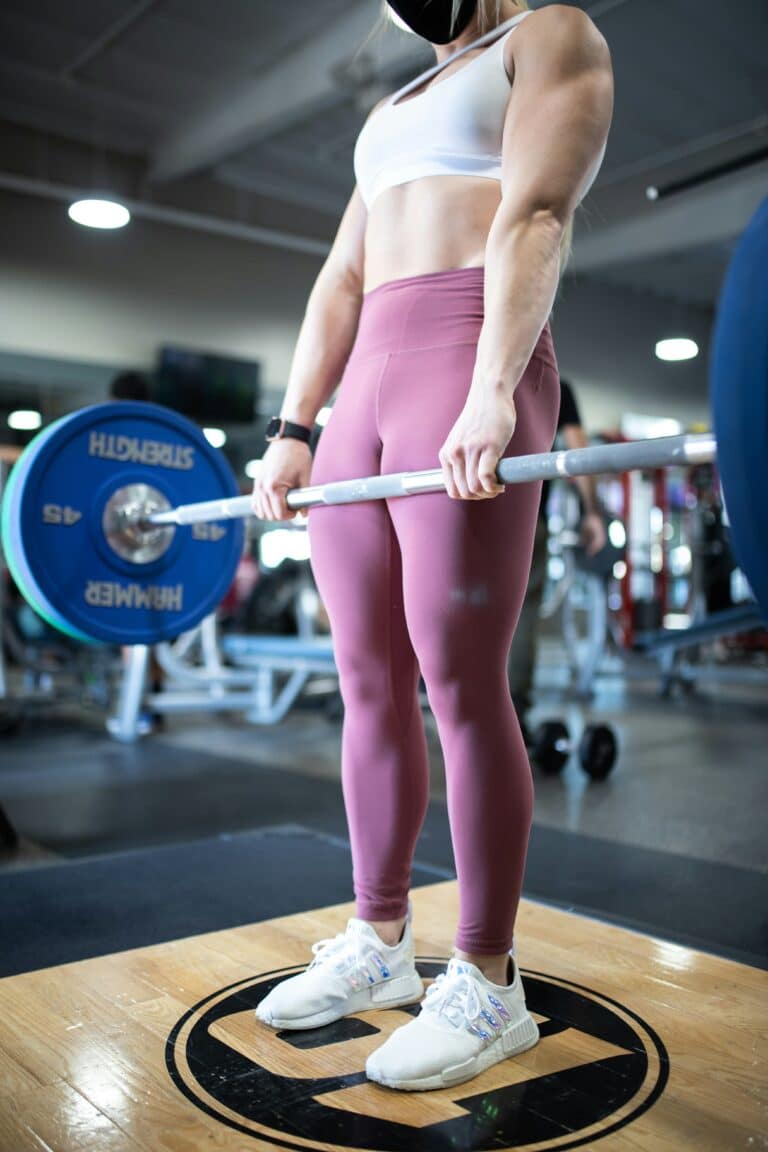
Your Strength Training Programme
Train twice per week with at least one full rest day between sessions. Each exercise: 1 warm-up set (lighter weight, 10-15 reps) + 3 working sets (heavier weight, 8-12 reps).
Workout A: Upper Body
Warm-Up (5-10 minutes)
- Arm circles: 10 each direction
- Band pull-aparts: 15 reps
- Press-ups: 10 reps
- Scapular wall slides: 10 reps
Superset 1 – Chest:
- 1A: Dumbbell Chest Press
- 1B: Resistance Band Chest Fly
Superset 2 – Back:
- 2A: Dumbbell Bent-Over Row
- 2B: Resistance Band Face Pulls
Superset 3 – Shoulders & Core:
- 3A: Dumbbell Shoulder Press
- 3B: Plank with Band Pull-Apart
Cool-Down (5-10 minutes)
- Chest doorway stretch: 30 seconds each side
- Overhead tricep stretch: 30 seconds each side
- Cross-body shoulder stretch: 30 seconds each side
- Deep breathing: 2 minutes
Workout B: Lower Body & Core
Warm-Up (5-10 minutes)
- Leg swings: 10 forward/back, 10 side-to-side each leg
- Hip circles: 10 each direction
- Bodyweight squats: 15 reps
- Glute bridges: 15 reps
Superset 1 – Quads:
- 1A: Dumbbell Goblet Squats
- 1B: Jump Squats
Superset 2 – Posterior Chain:
- 2A: Kettlebell Deadlifts
- 2B: Single-Leg Glute Bridges
Superset 3 – Lower Body Finisher:
- 3A: Dumbbell Reverse Lunges
- 3B: Single-Leg Calf Raises
Cool-Down (5-10 minutes)
- Standing quad stretch: 30 seconds each leg
- Standing calf stretch: 30 seconds each leg
- Figure-4 hip stretch: 30 seconds each leg
- Child’s pose: 60 seconds

Nutrition Strategies
Protein Requirements
Menopausal women who are active should aim for 1.2-1.6 grammes per kilogramme of body weight. For a 70kg woman, this means approximately 84-112 grammes of protein daily.
Timing matters. Consume 20-30 grammes of high-quality protein within 30 minutes after strength training to optimise muscle protein synthesis. For runners, having protein before and after longer runs helps minimise muscle breakdown.
Carbohydrates and Fats
Focus on complex carbohydrates with a lower glycaemic index to maintain stable blood sugar levels. The decline in oestrogen can affect insulin sensitivity, making this particularly important.
Healthy fats become increasingly important for hormone production and satiety. Omega-3 fatty acids may help reduce inflammation and support cardiovascular health.
Sugar and Hydration
Sugar elimination becomes particularly important. Hormonal changes can increase cravings for sweet foods whilst making the body less efficient at processing sugar. High sugar intake can worsen mood swings, energy fluctuations, and weight gain.
Focus on whole food sources like fruits, vegetables, and whole grains whilst avoiding processed foods with added sugars.
Maintain consistent water intake throughout the day rather than trying to hydrate heavily before exercise. Changes in temperature regulation make steady hydration more important.
Moving Forward
The journey of running through menopause isn’t about returning to who you were before. It’s about discovering who you can become with the wisdom and experience of this life stage.
Every woman’s experience with menopause is unique. What works for others may need adaptation for your specific situation. The key is approaching this journey with patience, self-compassion, and a willingness to experiment.
The combination of strategic running adaptations, comprehensive strength training, proper nutrition, and mindset shifts creates a powerful foundation for thriving through menopause. Your commitment to maintaining an active lifestyle during this challenging time is an investment in your long-term health.
Progress may not always be linear. There will be good days and challenging days, but each day you choose to move your body is a victory worth celebrating. The strength you develop, both physical and mental, will serve you well beyond this transitional period.
With the right strategies, support, and mindset, running during menopause can be one of the most empowering chapters of your fitness story.