



You’ve been squatting 50kg for 8 weeks. Same weight, same reps, same sets. You wonder why you’re not seeing results anymore.
Or maybe you’ve been adding weight aggressively every session—5kg here, 10kg there—and now your form is terrible and your joints ache.
The truth: Progressive overload is the single most important principle in strength training—but most people either ignore it completely or apply it incorrectly.
I’m Will Duru, a personal trainer with 10+ years’ experience in London. I’ve programmed progressive overload for thousands of training sessions across hundreds of clients, men and women, beginners and advanced.
My biggest observation: Without progressive overload, you’re just maintaining, not building. But progression must be systematic, not random. Client lifting same weights for months sees zero gains. Client adding too much weight too fast gets injured.
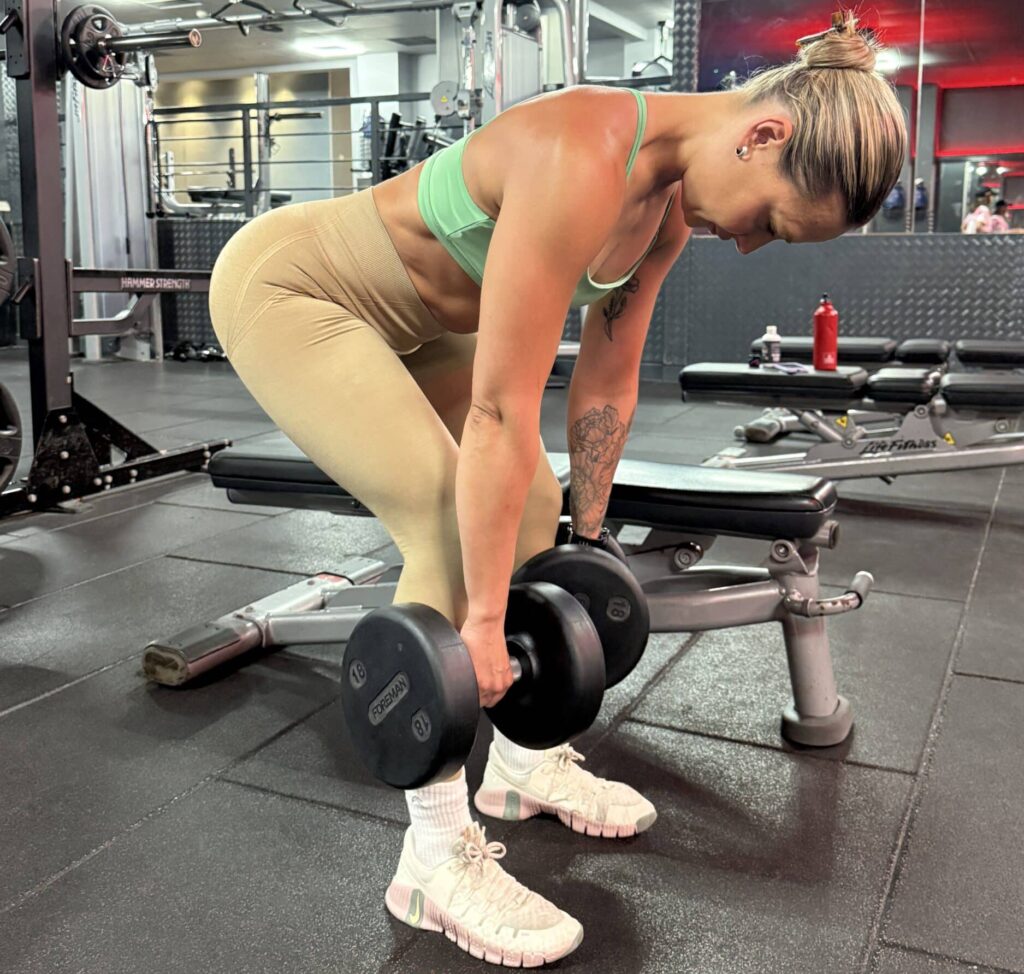
What Is Progressive Overload?
Definition: Gradually increasing the demands placed on your muscles over time to force continuous adaptation.
What happens when you progressively overload:
- Muscles adapt by growing stronger and larger
- Nervous system becomes more efficient at recruiting muscle fibres
- Bones, tendons, ligaments strengthen
- Metabolic capacity increases
What happens without progressive overload:
- Body adapts to current stimulus
- Muscle growth plateaus
- Strength gains stop
- You waste time maintaining instead of building
Will’s analogy: “Your body is lazy, it only adapts when forced to. If you squat 50kg every week, your body thinks: ‘I can handle this easily now, no need to change.’ You must continually increase demands to force adaptation.”

Why Progressive Overload Works
The physiological reality: Your body adapts to stress by getting stronger. Once adaptation occurs, the same stimulus no longer creates growth.
Research backing: Multiple studies show progressive overload is THE primary driver of muscle hypertrophy and strength gains. Without increasing training stimulus, progress stops within 4-8 weeks.
Will’s observation across 10+ years: “Client A trains consistently but uses same weights for 6 months—minimal gains. Client B systematically increases weight every 2-3 weeks—dramatic transformation. The difference is progressive overload.”
The 6 Methods of Progressive Overload
Method 1: Increase Weight (Most Common)
How: Lift heavier weight whilst maintaining same reps/sets.
Example:
- Week 1: Squats 50kg × 10 reps, 3 sets
- Week 4: Squats 52.5kg × 10 reps, 3 sets
- Week 8: Squats 55kg × 10 reps, 3 sets
How much to increase:
- Large compounds (squats, deadlifts): +2.5-5kg
- Upper body (bench, rows): +1.25-2.5kg
- Isolations (bicep curls): +1-2kg
When: Once you can complete all prescribed reps across all sets with good form.
Will’s rule: “If client hits 60kg × 10, 10, 10 for two consecutive sessions, we increase to 62.5kg next session. Weight goes up only when form stays perfect.”
Method 2: Increase Reps
How: Perform more reps with same weight.
Example:
- Week 1: RDLs 40kg × 8 reps, 3 sets
- Week 3: RDLs 40kg × 10 reps, 3 sets
- Week 5: RDLs 40kg × 12 reps, 3 sets
- Week 7: RDLs 45kg × 8 reps, 3 sets (increase weight, drop reps)
Why it works: 40kg × 8 reps = 320kg total. 40kg × 12 reps = 480kg total. You’ve lifted 160kg more volume.
Best for: When you can’t increase weight (limited equipment, home training, deload weeks).
Will’s application: “Home clients with fixed dumbbells progress via reps. Week 1: 15kg × 8 reps. Week 4: 15kg × 12 reps. Week 5: buy heavier dumbbells, restart at 8 reps.”
Method 3: Increase Sets
How: Add additional sets to exercises.
Example:
- Weeks 1-4: Hip thrusts 3 sets
- Weeks 5-8: Hip thrusts 4 sets
- Weeks 9-12: Hip thrusts 5 sets
Why it works: More total volume = more growth stimulus.
Limit: Diminishing returns above 20 sets per muscle weekly. Most people optimal at 12-18 sets per muscle.
Will’s caution: “Don’t just add sets indefinitely. I increase sets for lagging muscles only. Client’s glutes not growing—add 1-2 sets of hip thrusts. Don’t randomly add volume everywhere.”
Method 4: Increase Training Frequency
How: Train muscle groups more frequently per week.
Example:
- Months 1-3: Full body 3× weekly (each muscle 3× weekly)
- Months 4-6: Upper/lower 4× weekly (each muscle 2× weekly with higher volume per session)
Why it works: More frequent stimulus = more growth opportunities.
Best for: Intermediate/advanced lifters who’ve mastered technique.
Will’s progression: “Beginners: 3× weekly full body. After 6 months, can handle 4-5× weekly with splits. Advanced clients train 5-6× weekly. Frequency increases as recovery ability improves.”
Method 5: Decrease Rest Periods
How: Reduce rest time between sets whilst maintaining weight/reps.
Example:
- Weeks 1-4: 3 minutes rest between sets
- Weeks 5-8: 2.5 minutes rest
- Weeks 9-12: 2 minutes rest
Why it works: Increases metabolic stress, improves conditioning, greater fatigue = adaptation stimulus.
Caution: Only for hypertrophy/muscle growth goals. Strength training requires longer rest (3-5 minutes).
Will’s approach: “I reduce rest times for isolations and assistance work—bicep curls from 2 min to 90 sec. But heavy compounds stay at 3+ minutes. Don’t compromise performance on main lifts.”
Method 6: Increase Range of Motion or Tempo
How: Lift through fuller range of motion or slow down the movement.
Range of motion example:
- Months 1-2: Squats to parallel (thighs horizontal)
- Months 3-4: Squats below parallel (deeper)
Tempo example:
- Standard: 1 second down, 1 second up
- Tempo: 3 seconds down, 1 second pause, 1 second up
Why it works: Greater time under tension, more muscle fibres recruited, increased difficulty without adding weight.
Will’s use case: “Tempo training excellent for lighter deload weeks. Client normally squats 60kg standard tempo. Deload week: 50kg with 3-second eccentric. Feels harder but joints recover.”

Will's Practical Progressive Overload System
For Beginners (Months 0-6)
Primary method: Increase weight Frequency: Every 1-3 weeks Amount: +2.5-5kg compounds, +1-2kg isolations
Example 12-week progression (squats):
- Week 1: 20kg × 10 reps, 3 sets
- Week 3: 25kg × 10 reps, 3 sets
- Week 5: 30kg × 10 reps, 3 sets
- Week 7: 35kg × 10 reps, 3 sets
- Week 9: 40kg × 10 reps, 3 sets
- Week 11: 45kg × 10 reps, 3 sets
Will’s beginner expectation: “Beginners progress fastest—neurological adaptations. Adding 2.5-5kg every 2 weeks is normal first 3-6 months. After that, progression slows.”
For Intermediates (Months 6-24)
Primary methods: Increase weight + occasionally increase reps/sets Frequency: Every 2-4 weeks Amount: +2.5kg compounds, +1-2kg isolations
Example progression (hip thrusts):
- Weeks 1-3: 60kg × 10 reps, 3 sets
- Weeks 4-6: 65kg × 10 reps, 3 sets (increased weight)
- Weeks 7-9: 65kg × 12 reps, 3 sets (increased reps)
- Weeks 10-12: 70kg × 10 reps, 3 sets (increased weight, dropped reps)
Will’s intermediate approach: “Mix weight increases with rep increases. Keeps training varied, allows continued progression even when weight increases slow.”
For Advanced (24+ Months)
Primary methods: Combination—weight, reps, sets, frequency, tempo Frequency: Every 4-8 weeks Amount: +1.25-2.5kg compounds
Periodization example:
- Weeks 1-4: Volume phase (moderate weight, higher reps 10-12, 4-5 sets)
- Weeks 5-8: Strength phase (heavy weight, lower reps 4-6, 3 sets)
- Weeks 9-12: Hypertrophy phase (moderate-heavy, 8-10 reps, 4 sets)
Will’s advanced programming: “Advanced clients need varied stimulus—can’t just add weight forever. Use periodization, tempo changes, frequency manipulation. Keep body guessing.”

Common Progressive Overload Mistakes
Mistake 1: No Progression at All
The problem: Lifting same weights for months without any progression.
Why it’s wrong: Body fully adapted, no growth stimulus, wasting time.
Will’s typical case: “Client trains 6 months, frustrated by lack of results. Check training log—squatting 45kg entire time. I ask: ‘When did you last increase weight?’ She says: ‘I didn’t know I should.’ Now squatting 55kg, muscle growth obvious.”
The fix: Track every session. Aim to progress at least one variable every 2-4 weeks.
Mistake 2: Too Much Too Fast
The problem: Adding 5-10kg every session, form breaks down, injury risk.
Why it’s wrong: Body can’t adapt that quickly, connective tissue strengthens slower than muscles, overtraining risk.
Will’s immediate correction: “Client adds 10kg to deadlift each week. Week 1: 60kg perfect form. Week 3: 80kg with rounded back. I immediately reduce to 65kg. Explain: ‘Progression must be sustainable. Your muscles might handle 80kg but your spine doesn’t—slow down.'”
The fix: Maximum 10% increase per week, ideally 5%. Quality over speed.
Mistake 3: Changing Too Many Variables
The problem: Increasing weight AND reps AND sets simultaneously.
Why it’s confusing: Can’t track what’s driving progress, unsustainable, likely overtraining.
Will’s approach: “Change ONE variable at a time. Week 1-3: increase weight. Week 4-6: increase reps. Week 7-9: add a set. Systematic beats chaotic.”
The fix: Prioritize weight increases. Use rep/set increases when weight stalls.
Mistake 4: Ignoring Recovery
The problem: Pushing progression every single session without adequate rest.
Why it backfires: Overtraining, decreased performance, injury, burnout.
Will’s reality check: “Client trying to add weight every session, training 6× weekly. Performance declining, constantly fatigued. I programme deload week—reduce weight 30%, maintain volume. Following week strength rebounds, progression resumes.”
The fix: Plan deload weeks every 4-6 weeks (reduce weight 30-40% or reduce volume 40-50%).

How to Track Progressive Overload
Essential: You cannot progressively overload without tracking.
What to log:
- Exercise name
- Weight used
- Reps completed (each set)
- How it felt (RPE 1-10)
- Date
Example log entry:
Date: 15 January 2025
Exercise: Barbell Squats
Set 1: 52.5kg × 10 reps (RPE 7)
Set 2: 52.5kg × 10 reps (RPE 8)
Set 3: 52.5kg × 9 reps (RPE 9)
Notes: Last set tough, form good. Next session aim for 10, 10, 10.
Tools:
- Notebook (simple, effective)
- Phone app (convenience)
- Spreadsheet (detailed tracking)
- 12REPS app (automatic progressive overload recommendations)
Will’s requirement: “Every client logs every session—non-negotiable. Week 1: goblet squats 12kg × 10, 9, 8. Week 2: aim for 12kg × 10, 10, 9. Week 3: 12kg × 10, 10, 10. Week 4: increase to 14kg × 10, 9, 8. Can’t do this without tracking.”
When Progression Stalls
Reality: Eventually everyone plateaus. Weight increases slow or stop.
Common causes:
- Insufficient recovery
- Inadequate nutrition (especially protein)
- Poor sleep
- Life stress
- Need for deload
- Training too close to failure every set
Will’s plateau-breaking strategies:
Strategy 1: Deload Week Reduce weight 30-40% for one week, maintain volume. Often strength rebounds following week.
Strategy 2: Change Rep Ranges Been training 8-10 reps? Switch to 4-6 reps for 4 weeks. Fresh stimulus.
Strategy 3: Increase Frequency Training muscle 2× weekly? Try 3× weekly for 4 weeks.
Strategy 4: Examine Recovery Add rest day, improve sleep, increase calories 100-200, boost protein to 2.0-2.2g/kg.
Will’s most common issue: “When client plateaus, first thing I check: sleep and nutrition. Usually they’re sleeping 5-6 hours and eating 1,500 calories. We increase sleep to 7-8 hours, calories to 1,900-2,000, protein to 130g—plateau breaks immediately.”

The Bottom Line
Progressive overload is THE fundamental principle of strength training. Without it, you’re maintaining, not building.
6 methods of progressive overload:
✅ Increase weight (most common, most effective)
✅ Increase reps (when weight can’t increase)
✅ Increase sets (for lagging muscles)
✅ Increase frequency (intermediate/advanced)
✅ Decrease rest (for conditioning/hypertrophy)
✅ Increase range of motion or tempo (variation)
How to apply it:
✅ Beginners: Increase weight every 1-3 weeks (+2.5-5kg compounds)
✅ Intermediates: Increase weight every 2-4 weeks, occasionally add reps/sets
✅ Advanced: Use periodization, vary stimulus every 4-8 weeks
Will’s decade of experience summarized:
✅ “Without progressive overload, you’re just maintaining. Body adapts, growth stops. Must continually increase demands”
✅ “If client hits target reps all sets for 2 consecutive sessions, we increase weight. Weight goes up only when form stays perfect”
✅ “Change ONE variable at a time. Week 1-3: increase weight. Week 4-6: increase reps. Systematic beats chaotic”
✅ “Can’t progressively overload without tracking—non-negotiable. Week 1: 12kg × 10, 9, 8. Week 2: aim 10, 10, 9. Week 3: 10, 10, 10. Week 4: increase to 14kg”
✅ “When progression stalls, first check sleep and nutrition. Usually sleeping 5-6 hours, eating 1,500 cal. Increase sleep to 7-8, calories to 1,900-2,000—plateau breaks”
✅ “Beginners progress fastest—adding 2.5-5kg every 2 weeks normal first 3-6 months due to neurological adaptations”
Common mistakes to avoid:
❌ No progression at all (same weights for months—body fully adapted, no growth)
❌ Too much too fast (adding 10kg weekly—injury risk, unsustainable)
❌ Changing multiple variables (increasing weight AND reps AND sets—chaotic, can’t track what works)
❌ Ignoring recovery (pushing every session without deloads—overtraining, decreased performance)
Essential tracking:
✅ Log every exercise, weight, reps, date
✅ Review weekly: “Did I progress from last week?”
✅ Plan next session: “What’s my target for next workout?”
Try 12REPS free for 7 days. Get AI-powered progressive overload recommendations that automatically adjust based on your performance—never guess what weight to use or when to progress.
Stop guessing. Start tracking. Progress systematically. Add weight when form is perfect. Deload every 4-6 weeks. Prioritize recovery. Progressive overload is the difference between spinning your wheels and transforming your physique.

References
- Schoenfeld, B.J., Ogborn, D., Krieger, J.W. (2017). Dose-Response Relationship Between Weekly Resistance Training Volume and Increases in Muscle Mass. Journal of Sports Sciences, 35(11), 1073-1082. https://doi.org/10.1080/02640414.2016.1210197
- American College of Sports Medicine (2009). Progression Models in Resistance Training for Healthy Adults. Medicine & Science in Sports & Exercise, 41(3), 687-708. https://doi.org/10.1249/MSS.0b013e3181915670
- Kraemer, W.J., Ratamess, N.A. (2004). Fundamentals of Resistance Training: Progression and Exercise Prescription. Medicine & Science in Sports & Exercise, 36(4), 674-688. https://doi.org/10.1249/01.MSS.0000121945.36635.61
- Peterson, M.D., Rhea, M.R., Alvar, B.A. (2004). Maximizing Strength Development in Athletes: A Meta-Analysis to Determine the Dose-Response Relationship. Journal of Strength and Conditioning Research, 18(2), 377-382. https://doi.org/10.1519/R-12842.1