

My name is Will Duru. I hold a BSc Honours degree in Sport and Exercise Science. I’m an award-winning personal trainer with over 10 years of experience in strength training and recovery optimisation. And I want to tell you something honest.
Most men trying to build their chest are making the same three mistakes.
They’re avoiding push-ups. They’re using the wrong technique. They’re not tracking progress. These three things alone are why your chest isn’t growing. You’re not weak. You’re just missing the right approach.
I built this article to show you exactly what works. And more importantly, why it works.

Why Most Men Fail at Chest Building
Attention: You’re probably making one of these mistakes right now.
Let me show you what I see in the gym every week.
Mistake 1: You Avoid Bodyweight Exercises
Most men think push-ups are too basic. They skip straight to heavy weights. Big mistake.
Push-ups are a foundation. They’re one of the best chest exercises you can do. Why? Because they teach your body how to move correctly. They build the connection between your brain and your chest muscle. They’re safe. They work.
Here’s the thing. If you find push-ups easy, that’s good. It means you can make them harder. Add a weight vest. Put weight on your back. Do diamond push-ups. There are many ways to progress.
Research shows that bodyweight exercises like push-ups activate your chest muscles as much as dumbbells when done correctly. The difference is control. You learn the movement pattern. You build stable foundations. Then you add weight.
But most beginners skip this step. They go straight to heavy dumbbells. Their shoulders take over. Their chest doesn’t get the work. And they get frustrated.
Mistake 2: Your Technique Is Wrong
You’re probably using your shoulders to lift the weight instead of your chest.
This happens because you rush. You pick up heavy dumbbells. You press them up. But your shoulders do 70 percent of the work. Your chest does 30 percent. No wonder it’s not growing.
Let me show you the difference. When you do a dumbbell press correctly, your shoulder blades pull back. Your chest stays tight. The weight moves from your chest, not from your shoulders.
When you do it wrong, your shoulders shrug up. Your chest stays relaxed. You’re not building the muscle you want.
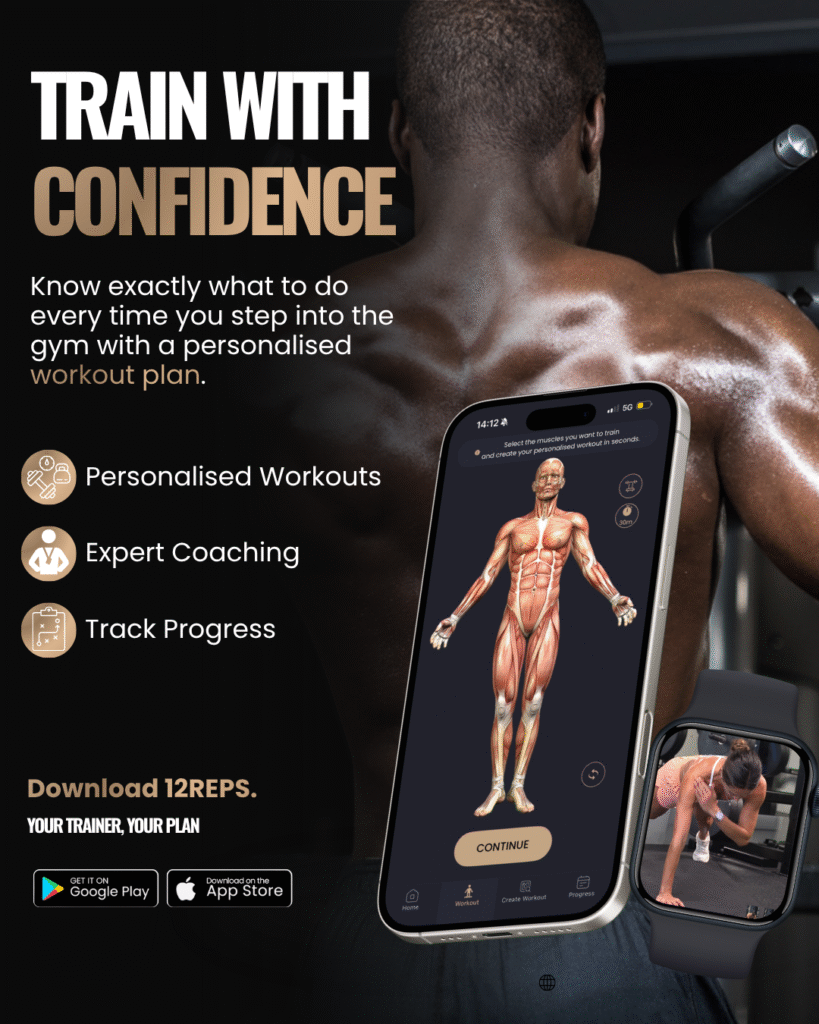
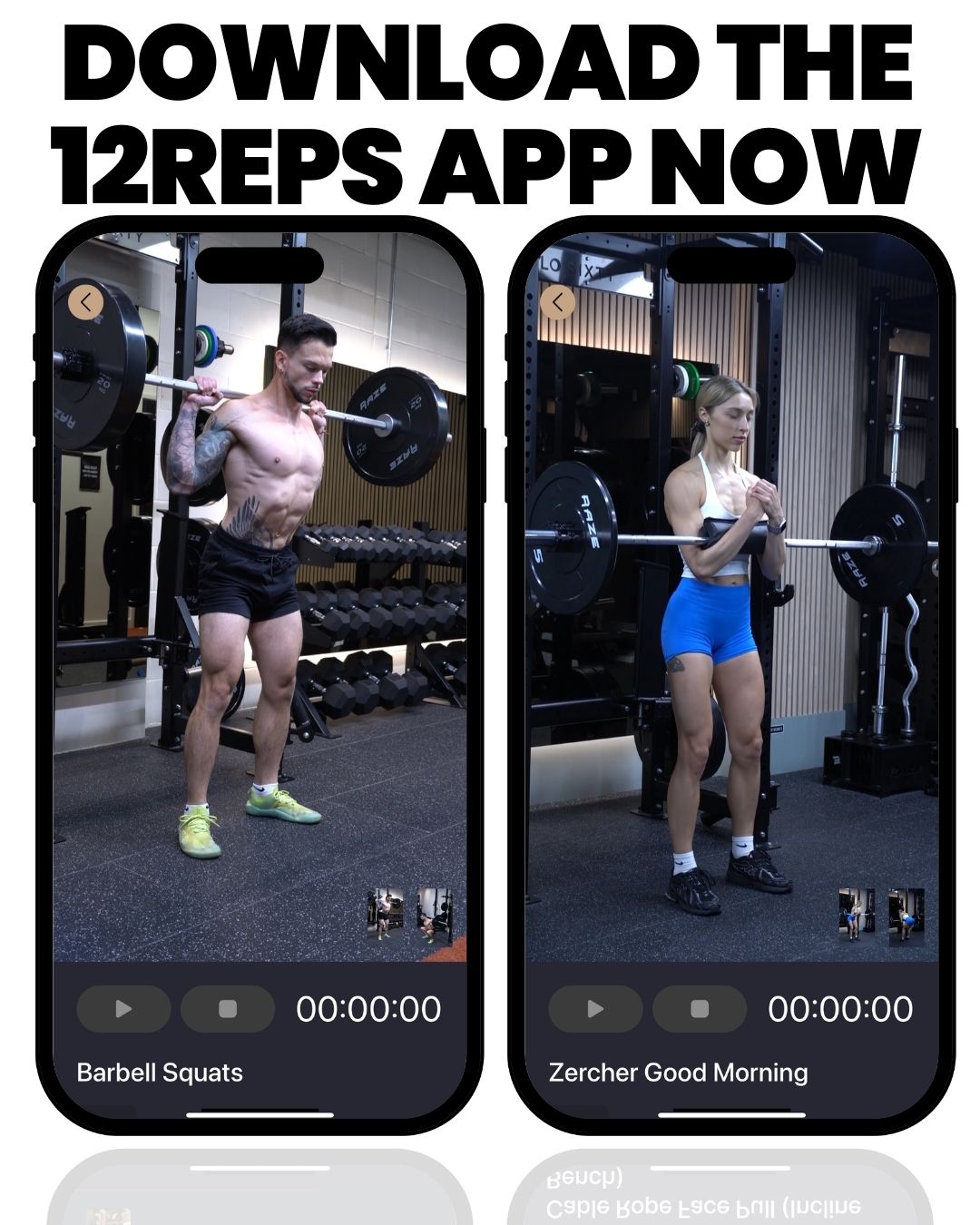
The 12REPS app has step-by-step video guidance for every exercise. You can watch how to do it right. You can pause. You can rewind. You can see your form improve.
Mistake 3: You’re Not Tracking Progress, and You’re Not Changing Exercise Order
This is the big one. You do the same workout. Same weight. Same order. For weeks. For months.
Your body adapts fast. When nothing changes, nothing grows. You plateau. You get frustrated. You quit.
Progressive overload is the science behind muscle growth. You need to add weight or add reps. Or change the order. Or add sets. Something needs to change every week or two.
How do you track this? Write it down. Use an app. Use something. But track it.
When you change the order of exercises, you change the stimulus. Do cable flys first one week. Do dumbbell press first the next week. This keeps your muscles working hard.
Interest: Why This Chest Workout Works
This four-exercise chest workout is simple. It’s effective. It uses movements that actually build muscle.
Each exercise has a purpose. Push-ups build foundation and strength. Dumbbell press builds raw strength. Incline press targets the upper chest. Cable flys build the finishing pump and control.
Together, they hit your entire chest from different angles. They use different rep ranges. They build size and strength.
Most importantly, they all come with video guidance in the 12REPS app. You can see exactly how to do each one.
The Chest Workout: Sets, Reps, and Rest Periods
Here is your complete chest day workout. Use this table as your guide.
Exercise | Sets | Reps | Weight | Rest Period |
Push-Up | 4 | 12-8 | Bodyweight (or add weight) | 60 seconds |
Dumbbell Chest Press | 4 | 12-8 | Your weight | 90 seconds |
Dumbbell Incline Chest Press | 4 | 10-8 | Your weight | 90 seconds |
Cable Chest Flys | 4 | 15-10 | Your weight | 60 seconds |
What does this mean?
Start with push-ups. Do 12 reps on your first set. Rest 60 seconds. Do 12 reps again. Your third set might be 10 reps. Your fourth set might be 8 reps. That’s called rep reduction. Your muscles get tired as you go. This is normal.
The weights should feel challenging by your last reps. Not impossible. But challenging.
If it feels too easy, add weight next time. If it feels too hard, use less weight.
The rest periods matter too. 60 to 90 seconds gives your muscles time to recover but keeps your heart rate up. Don’t rest five minutes. Don’t rest 30 seconds. Stick to the plan.
Exercise Breakdown
Exercise 1: Push-Up – Full Body Movement
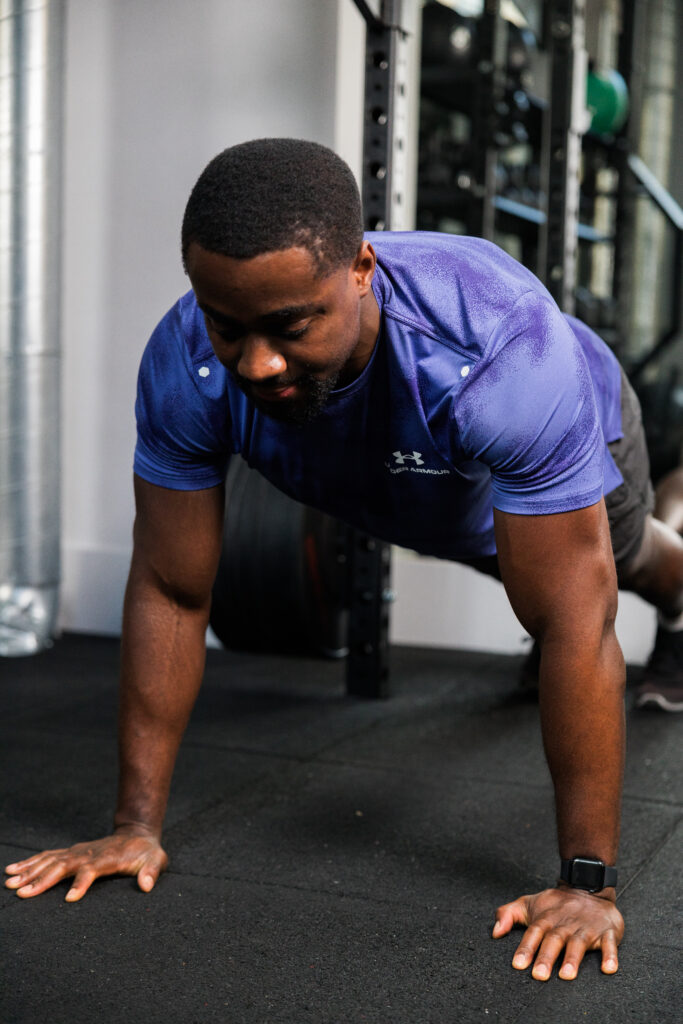
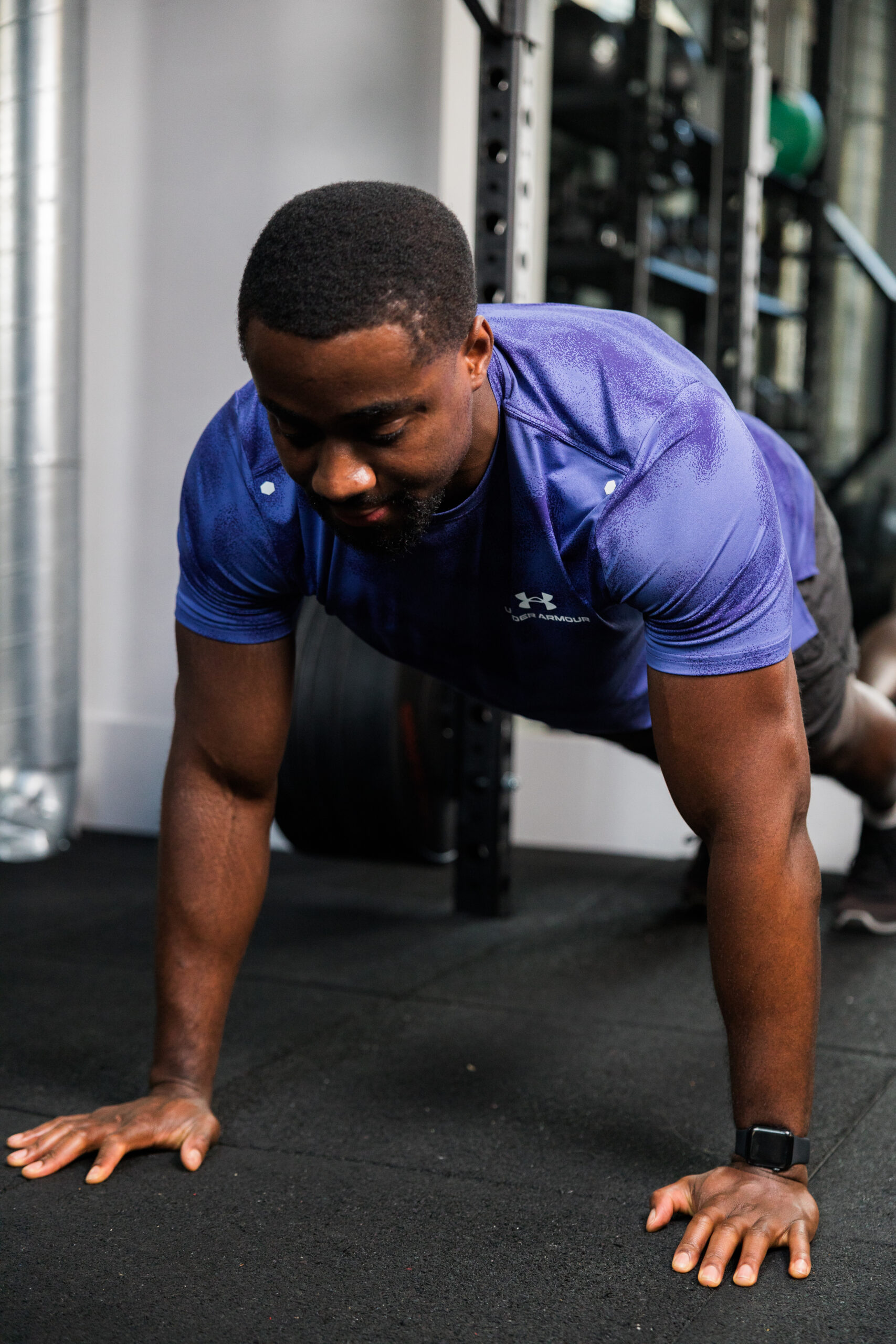
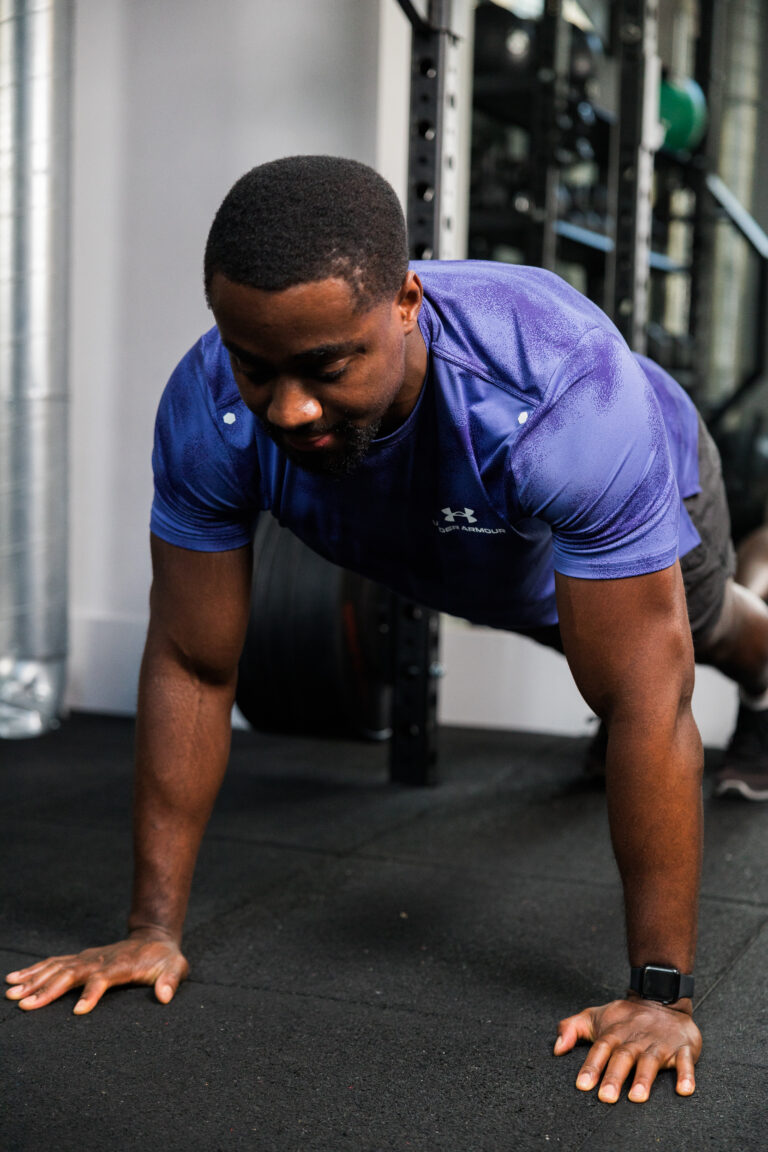
Push-ups are where you start. Hands on the ground. Body straight. Lower yourself down. Push back up. Feel your chest work.
Simple description: Your hands are shoulder-width apart on the ground. Your body stays in a straight line from head to heels. Lower your chest towards the ground. Push back up. This is one rep.
If this is hard, that’s fine. Do as many as you can. Rest. Do more. Build up to 12 reps.
If this is easy, add weight. Wear a weight vest. Put a plate on your back. Make it challenging.
The 12REPS app shows you the exact form. Watch it. Learn it. Master it.
Exercise 3: Dumbbell Incline Chest Press – Upper Chest Focus
This is the same as the dumbbell press but at an angle. Set the bench to a 45-degree angle. This targets the upper chest.
Simple description: Lie on an inclined bench (head higher than hips). Hold dumbbells at chest height. Press them up and slightly forward. The angle targets your upper chest more than flat bench.
Use lighter weight than the flat bench. The angle makes it harder. That’s intentional.
Exercise 3: Dumbbell Chest Press – Flat Bench
Pick a dumbbell weight that feels medium. Not light. Not heavy. Medium.
Simple description: Lie on a flat bench. Hold the dumbbells at chest height. Your elbows are bent at 90 degrees. Press the dumbbells up until your arms are almost straight. Lower them back down slowly. Feel your chest work, not your shoulders.
The key here is control. Don’t let your shoulders take over. Keep tension on your chest the whole time.
Exercise 4: Cable Chest Flys – Isolation Exercise
Set the cable machine to mid-height. Grab the handles. Step forward. Your arms go in a fly motion. Bring the handles together in front of your chest. Control the weight as it goes back.
Simple description: Stand in the middle of a cable machine with handles at chest height. Your arms are slightly bent. Squeeze your chest and bring the handles together in front of you in an arc motion. Let them go back slowly without letting them pull you forward. This builds the pump and connection to your chest muscle.
Desire: How 12REPS Helps You Build Chest
You can build this exact workout in the 12REPS app. Go to “Build Your Routine.” Select these four exercises. Set the reps, sets, and weight. Save it.
Next time you go to the gym, open the app. You know exactly what to do. You know what weight you used last time. You can aim to beat it this week.
The app has a built-in stopwatch. Use it for your rest periods. Don’t guess. Don’t use your phone timer. Use the app timer. It keeps you on track.
Every exercise has step-by-step video guidance. You can watch between sets. You can check your form. You can improve every workout.
You can track every set. Every rep. Every weight. Over weeks and months, you see your progress. Your strength goes up. Your chest gets bigger. You stay motivated.
Action: Start Your Chest Day This Week
Download the 12REPS app. Go to “Build Your Routine.” Add these four exercises. Pick weights that feel challenging but manageable.
Do this workout once per week or every five to seven days. Don’t do it two days in a row. Your chest needs recovery time.
After four weeks, you should notice your chest is stronger. After eight weeks, it should be noticeably bigger.
Consistency beats perfection. Do this right and track it. That’s all you need.
You have no excuses now. You know the three mistakes. You know the exercises. You know how to track progress. You have the tool to help you.
Build the routine. Pick up the weights. Feel your chest work. Keep going.
That’s how you build a stronger chest.
References
- Research on Bodyweight Exercises and Chest Muscle Activation– Shows that push-ups and bodyweight chest exercises activate chest muscles effectively when performed with proper form.
- Progressive Overload and Muscle Growth Science– Demonstrates that progressive overload is essential for continuous muscle growth and adaptation in strength training.