

My name is Will. I’m a certified personal trainer and founder of 12REPS. I work with busy adults aged 30 to 55 every single day. You come in three times a week. You’re eating enough protein. You’re showing up consistently. But you’re still not getting the results you want.
Here’s what I see. It’s rarely because you lack effort. It’s almost always because you’re missing one of these three things. Maybe all three.
I’ve trained hundreds of people. I’ve watched them waste months doing the right exercises the wrong way. These three mistakes alone are why some plateau. Others actually lose progress. I want to show you what’s broken and how to fix it. Because that’s what I built 12REPS App.
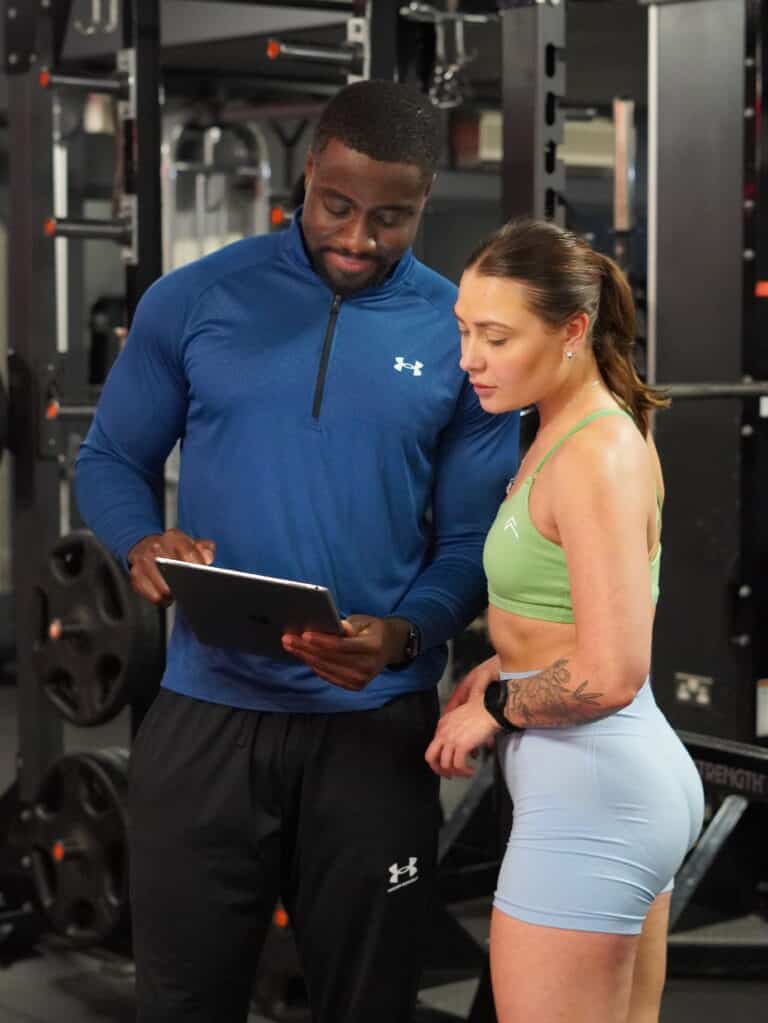
Mistake #1: You Are Not Using Your Training Time Properly
Many people spend 60 minutes in the gym but only complete 25 minutes of useful training.
They choose exercises as they go. They wait for equipment. They take long breaks because they’re distracted. By the end, they think they’ve trained hard, but they haven’t pushed themselves to the point where muscle growth is the only answer.
Here’s what I mean. A gym member comes in with an hour to train. He does three compound lifts. But he rests five minutes between sets because he’s checking his phone. He spends ten minutes figuring out which machine to use next. He chats with someone for another eight minutes. By the time he’s done, he’s completed maybe 10 to 12 working sets. That’s barely enough stimulus for muscle growth or to get the body to react.
The real mistake isn’t the exercises. It’s having no structure for the time you have.
Supersets can help when time is tight. You perform one exercise and move straight into another. You then rest after completing both exercises.
For example:
Dumbbell chest press followed by cable seated rows Leg extensions followed by hamstring curls; dumbbell bicep curls followed by tricep pushdowns
Pairing opposing muscle groups lets one muscle recover while the other works. Research shows that supersets allow for similar total repetitions and volume load as traditional sets while taking significantly less time, which increases training efficiency. Agonist-antagonist supersets are most effective because they allow one muscle to rest while the other works, preserving performance and training volume.
They can feel harder, though, so they need to be programmed carefully. I would not use supersets for every exercise.
Your squats, deadlifts and heavy presses may need more rest. Place them at the start of the session. Use supersets later for smaller muscle groups and exercises that are safe to perform when tired.
The goal is clear. If you have 60 minutes, you should leave with 40 to 45 minutes of actual training done, not time spent.
How 12REPS Helps You Use Your Time
12REPS gives you a structured workout before you enter the gym.
Your exercises, sets, repetitions and rest periods are already organised. Trainer-designed programmes can include supersets in the right part of the session, so you don’t waste time trying to create exercise combinations while standing in the gym.
You can personalise your training around:
The equipment available, the muscles you want to train, your experience level, your goal, and the time you have
You open the app and start. No walking around looking for ideas. No copying a random workout from social media. You know what to do and how long it should take.
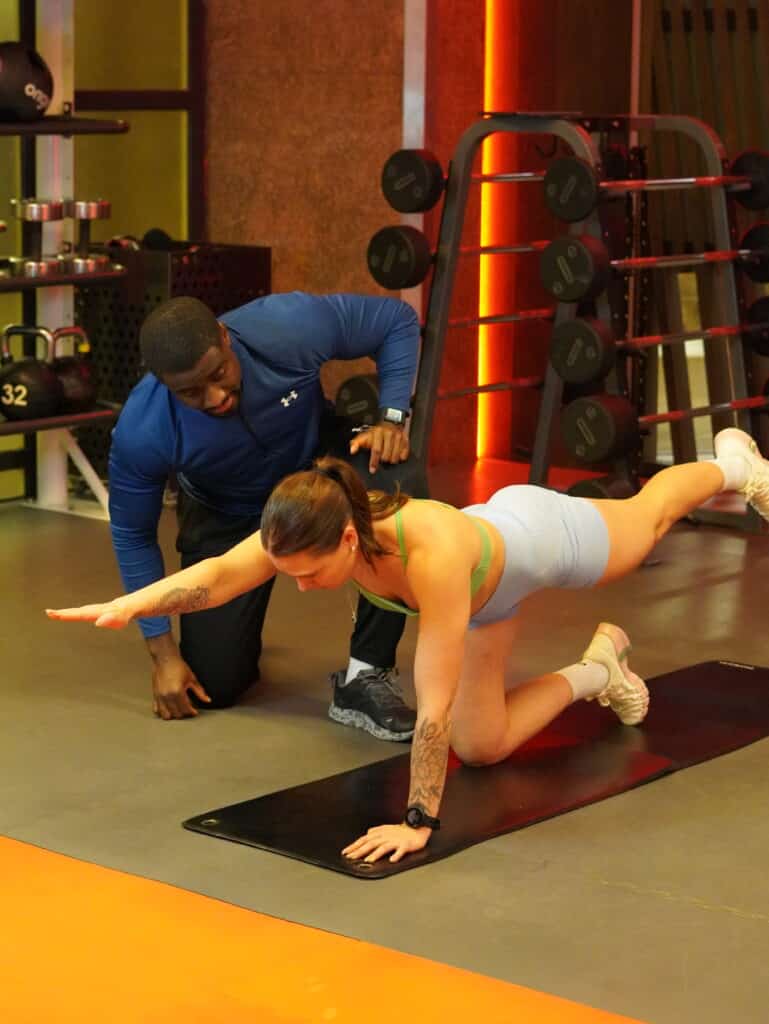
Mistake #2: You Have No Progressive Overload
This is probably the biggest one I see. Same weight every week. Same reps. Same exercises in the same order for months.
Your body adapts to the work you give it. If the challenge never changes, your progress will eventually slow down. That’s just biology.
A major 2023 study published in PubMed examined 55 untrained women over 8 weeks. One group increased weight whenever they reached the top of their rep range. The other group did the same weight and reps every session. The progressive group showed significantly greater muscle growth, with muscle thickness increases that were roughly double compared to the non-progressive group.
That’s the science. Double the gains. Just by adding a little weight.
Progressive overload can mean several things:
Adding a small amount of weight; completing another repetition; adding a set when appropriate; improving your control; using a greater range of movement; moving to a harder exercise variation
You do not need to make a large jump. Both increasing load and increasing reps drive muscle and strength growth, and high-intensity protocols better activate muscle fibers while increased volume amplifies anabolic hormone responses including growth hormone, testosterone, and IGF-1.
If you completed three sets of eight repetitions with 40 kg last week, aim for nine repetitions this week. Once you reach the top of your repetition range, increase the weight and return to the lower end.
The important part is tracking it. You cannot plan your next step if you cannot remember what you did last time.
Research suggests that performing at least 10 sets per muscle group per week is a good target for maximising muscle growth. But those sets need to get harder over time. Same thing twice means adaptation has stopped.
How 12REPS Helps You Progress
12REPS records your sets, repetitions and weights automatically.
When you return to an exercise, you can see what you lifted during your previous session. You no longer need to guess whether you used 20 kg or 22 kg.
That gives you a clear target:
Match your previous performance; complete another repetition; increase the weight; beat your previous best
You can also track your training volume, personal records and estimated one-repetition maximum.
This turns every workout into part of a longer plan. You are not only completing today’s session. You are building on the session you completed last week.
That small piece of information can change your behaviour. When you see your previous result in front of you, you have something clear to aim for. Progress becomes visible. Motivation stays high.
Mistake #3: You Exhaust Yourself With Cardio Before Lifting
Cardio is not bad for muscle growth. This part confuses people. Strength training and cardio can work well together. Research shows that concurrent cardiovascular endurance and strength training does not interfere with the development of maximal strength and muscle hypertrophy compared with strength training alone. Doing both in the same session may affect explosive-strength gains in some cases. But for most people trying to build muscle and live longer, combining both works fine.
The problem starts when your warm-up becomes a workout.
If your main goal is building muscle, a hard 20- or 30-minute run before lifting may leave you tired. Your legs feel heavy. Your performance drops. You complete fewer quality repetitions.
When you run for 20 minutes before lifting, you drain your glycogen stores. That’s the sugar in your muscles that acts as fuel. When weights are done first before cardio, the body uses muscle glycogen for lifting, then switches to fat reserves for cardio. But when cardio is done first, glycogen stores are already reduced before lifting, which compromises your strength training effectiveness.
A 2025 study tracked two groups doing both cardio and weights. The group that did weight training followed by cardio showed remarkable progress with reductions in fat mass, increases in explosive strength, and they exercised more often.
Keep your warm-up simple. Use five to ten minutes of easy movement, followed by mobility work and lighter warm-up sets for your first exercise. Then complete your strength training.
You can perform cardio afterwards or on a separate day. The best choice depends on your goal, schedule and ability to recover.
How 12REPS Helps You Organise Strength and Cardio
12REPS gives your session a clear order.
Your warm-up prepares you for the exercises ahead. Your main strength work comes when you have the most energy. Cardio and conditioning can then sit after your lifts or on another training day.
This stops you from building each session based on how you feel when you arrive.
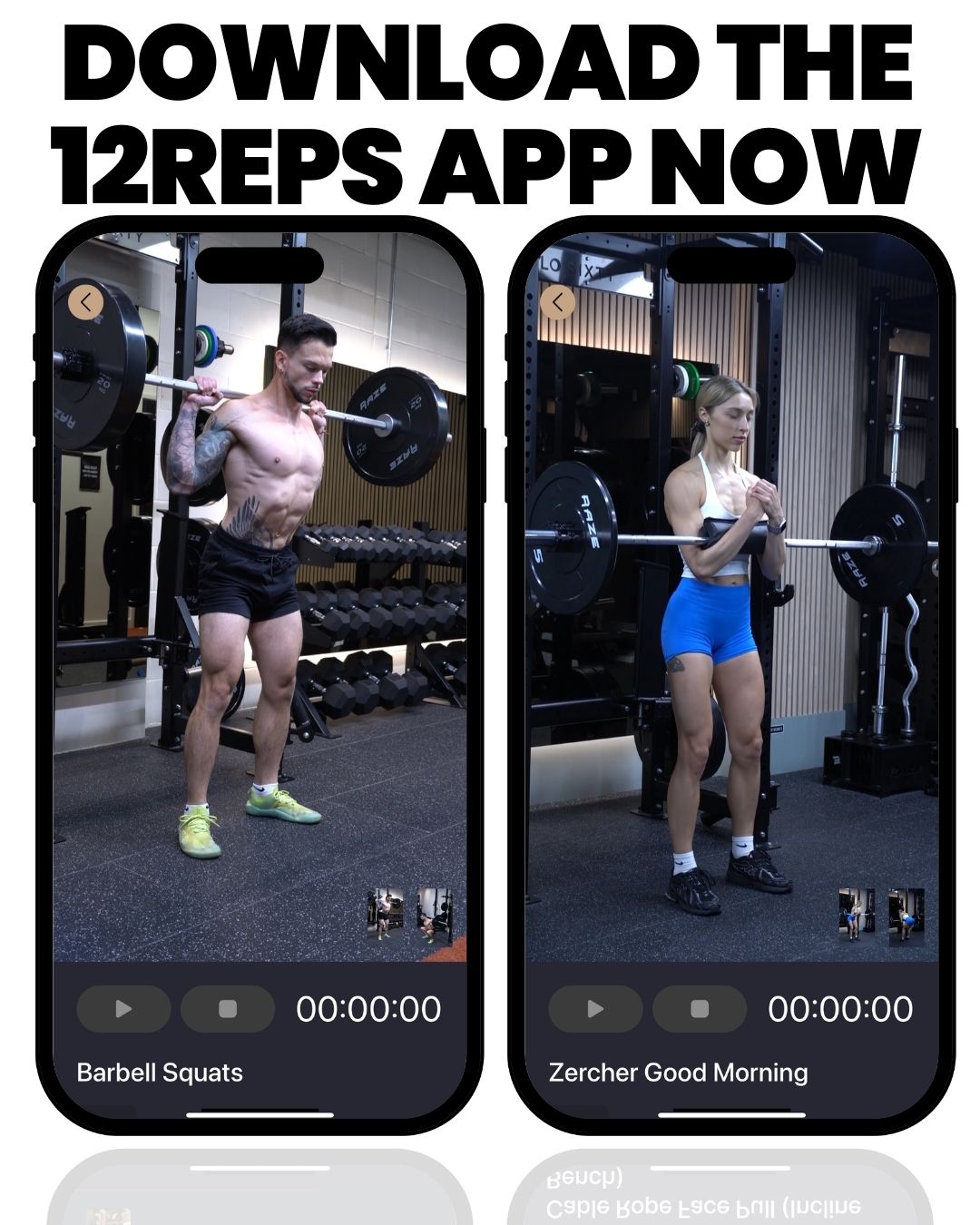
You can follow a trainer-designed programme or create your own routine from more than 1,500 exercise demonstrations. Each demonstration shows you how to perform the movement, while personal-trainer tutorials explain the key points in more detail.
You know:
What to do first; how many sets to complete; how many repetitions to perform; when to rest; what you lifted last time; what to aim for next
That is what structure should feel like.
The Right Tool Removes the Guesswork
Knowing these mistakes is useful. But you still need to remember the solution every time you train.
That is where the right tool helps.
A notebook can record your weights. A video can demonstrate an exercise. A timer can control your rest. A workout plan can tell you what to do.
12REPS brings these parts together.
It gives you:
Personalised strength programmes designed by trainers; workouts based on your goal, equipment and available time; exercise demonstrations and trainer breakdown videos; set, repetition and weight tracking; previous weights ready for your next session Rest timers; progress and personal-record tracking; the option to create your own workouts
12REPS cannot lift the weight for you. What it can do is remove the small decisions that make training harder to follow.
You enter the gym with a plan. You know how to perform each exercise. You can see what you achieved last time. Then you know what progress looks like today. That is how you train with more confidence.
Fix One Mistake This Week
You do not need another random workout.
You need a plan that helps you use your time, track your progress and organise your training around your goal.
Fix one mistake this week.
Use supersets when they help you save time. Record every working set. Put your main strength exercises before demanding cardio.
If you want all three fixes in one place, download 12REPS. Your programme is ready. Your previous weights are saved. Every exercise includes guidance. You only need to show up and complete the work.
Start training with 12REPS. I built it for people like you.