

By Will Duru, BSc (Hons) Sport and Exercise Science, Award-winning Personal Trainer with over 10 years of experience in strength training
“Give me a 12-week push pull legs programme for building muscle.”
I typed this into ChatGPT to see what millions of people are now using as their fitness guidance. The response came within seconds: a complete programme with exercises, sets, reps and a weekly schedule. It looked professional. It seemed comprehensive.
But would it actually work?
As a personal trainer with over a decade of experience, I knew what to look for. I analysed the programme ChatGPT produced and tracked what would happen to someone following it faithfully. The results reveal exactly why AI-generated workout plans fail to deliver.
The Programme ChatGPT Created
Here is exactly what ChatGPT provided when asked for a 12-week push pull legs programme:
Push Day
| Exercise | Sets | Reps |
|---|---|---|
| Barbell Bench Press | 4 | 8 to 10 |
| Overhead Press | 3 | 8 to 10 |
| Incline Dumbbell Press | 3 | 10 to 12 |
| Tricep Pushdowns | 3 | 12 to 15 |
| Lateral Raises | 3 | 12 to 15 |
Pull Day
| Exercise | Sets | Reps |
|---|---|---|
| Barbell Rows | 4 | 8 to 10 |
| Pull Ups or Lat Pulldown | 3 | 8 to 10 |
| Seated Cable Rows | 3 | 10 to 12 |
| Face Pulls | 3 | 12 to 15 |
| Barbell Curls | 3 | 10 to 12 |
Leg Day
| Exercise | Sets | Reps |
|---|---|---|
| Barbell Back Squat | 4 | 8 to 10 |
| Romanian Deadlift | 3 | 8 to 10 |
| Leg Press | 3 | 10 to 12 |
| Leg Curls | 3 | 10 to 12 |
| Calf Raises | 4 | 12 to 15 |
The schedule suggested Push on Monday, Pull on Tuesday, Legs on Wednesday, rest Thursday, then repeat Push Friday, Pull Saturday, Legs Sunday.
On the surface, this looks reasonable. The exercises are real. The rep ranges make sense. The structure follows a legitimate training split.
So what is the problem?
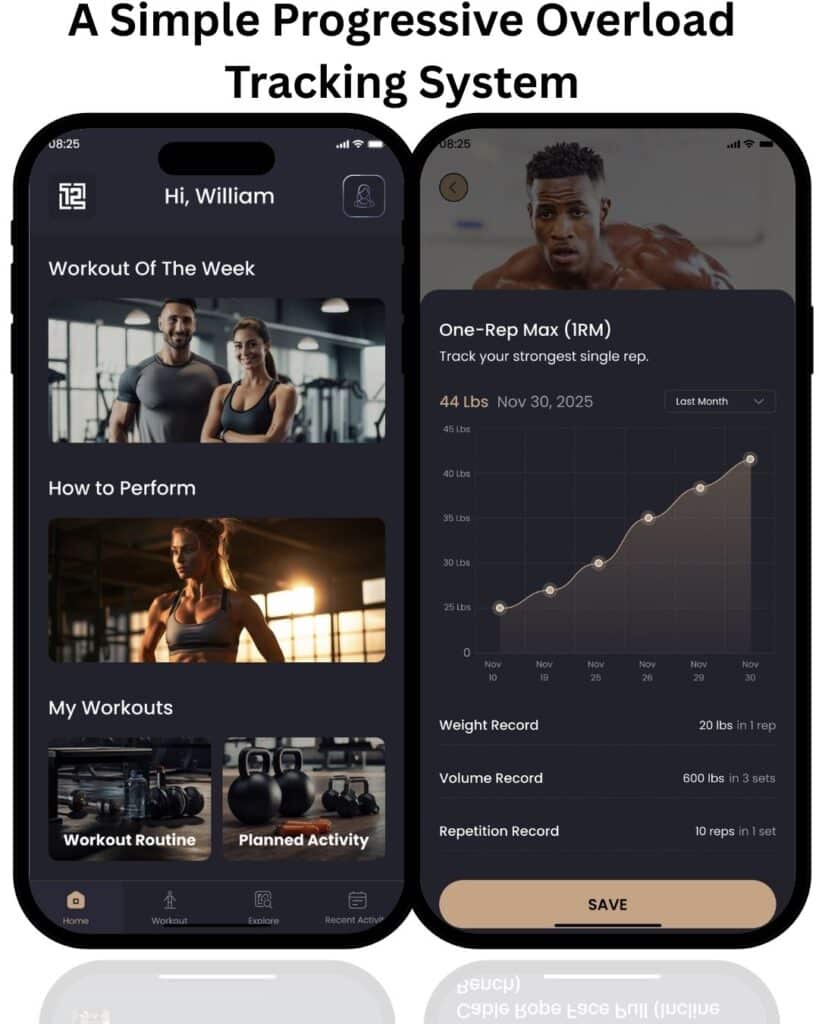
Problem 1: The Same Programme Forever
I asked ChatGPT what to do in week 5. It gave me the same programme.
I asked what to do in week 9. Same programme.
Week 12? Identical.
The AI has no concept of progression. It provided a snapshot of what training might look like on any given day but no system for evolving that training over 12 weeks.
A real 12-week programme changes. Weights increase. Volume progresses. Intensity varies. Deload weeks appear. The body adapts to week one and needs something different by week six.
ChatGPT gave me day one repeated 84 times.
Problem 2: No Weight Recommendations
The programme says “Barbell Bench Press: 4 sets of 8 to 10 reps.”
How much weight? ChatGPT does not know. It cannot know. It has no idea if you are a complete beginner who should start with an empty bar or an experienced lifter who benches 120 kilograms.
When I asked for weight recommendations, the AI gave vague advice about “starting light and progressing when it feels manageable.” This is functionally useless for someone who does not already understand load selection.
A real programme either specifies loads based on assessment or includes a systematic method for determining and progressing weights. ChatGPT provides neither.
Problem 3: No Tracking Integration
Week 4. You completed your push workout. How many reps did you get on bench press? What weight did you use? Was it harder or easier than last week?
ChatGPT has no idea. The conversation ended. The AI forgot you exist.
Without tracking, there is no way to know if you are progressing, stalling or regressing. There is no data to inform adjustments. You are training blind, hoping effort alone produces results.
Every successful training system includes tracking. ChatGPT-generated plans do not.
Problem 4: No Adaptation to Reality
Life happens. You miss a session due to illness. The gym is packed and your preferred equipment is taken. Your shoulder feels tweaked after last week’s overhead press.
What does ChatGPT suggest? Nothing. It created a programme assuming perfect conditions forever. It cannot adapt to the reality that training rarely goes exactly as planned.
A real coach or well-designed app adjusts. Missed a session? Here is how to modify the week. Equipment unavailable? Here are substitutions. Joint feeling off? Here are modifications. ChatGPT stares blankly, offering only the same generic template regardless of circumstances.
Problem 5: No Exercise Instruction
“Romanian Deadlift: 3 sets of 8 to 10 reps.”
What is a Romanian deadlift? How do you perform it correctly? What are common mistakes? How do you know if your form is right?
ChatGPT can explain these things if you ask separately. But the programme itself is just a list of exercise names. For beginners, this creates a dangerous gap between knowing what to do and knowing how to do it.
Incorrect technique at best wastes time. At worst, it causes injury. A list of exercises without instruction sets people up for problems
The Progression Illusion
When challenged about progression, ChatGPT offers advice like: “Increase weight by 2.5 to 5 pounds when you can complete all reps with good form.”
This sounds reasonable. But who ensures this happens? Who tracks whether you actually added weight? Who notices when you have been stuck at the same load for six weeks?
The advice exists in theory. The implementation is entirely your responsibility. Most people, especially beginners, cannot self-manage progressive overload effectively. They need systems that guide and track progression automatically.
Knowing you should progress and having a system that ensures you progress are completely different things.
What a Real 12-Week Programme Includes
Contrast the ChatGPT output with what an effective programme actually provides:
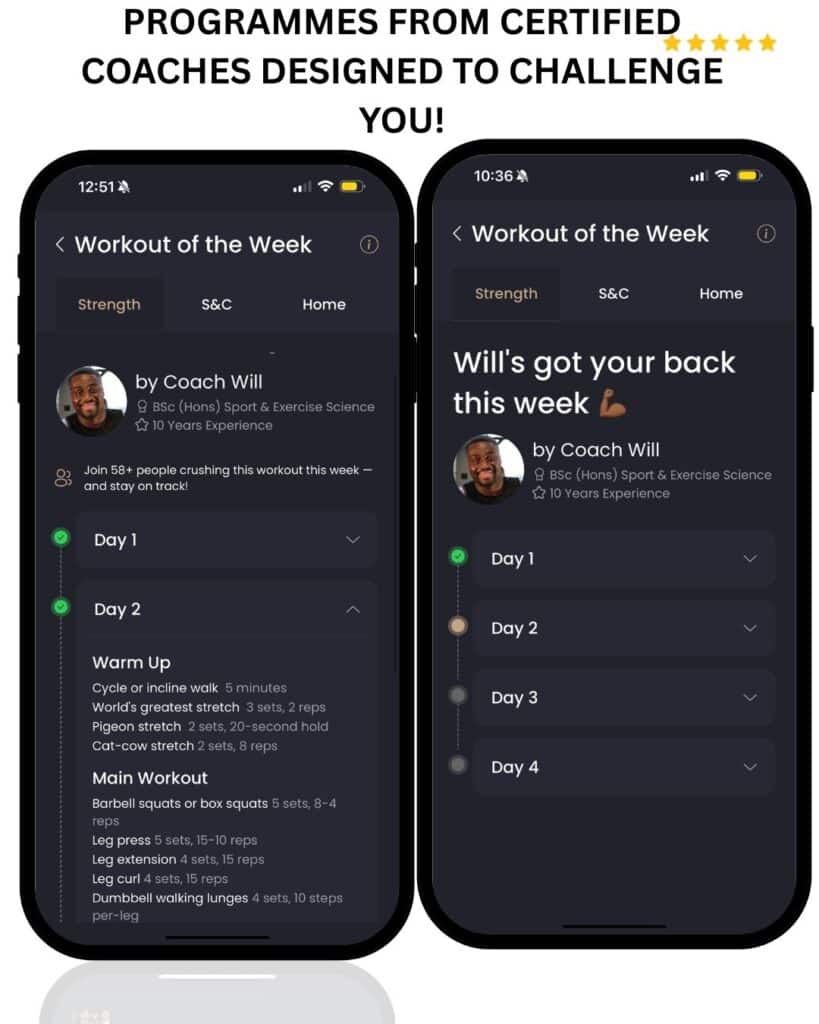
Week-by-Week Progression
A real programme specifies how training changes over the 12 weeks:
Weeks 1 to 4: Foundation phase. Moderate intensity, focus on technique, establishing baseline weights.
Weeks 5 to 8: Progression phase. Systematic weight increases, volume builds, intensity rises.
Week 9: Deload. Reduced volume and intensity for recovery.
Weeks 10 to 12: Peak phase. Highest intensity, testing new maximums, consolidating gains.
This structure produces results because it manages fatigue, drives adaptation and peaks performance. ChatGPT’s static template does none of this.
Specific Load Prescriptions
Real programmes either assess your starting point or provide systematic methods for establishing appropriate weights. They specify percentage increases week to week or use autoregulation systems like RPE.
You know exactly what weight to use, not vaguely that you should “start light.”
Built-In Tracking
Effective programmes integrate with tracking systems. You record what you do. The system remembers. Future sessions reference past performance. Progress becomes visible and informs adjustments.
Adaptation Protocols
Good programmes include guidance for common scenarios: missed sessions, equipment substitutions, fatigue management, injury modifications. They acknowledge that perfect adherence never happens and plan accordingly.
Exercise Coaching
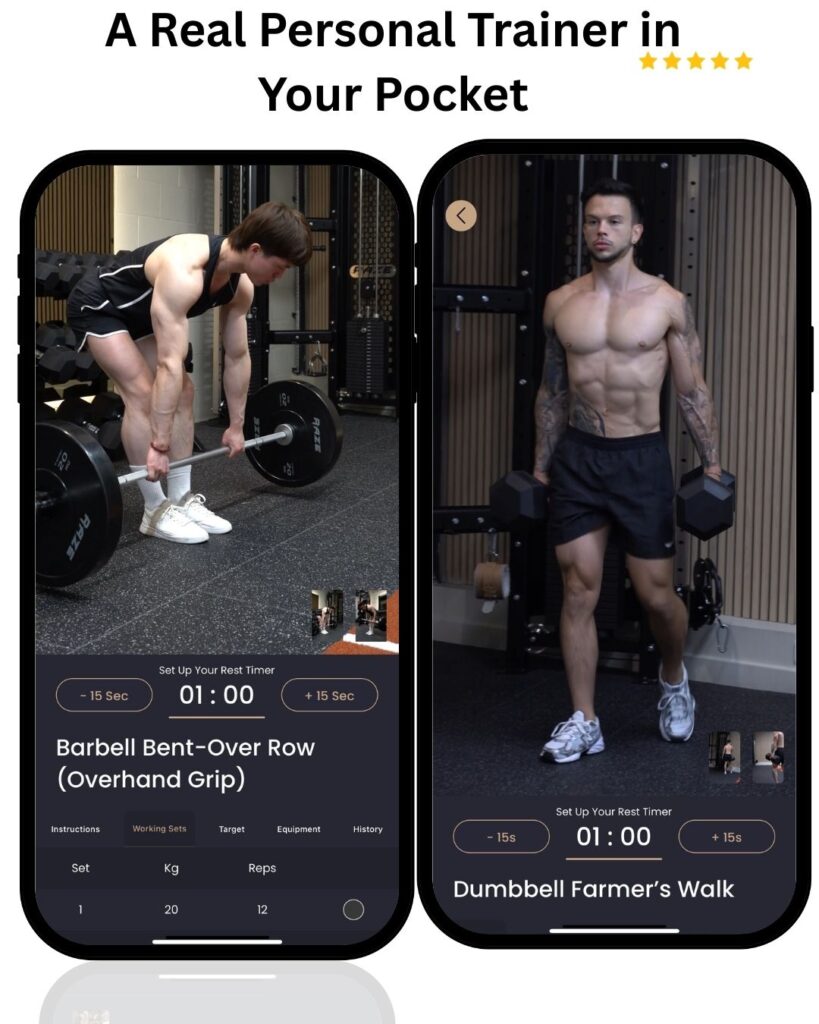
Proper programmes include technique instruction. Video demonstrations. Cue reminders. Form checkpoints. You learn how to perform exercises, not just their names.
The Real Cost of Following ChatGPT
Time is the currency you cannot recover.
Someone following ChatGPT’s programme for 12 weeks invests approximately 72 training sessions. Each session takes an hour plus travel and preparation time. Call it 100 hours of total commitment.
What do they have after those 100 hours? Perhaps some initial adaptation from the novelty of training. Then weeks of stagnation as their body adapted to the unchanging stimulus and stopped responding.
The same 100 hours with a properly designed programme produces measurable strength gains, visible physique changes and established habits built on systems that continue working long term.
Both approaches require equal effort. Only one produces results.
A Client Who Made This Mistake
ChatGPT is a language model. It predicts what text should come next based on patterns in its training data. It can produce text that looks like a workout programme because it has seen many workout programmes.
But looking like a programme and functioning as a programme are different things.
ChatGPT cannot:
- Track your actual performance
- Adjust based on your progress
- Ensure progressive overload happens
- Demonstrate exercise technique
- Account for your individual circumstances
- Provide accountability
- Adapt when life disrupts your training
These are not minor gaps. They are the fundamental elements that separate effective training from going through motions.
The 12REPS Alternative
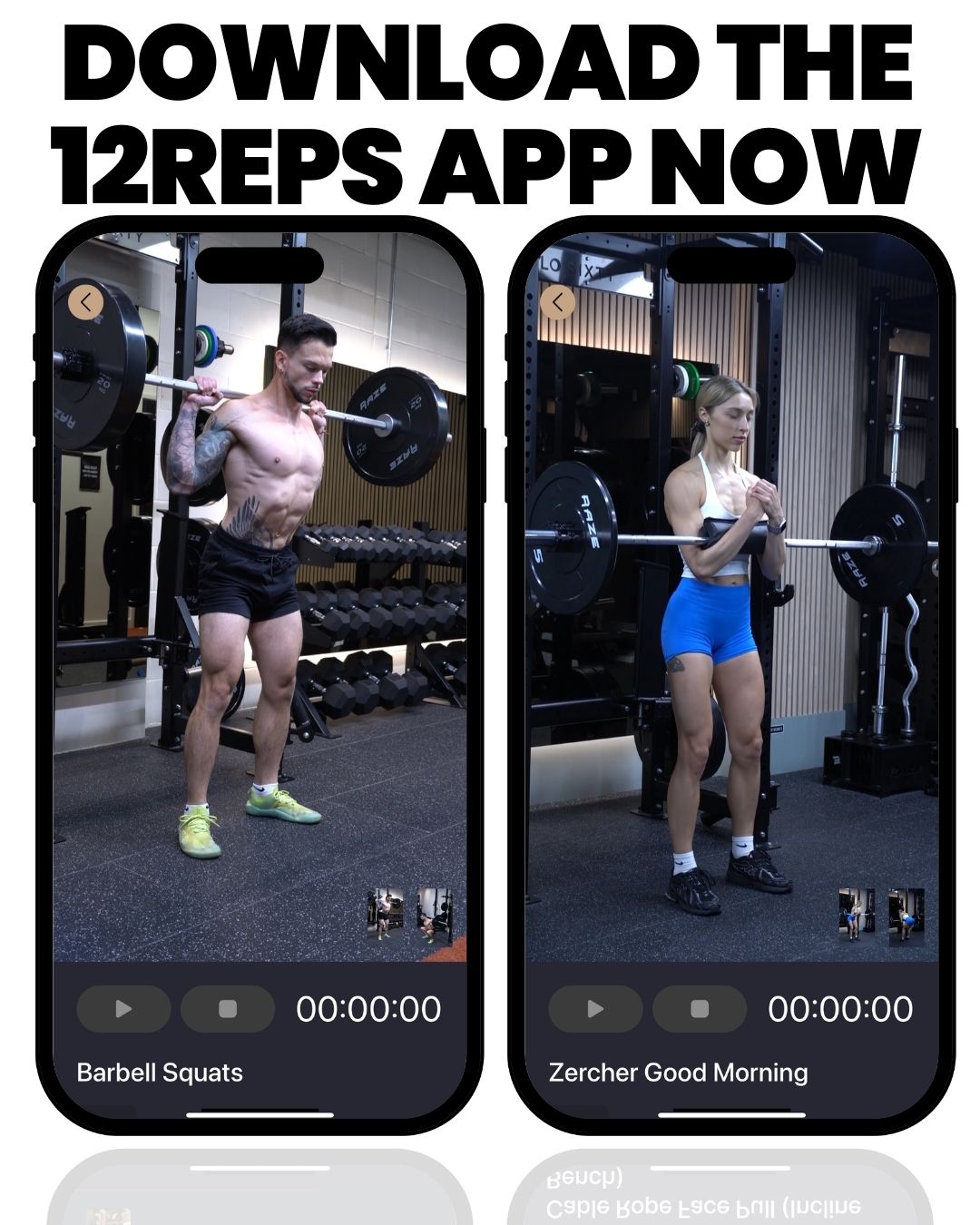
The 12REPS app was built specifically to provide what ChatGPT cannot.
Actual Progression: The app tracks every workout and guides systematic increases. You see your previous performance and know exactly what to attempt today.
Real Personalisation: Rather than generic templates, programming adapts based on your training history, available equipment and actual progress.
Exercise Instruction: Every movement includes video demonstration from a qualified personal trainer. You see how exercises should be performed, not just their names.
Adaptation to Reality: Miss a session? The app adjusts. Equipment unavailable? Substitutions are provided. The programme responds to your actual life.
Accountability Built In: Your training history is recorded. Patterns become visible. Stalls are identified. You cannot accidentally plateau for months without noticing.
This is not about AI being bad and apps being good. It is about what produces results versus what produces the illusion of a programme.
Should You Ever Use ChatGPT for Fitness?
ChatGPT has legitimate fitness applications:
Learning concepts: Understanding what progressive overload means, why protein matters, how muscle growth works.
Exploring ideas: Discovering exercises you might not know, learning about different training splits, understanding programming concepts.
Answering questions: Quick explanations of fitness principles, nutritional concepts, recovery strategies.
Meal planning: Generating recipe ideas that meet certain nutritional targets.
Where ChatGPT fails is in replacing systematic training programmes. It can inform your understanding but cannot be your coach.
The Bottom Line
I asked ChatGPT for a 12-week programme and received a single week repeated 12 times. No progression. No tracking. No adaptation. No instruction.
Millions of people are using this approach, wondering why their bodies are not changing despite consistent effort. The answer is that effort without effective systems produces limited results.
Your training time is valuable. Your goals deserve better than a generic template that helped nobody in particular.
The 12REPS app provides the progression, tracking, instruction and adaptation that ChatGPT cannot. It turns your effort into actual results rather than just activity.
Stop letting AI chatbots pretend to be personal trainers. Use tools designed by real trainers to produce real results.
Related Articles on just12reps.com
| Article | Description | Link |
|---|---|---|
| Why ChatGPT Can’t Be Your Personal Trainer | The fundamental problems with AI workout planning. | Read Article |
| Progressive Overload Guide | The principle AI plans always miss. | Read Article |
| Why You’re Not Seeing Results | Common training mistakes including programme issues. | Read Article |
| Complete Beginner’s Guide to Strength Training | A properly structured starting programme. | Read Article |
| Best Workout Planner and Tracker | Why tracking matters for results. | Read Article |
References
[1] Schoenfeld, B.J. et al. (2017). Dose-response relationship between weekly resistance training volume and increases in muscle mass. Journal of Sports Sciences. https://www.tandfonline.com/toc/rjsp20/current
[2] Peterson, M.D. et al. (2004). Maximizing strength development in athletes: a meta-analysis to determine the dose-response relationship. Journal of Strength and Conditioning Research. https://journals.lww.com/nsca-jscr/pages/default.aspx
[3] Kiely, J. (2012). Periodization paradigms in the 21st century: evidence-led or tradition-driven? International Journal of Sports Physiology and Performance. https://journals.humankinetics.com/view/journals/ijspp/ijspp-overview.xml
[4] Zourdos, M.C. et al. (2016). Novel resistance training-specific rating of perceived exertion scale measuring repetitions in reserve. Journal of Strength and Conditioning Research. https://journals.lww.com/nsca-jscr/pages/default.aspx
[5] Buckner, S.L. et al. (2017). The general adaptation syndrome: reassessing a classic for the 21st century. Strength and Conditioning Journal. https://journals.lww.com/nsca-scj/pages/default.aspx
About the Author: Will Duru holds a BSc (Hons) in Sport and Exercise Science and is an award-winning personal trainer with over 10 years of experience creating programmes that actually produce results. He is the creator of the 12REPS app, built to provide the systematic training guidance that generic AI cannot match.