

You’re standing in the gym staring at the dumbbell rack. 5kg? 8kg? 12kg? You’re not sure, so you grab the 5kg dumbbells because they feel “safe”—even though you’re carrying 10kg bags of shopping without issue.
Or maybe you’ve grabbed weights that are too heavy, struggled through 3 reps with terrible form, and felt discouraged.
The truth: Most women lift too light because they’re afraid of looking silly or getting “bulky”, but lifting too light means no muscle growth and wasted time in the gym.
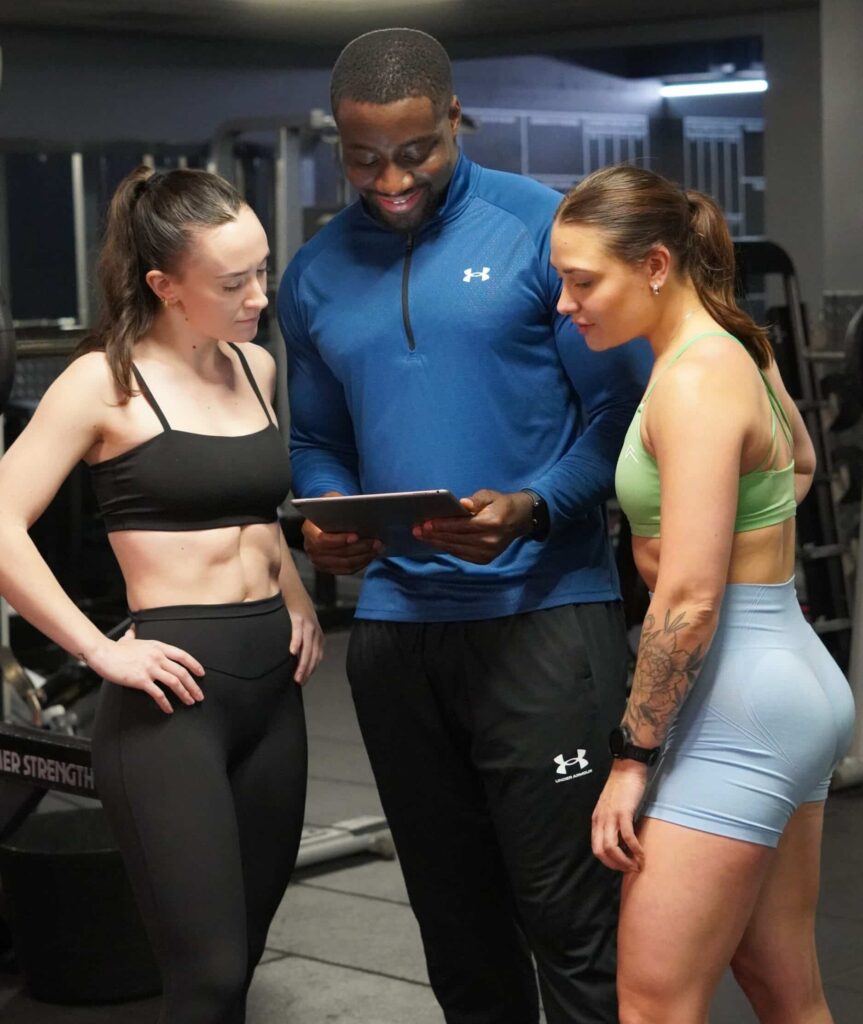
I’m Will Duru, a personal trainer with 10+ years’ experience in London. I’ve taught hundreds of women how to choose appropriate weights, and I watch this struggle constantly.
My biggest observation: Women routinely carry heavy shopping bags, children, suitcases, 10kg+—without thinking. But in the gym, they shy away from anything over 5kg dumbbells. The disconnect is enormous.
The Golden Rule for Choosing Weight
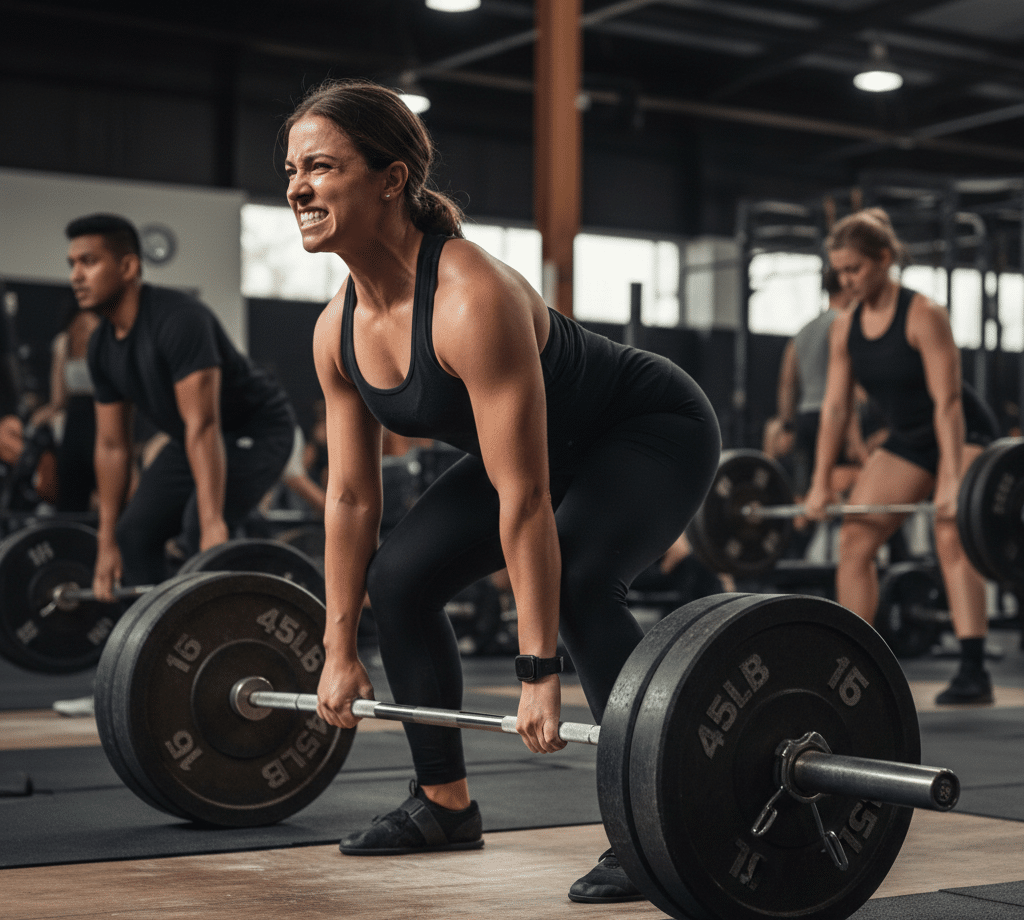
The right weight makes your last 2-3 reps of each set challenging whilst maintaining perfect form.
What this means:
- First 5-6 reps feel manageable
- Reps 7-8 feel challenging
- Reps 9-10 require real effort but form stays perfect
Too light: All 10 reps feel easy, you could do 15+ reps Too heavy: Form breaks down by rep 5-6, can’t complete prescribed reps
Will’s coaching: “I ask clients after set 1: ‘How many more reps could you have done?’ If answer is ‘5-6 more easily,’ weight is too light. If answer is ‘maybe 1-2 more with good form,’ weight is perfect.”
Starting Points by Exercise Type
Large Compound Movements
Squats (barbell):
- Complete beginners: Empty bar (20kg) or 30kg
- Some strength: 30-40kg
- Intermediate: 40-60kg
Deadlifts (barbell):
- Complete beginners: 20-30kg
- Some strength: 30-50kg
- Intermediate: 50-80kg
Will’s beginner approach: “Every new client starts with empty bar (20kg) for squats and deadlifts—no exceptions. Master the movement pattern with light weight first. Add weight next session if form is perfect.”
Medium Compound Movements
RDLs (barbell):
- Beginners: 20-30kg
- Some strength: 30-40kg
- Intermediate: 40-60kg
Hip Thrusts (barbell):
- Beginners: 20-40kg
- Some strength: 40-60kg
- Intermediate: 60-100kg
Lunges/Bulgarian split squats (dumbbells per hand):
- Beginners: 5-8kg
- Some strength: 8-12kg
- Intermediate: 12-20kg
Will’s note: “Hip thrusts clients can typically go heavier than expected—glutes are very strong. Client squatting 50kg might hip thrust 80kg comfortably.”
Upper Body Pressing
Bench Press (barbell):
- Beginners: 20-25kg (empty bar or slightly more)
- Some strength: 25-35kg
- Intermediate: 35-50kg
Overhead Press (barbell):
- Beginners: 15-20kg (lighter bar or empty bar)
- Some strength: 20-25kg
- Intermediate: 25-35kg
Dumbbell Press (per hand):
- Beginners: 5-8kg
- Some strength: 8-12kg
- Intermediate: 12-18kg
Will’s reality: “Overhead press is hardest for most women. Client benching 30kg might overhead press just 20kg. That’s normal—shoulders are smaller, weaker muscles.”
Upper Body Pulling
Barbell Rows:
- Beginners: 15-25kg
- Some strength: 25-40kg
- Intermediate: 40-60kg
Lat Pulldowns (cable machine):
- Beginners: 20-30kg
- Some strength: 30-40kg
- Intermediate: 40-55kg
Isolation Exercises
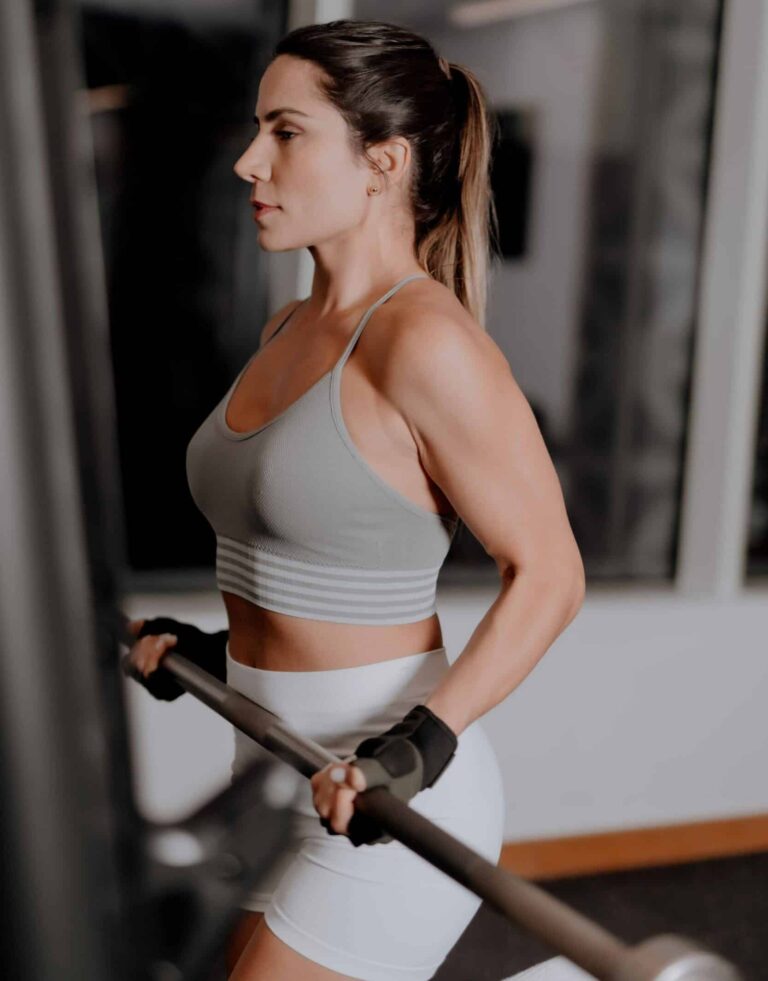
Bicep Curls (dumbbells per hand):
- Beginners: 3-5kg
- Some strength: 5-8kg
- Intermediate: 8-12kg
Tricep Extensions (dumbbells):
- Beginners: 4-6kg
- Some strength: 6-10kg
- Intermediate: 10-14kg
Lateral Raises (dumbbells per hand):
- Beginners: 2-4kg
- Some strength: 4-6kg
- Intermediate: 6-10kg
Will’s isolation guidance: “Small muscles = lighter weights. Client RDLing 50kg might lateral raise just 5kg. Don’t ego lift on isolations—form is everything.”
How to Find Your Starting Weight (First Session)
Step 1: Start With Empty Bar or Light Dumbbells
For barbells: Begin with empty 20kg bar (or 15kg training bar if available) For dumbbells: Start with 5kg pair
Why: Learn movement pattern, test your current strength safely.
Will’s method: “Session 1, everyone starts light. I don’t care if you’ve lifted before—I need to see your movement quality. Add weight session 2 if form is perfect.”
Step 2: Perform a Test Set
Do: 10 reps with perfect form
Assess:
- Could you have done 15+ more reps easily? Too light—add weight
- Could you have done 3-5 more reps? Too light—add weight
- Could you have done 1-2 more reps? Perfect
- Couldn’t complete 10 reps with good form? Too heavy—reduce weight
Will’s test: “After test set of goblet squats with 8kg dumbbell, I ask: ‘How many more reps?’ Client says ’10 more easily.’ I hand her 12kg. Test again. ‘Maybe 3-4 more.’ Still too light. Try 16kg. ‘Maybe 1-2 more.’ Perfect—that’s her working weight.”
Step 3: Complete Your Working Sets
Use the weight from Step 2 for your prescribed sets/reps.
Monitor: Performance should stay consistent across sets (with 2-3 minute rest). If set 2 drops dramatically (60kg × 10 reps → 60kg × 5 reps), weight is too heavy.
When to Increase Weight
Sign 1: Last 2-3 Reps No Longer Challenging
What it looks like: All 10 reps feel manageable, you could easily do 13-15 reps.
Action: Increase weight next session.
How much:
- Large compounds (squats, deadlifts): +2.5-5kg
- Medium compounds (RDLs, hip thrusts): +2.5-5kg
- Upper body: +1.25-2.5kg
- Isolations: +1-2kg
Will’s progression: “Client squatting 50kg × 10 reps for 3 sets, all reps feel comfortable. Next session: 52.5kg. She hits 10, 9, 8 reps—perfect. Week after: 52.5kg × 10, 10, 9—she’s adapted. Next session: 55kg.”
Sign 2: Completed Prescribed Reps Multiple Sessions
What it looks like: Week 1: 50kg × 10, 9, 8 reps. Week 2: 50kg × 10, 10, 9. Week 3: 50kg × 10, 10, 10.
Action: Increase weight week 4.
Will’s rule: “Once client hits target reps on all sets for 2 consecutive sessions, we increase weight. No point staying at same weight once you’ve adapted.”
Sign 3: Exercise Feels “Easy”
What it looks like: You finish sets thinking “that wasn’t hard at all.”
Action: Increase weight immediately next session.
Will’s frustration: “Client doing hip thrusts with 60kg, finishes saying ‘that was easy.’ I ask why she didn’t increase weight. She says ‘I thought I should wait.’ No—if it’s easy, add weight now.”
Common Mistakes Choosing Weight
Mistake 1: Lifting Too Light (Most Common)
The problem: Using 5kg dumbbells for goblet squats when you could comfortably lift 15kg.
Why women do this: Fear of looking silly, fear of “bulking up,” lack of confidence.
Why it’s wrong: No muscle growth stimulus, wasted time, no strength gains.
Will’s typical scenario: “Client doing goblet squats with 8kg dumbbell. I watch her complete 15 reps easily, perfect form. I ask: ‘How did that feel?’ She says ‘Good!’ I hand her 14kg dumbbell. She does 10 reps, last 2 challenging. I ask again: ‘How did that feel?’ She says ‘Hard but good!’ That’s the right weight—not the one that felt comfortable.”
The fix: Start conservatively, but increase weight aggressively once form is solid.
Mistake 2: Same Weight for Months
The problem: Squatting 40kg in January, still squatting 40kg in June.
Why it happens: Comfort, fear of failure, not tracking progress.
Why it’s wrong: No progressive overload = no muscle growth or strength gains.
Will’s observation: “Client tells me she’s been training 6 months but hasn’t built muscle. I check her training log—she’s been squatting 45kg the entire time. That’s not training—that’s maintaining. Progressive overload is non-negotiable.”
The fix: Increase weight every 1-3 weeks, even if just +2.5kg.
Mistake 3: Ego Lifting (Lifting Too Heavy)
The problem: Loading 70kg on bar for squats when you can only do 3 reps with terrible form.
Why it happens: Comparing yourself to others, impatience, ego.
Why it’s dangerous: Injury risk, poor movement patterns, diminished results.
Will’s immediate correction: “Client loads 60kg for RDLs, first rep her back rounds significantly. I stop her immediately, remove weight to 40kg. She complains it’s ‘too light.’ I explain: perfect form with 40kg builds muscle. Terrible form with 60kg builds injuries.”
The fix: Form first, weight second—always.
Mistake 4: Not Tracking Weights
The problem: Can’t remember what weight you used last session, so you guess.
Why it’s problematic: Can’t apply progressive overload if you don’t know what you lifted last time.
Will’s requirement: “Every client logs every exercise, every weight, every rep. Week 1: goblet squats 12kg × 10, 9, 8. Week 2: aim for 12kg × 10, 10, 9. Can’t progress if you don’t track.”
The fix: Use a training log (notebook, phone app, spreadsheet).
Will's Practical Weight Selection System
For Complete Beginners (Week 1)
Lower body:
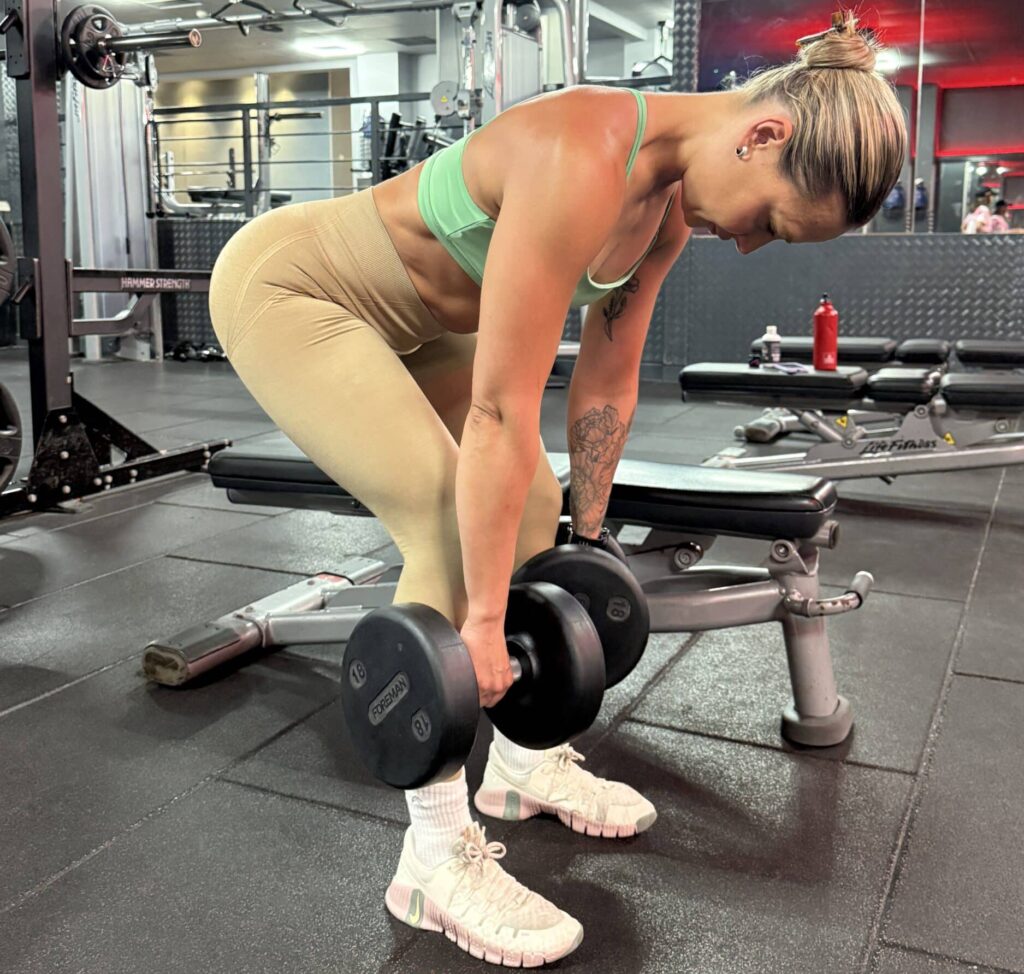
- Squats: Empty bar (20kg) or goblet squats 8-10kg dumbbell
- RDLs: Empty bar (20kg) or 8-10kg dumbbells
- Hip thrusts: 20-30kg barbell
- Lunges: 5-8kg dumbbells per hand
Upper body:
- Press variations: Empty bar (20kg) or 5-8kg dumbbells
- Rows: 15-20kg barbell or 6-10kg dumbbells
- Pull-ups/lat pulldowns: Assisted or 20-25kg
Isolations:
- Bicep curls: 3-5kg
- Lateral raises: 2-4kg
- Tricep extensions: 4-6kg
Will’s week 1 goal: “Not about finding max weight. It’s about learning movements with manageable loads. Week 2 we’ll add weight.”
Progressive Increases (Weeks 2-12)
Week 2-4: If form is perfect and prescribed reps achieved, increase 2.5-5kg each week Week 5-8: Increases slow to every 2-3 weeks Week 9-12: May stay at same weight 2-3 weeks whilst improving reps/form
Typical 12-week progression (squats):
- Week 1: 20kg (empty bar) × 10 reps
- Week 3: 30kg × 10 reps
- Week 6: 40kg × 10 reps
- Week 9: 47.5kg × 10 reps
- Week 12: 52.5-55kg × 10 reps
Will’s beginner expectation: “Beginner woman starting with empty bar for squats should reach 45-55kg for 10 reps within 12 weeks with proper programming and nutrition.”
The Bottom Line
How much weight should you lift? The weight that makes your last 2-3 reps of each set challenging whilst maintaining perfect form.
Starting points (beginners):
✅ Large compounds (squats, deadlifts): Empty 20kg bar
✅ Medium compounds (RDLs, hip thrusts): 20-40kg barbell or 8-12kg dumbbells
✅ Upper body (press, rows): 15-25kg barbell or 5-10kg dumbbells
✅ Isolations (bicep curls, lateral raises): 3-6kg dumbbells
When to increase weight:
✅ Last 2-3 reps no longer challenging (could do 4+ more reps)
✅ Completed prescribed reps multiple sessions in a row
✅ Exercise feels “easy”
How much to increase:
✅ Large compounds: +2.5-5kg
✅ Medium compounds: +2.5-5kg
✅ Upper body: +1.25-2.5kg
✅ Isolations: +1-2kg
Will’s decade of experience summarised:
✅ “Women carry heavy shopping (10kg+), children, suitcases without thinking. But in gym, shy away from anything over 5kg dumbbells. The disconnect is enormous”
✅ “After set 1 I ask: ‘How many more reps could you do?’ If answer is ‘5-6 easily,’ weight too light. If ‘1-2 with good form,’ weight perfect”
✅ “Every new client starts with empty bar for squats/deadlifts—no exceptions. Master movement with light weight first. Add weight next session if form perfect”
✅ “Client doing goblet squats with 8kg, completes 15 reps easily. I hand her 14kg—does 10 reps, last 2 challenging. That’s the right weight—not the comfortable one”
✅ “Client tells me 6 months training but no muscle gain. Check training log—squatting 45kg entire time. That’s not training, that’s maintaining. Progressive overload non-negotiable”
✅ “Perfect form with 40kg builds muscle. Terrible form with 60kg builds injuries. Form first, weight second—always”
✅ “Beginner woman starting with empty bar squats should reach 45-55kg for 10 reps within 12 weeks with proper programming and nutrition”
Common mistakes to avoid:
❌ Lifting too light (5kg dumbbells when could lift 15kg—no muscle growth stimulus, wasted time)
❌ Same weight for months (no progressive overload = no gains)
❌ Ego lifting (loading too heavy, form breaks down—injury risk)
❌ Not tracking weights (can’t apply progressive overload if don’t know what lifted last time)
The golden rule:
✅ First 5-6 reps: Manageable
✅ Reps 7-8: Challenging
✅ Reps 9-10: Require real effort BUT form stays perfect
✅ Could do maybe 1-2 more reps maximum
Try 12REPS free for 7 days. Get structured programmes that tell you exactly what weight to use, when to increase, and how to progress safely—no more guessing.
Stop lifting too light out of fear. Start with empty bar or light dumbbells to learn movements, then increase weight every 1-3 weeks. Track everything. Push yourself—last 2-3 reps should be challenging. Form first, weight second, progressive overload always.
References
- Schoenfeld, B.J., Grgic, J., Ogborn, D., Krieger, J.W. (2017). Strength and Hypertrophy Adaptations Between Low- vs. High-Load Resistance Training: A Systematic Review and Meta-Analysis. Journal of Strength and Conditioning Research, 31(12), 3508-3523. https://doi.org/10.1519/JSC.0000000000002200
- American College of Sports Medicine (2009). Progression Models in Resistance Training for Healthy Adults. Medicine & Science in Sports & Exercise, 41(3), 687-708. https://doi.org/10.1249/MSS.0b013e3181915670
- Kraemer, W.J., Ratamess, N.A. (2004). Fundamentals of Resistance Training: Progression and Exercise Prescription. Medicine & Science in Sports & Exercise, 36(4), 674-688. https://doi.org/10.1249/01.MSS.0000121945.36635.61