



You’re mid-set, muscles burning, wondering: should I push until I literally can’t do another rep? Or stop when it gets really hard?
The fitness world sends mixed messages. Some trainers say training to failure is essential for muscle growth. Others say it’s unnecessary and increases injury risk. You’re confused about how hard to actually push yourself.
The truth: Training close to failure builds muscle, but you don’t need to hit complete exhaustion every single set.
I’m Will Duru, a personal trainer with 10+ years’ experience in London. I’ve programmed thousands of training sessions and watched clients make progress with varying approaches to intensity.
My biggest observation: Most women don’t push hard enough (stopping with 5-6 reps left in the tank), but the ones who push to absolute failure every set burn out quickly and progress slower due to excessive fatigue.

What Is "Training to Failure"?
Training to failure means pushing a set until you physically cannot complete another rep with proper form.
Two types of failure:
1. Technical failure (most relevant for women)
- Cannot perform another rep with good form
- Form breaks down before muscles give out
- Example: Hip thrust where lower back arches excessively on attempted final rep
2. Absolute muscular failure
- Muscles physically cannot move the weight another inch
- Regardless of form (good or bad)
- Example: Bicep curl where arm won’t move despite maximum effort
Will’s coaching: “For women, technical failure is what matters. Absolute muscular failure, where form completely breaks down—is dangerous. When I say ‘push close to failure,’ I mean stop when you can’t do another rep with good form.”

Does Training to Failure Build More Muscle?
Recent research (2024 Sports Medicine review): Training closer to failure does increase muscle growth. BUT—and this is crucial—you don’t need to hit complete failure every set.
The “sweet spot” for muscle growth: Stopping 0-3 reps before complete failure stimulates equal or near-equal muscle growth as absolute failure, with significantly less fatigue.
What this means practically:
- If you could do 12 reps maximum before absolute failure, stopping at 9-11 reps (1-3 reps shy) builds just as much muscle
- Going all the way to rep 12 (complete failure) adds minimal benefit but causes excessive fatigue
Will’s experience: “I programme most sets to end 1-3 reps before absolute failure. Clients build excellent muscle at this intensity whilst recovering properly between sessions. The few who insist on absolute failure every set? They’re constantly exhausted, miss sessions, progress slower.”

The Problem With Training to Failure Every Set
Issue 1: Excessive Fatigue Reduces Total Volume
What research shows: Training every set to absolute failure creates so much neuromuscular fatigue that performance on subsequent sets drops dramatically.
Real example:
- Set 1 to failure: 60kg hip thrusts × 12 reps
- Set 2 after hitting failure: 60kg × 7 reps (41% drop)
- Set 3 after hitting failure: 60kg × 5 reps (58% drop)
Versus stopping 2 reps shy:
- Set 1 (2 reps shy): 60kg × 10 reps
- Set 2: 60kg × 9 reps (10% drop)
- Set 3: 60kg × 8 reps (20% drop)
Total volume: Failure sets = 24 reps, Non-failure = 27 reps (12.5% more)
Will’s observation: “Client doing RDLs to absolute failure on set 1—completely fried, can barely manage 2-3 more sets. Client stopping 2 reps shy, completes 4 quality sets with minimal drop-off. More total volume = more muscle growth.”
Issue 2: Recovery Takes 24-48 Hours Longer
Research finding: Training to absolute failure requires roughly 24-48 hours additional recovery time compared to stopping 1-3 reps shy.
Why it matters: If you train legs Monday to complete failure, you’re still recovering Wednesday/Thursday, interfering with your next session.
Will’s practical issue: “Woman training full body Monday/Wednesday/Friday. If she trains to absolute failure Monday, she’s not recovered by Wednesday, session quality poor, can’t progressive overload. Better to stop 2 reps shy Monday, recover properly, hit Wednesday strong.”
Issue 3: Increased Injury Risk
The danger: As fatigue accumulates, form deteriorates, injury risk rises.
Will’s biggest safety concern: “Client squatting heavy, pushes to absolute failure—final rep, knees cave in, back rounds. That’s how injuries happen. I programme technical failure (good form maintained) not absolute failure (form breaks down).”
When Training to Failure Makes Sense
Scenario 1: Final Set of an Exercise
Why it works: You’re done with that exercise, so fatigue won’t impact subsequent sets.
Will’s approach: “Sets 1-3 I programme 1-3 reps shy of failure. Set 4 (final set)? Push to technical failure—get that extra stimulus without compromising remaining workout.”
Example (goblet squats):
- Set 1: 20kg × 10 reps (2 reps shy)
- Set 2: 20kg × 10 reps (2 reps shy)
- Set 3: 20kg × 9 reps (2 reps shy)
- Set 4: 20kg × 11 reps (technical failure)
Scenario 2: Isolation Exercises
Why it works: Less technical demand, lower injury risk, fatigue less systemic.
Safe for failure: Bicep curls, tricep extensions, leg curls, lateral raises, cable exercises
Not safe for failure: Squats, deadlifts, overhead presses (high injury risk when fatigued)
Will’s guidance: “Pushing bicep curls or leg curls to failure? Fine—low injury risk. Pushing heavy back squats to absolute failure? Dangerous. I allow failure on isolations, prohibit it on big compounds.”
Scenario 3: Learning Your Limits (Occasionally)
Why it’s useful: Most women underestimate their capacity—they stop with 5+ reps remaining thinking they’re at failure.
Will’s reality check method: Once monthly, I have clients push one final set to absolute technical failure to recalibrate their effort perception.
The revelation: “Client thinks she’s at failure at 8 reps. I encourage one more—she does it. And another. And another. She hits 12 reps. Her ‘failure’ was actually 4 reps shy. Now she knows what true failure feels like and trains harder going forward.”
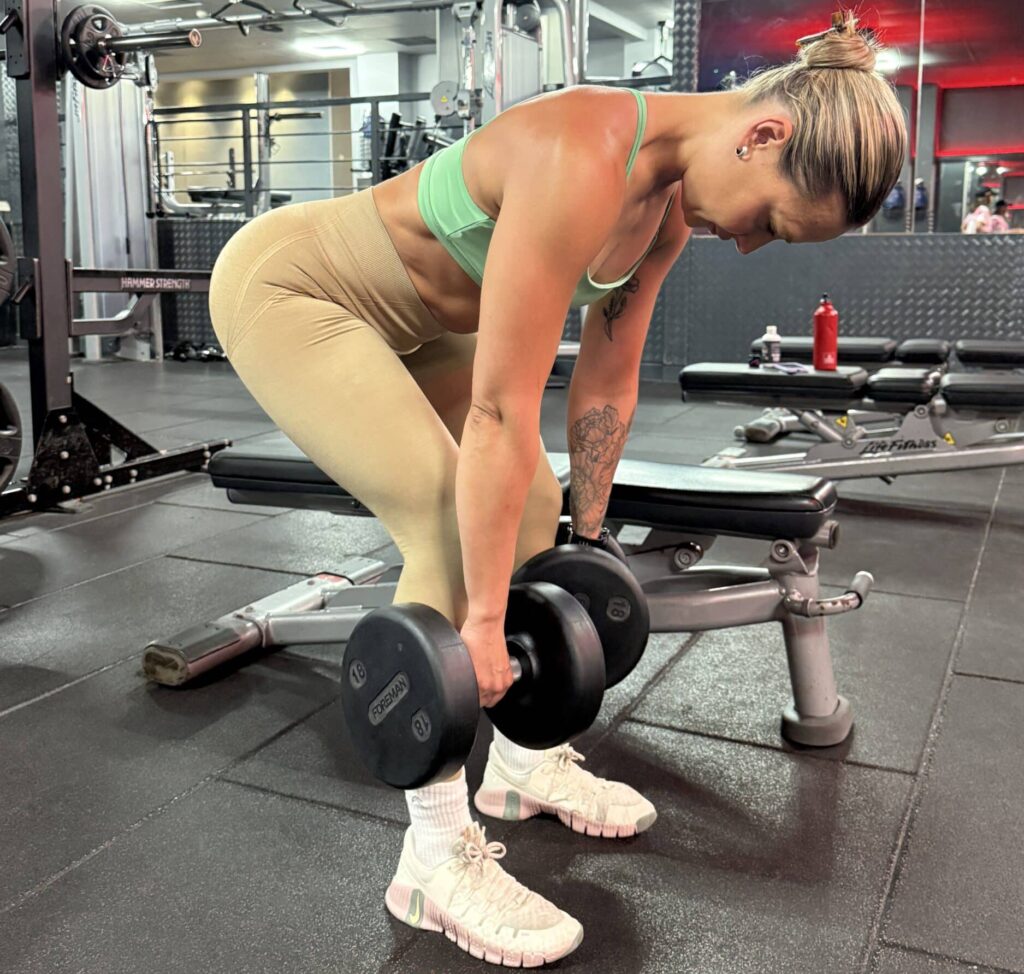
How Hard Should You Actually Train?
The research-backed sweet spot: 0-3 reps shy of technical failure
What this looks like:
- You complete your programmed reps (say, 10)
- You feel you could do 1-3 more reps maximum if pushed
- The final 2-3 reps felt challenging but form stayed perfect
Will’s practical guide (RPE scale 1-10):
- RPE 10: Absolute failure, couldn’t do another rep
- RPE 9: 1 rep shy of failure (ideal for final sets)
- RPE 8: 2 reps shy of failure (ideal for most sets)
- RPE 7: 3 reps shy of failure (minimum for muscle growth)
- RPE 6 or less: Probably training too easy
Will’s programming: “I prescribe RPE 8 for most working sets (2 reps shy), RPE 9 for final sets (1 rep shy). This builds maximum muscle whilst managing fatigue properly.”

Will's Practical Approach by Training Experience
Beginners (0-6 months)
Recommendation: Stop 3-4 reps shy of failure (RPE 7)
Why: Learning movement patterns, building work capacity, establishing consistency matters more than maximum intensity.
Will’s coaching: “First 6 months, I keep intensity moderate. Client learning to squat properly doesn’t need to push to failure—she needs to perfect technique and build the training habit. Intensity comes later.”
Intermediates (6-18 months)
Recommendation: Most sets 2-3 reps shy (RPE 7-8), final set 1 rep shy (RPE 9)
Why: Movement patterns solid, ready for higher intensity, but still need to manage fatigue for progression.
Will’s typical prescription:
- Sets 1-3: RPE 8 (2 reps shy)
- Set 4: RPE 9 (1 rep shy, technical failure)
Advanced (18+ months)
Recommendation: Most sets 1-2 reps shy (RPE 8-9), occasional absolute failure on final sets of isolations
Why: Experienced lifters need higher intensity to continue progressing, can handle fatigue better.
Will’s advanced approach: “Advanced clients I push harder—RPE 9 on most sets, absolute failure on final sets of isolations. But even then, never failure on big compounds like squats/deadlifts.”

Common Mistakes About Training Intensity
Mistake 1: Never Pushing Hard Enough
The problem: Stopping with 5+ reps remaining thinking “I don’t want to train to failure.”
Why it’s wrong: If you stop with 5+ reps left, you’re not creating sufficient stimulus for growth.
Will’s diagnosis: “Client doing hip thrusts, stops at 8 reps. I ask ‘how many more could you do?’ She says ‘5-6 more easily.’ That’s RPE 5—way too easy. No wonder she’s not building glutes.”
The fix: Push to at least RPE 7 (3 reps shy minimum).
Mistake 2: Absolute Failure Every Single Set
The problem: Taking every set of every exercise to complete exhaustion.
Why it’s wrong: Excessive fatigue, reduced total volume, impaired recovery, increased injury risk.
Will’s typical scenario: “Client starts every workout with absolute failure mentality. By exercise 3, she’s completely spent, can barely finish session. Next session two days later? Still fatigued, lifts way down. She’s overtraining.”
The fix: Most sets RPE 8, final set RPE 9, occasional RPE 10 on isolations only.
Mistake 3: Failure on Dangerous Exercises
The problem: Pushing heavy squats, deadlifts, overhead presses to absolute failure.
Why it’s dangerous: Form breaks down under extreme fatigue, injury risk spikes.
Will’s safety rule: “Big compound lifts should never reach absolute failure. Client squatting 70kg for 8 reps, feeling confident, tries for 9th rep to failure, knees cave, back rounds. That’s a potential injury. Stop at 8 when form is still perfect.”
Mistake 4: Confusing “Hard” With “Failure”
The problem: Thinking training is only effective if you reach absolute failure.
Reality: Training at RPE 8 (2 reps shy) is still very hard, still builds muscle, but allows better recovery.
Will’s reminder: “Client thinks stopping 2 reps shy means ‘going easy.’ I remind her: a set to RPE 8 is still challenging, muscles are burning, you’re sweating, breathing hard. It’s not easy—it’s just smart.”
The Bottom Line
Should you train to failure? Sometimes—but not every set of every exercise.
The research-backed approach:
✅ Train most sets to RPE 8 (2 reps shy of failure), maximises muscle growth whilst managing fatigue
✅ Push final set to RPE 9 (1 rep shy), extracts extra stimulus without compromising recovery
✅ Occasionally absolute failure (RPE 10) on isolations (bicep curls, leg curls), safe, low injury risk
✅ Never absolute failure on heavy compounds (squats, deadlifts, overhead presses), dangerous when form breaks
By training experience:
✅ Beginners (0-6 months): RPE 7, focus on technique and consistency
✅ Intermediates (6-18 months): RPE 8 most sets, RPE 9 final sets
✅ Advanced (18+ months): RPE 8-9 most sets, occasional RPE 10 on isolations
Will’s decade of experience summarised:
✅ “Most women don’t push hard enough, stopping with 5-6 reps left (RPE 5-6). Minimum RPE 7 needed for growth”
✅ “The ones who push to absolute failure every set burn out, constantly exhausted, miss sessions, progress slower due to excessive fatigue”
✅ “I programme RPE 8 for most sets (2 reps shy), builds maximum muscle, manages fatigue, allows consistent progression”
✅ “Final set of each exercise? RPE 9 (1 rep shy, technical failure), get extra stimulus without compromising remaining workout”
✅ “Big compounds (squats, deadlifts, overhead press) should never reach absolute failure, form breaks down, injury risk spikes”
✅ “Client doing RDLs to absolute failure set 1, fried, barely manages 2-3 more sets. Client stopping 2 reps shy, completes 4 quality sets. More total volume = more growth”
✅ “Once monthly I have clients push one final set to absolute failure to recalibrate effort perception—teaches them what true hard feels like”
The problem with failure every set:
❌ Excessive neuromuscular fatigue (performance drops 40-60% on subsequent sets)
❌ Recovery takes 24-48 hours longer (interferes with next session)
❌ Increased injury risk (form breaks down under extreme fatigue)
❌ Lower total volume (fewer quality sets = less muscle growth)
Try 12REPS free for 7 days. Get structured programmes with RPE targets built in, know exactly how hard to push each set for maximum muscle growth without burnout.
Stop guessing about intensity. Train most sets to RPE 8 (2 reps shy), final sets to RPE 9 (1 rep shy), occasional failure on safe isolations only. Push hard, but train smart.

References
- Grgic, J., Schoenfeld, B.J., Orazem, J., Sabol, F. (2022). Effects of Resistance Training Performed to Repetition Failure or Non-Failure on Muscular Strength and Hypertrophy: A Systematic Review and Meta-Analysis. Journal of Sport and Health Science, 11(2), 202-211. https://doi.org/10.1016/j.jshs.2021.01.007
- Schoenfeld, B.J., Grgic, J., Van Every, D.W., Plotkin, D.L. (2021). Loading Recommendations for Muscle Strength, Hypertrophy, and Local Endurance: A Re-Examination of the Repetition Continuum. Sports, 9(2), 32. https://doi.org/10.3390/sports9020032
- Davies, T., Orr, R., Halaki, M., Hackett, D. (2016). Effect of Training Leading to Repetition Failure on Muscular Strength: A Systematic Review and Meta-Analysis. Sports Medicine, 46(4), 487-502. https://doi.org/10.1007/s40279-015-0451-3
- Willardson, J.M., Norton, L., Wilson, G. (2010). Training to Failure and Beyond in Mainstream Resistance Exercise Programs. Strength and Conditioning Journal, 32(3), 21-29. https://doi.org/10.1519/SSC.0b013e3181cc2392