

Every woman who starts lifting weights eventually asks the same question: “How much protein should I be eating?”
Then the confusion begins. One article says 0.8g per kg bodyweight. Another claims you need 2.2g per kg. Instagram fitness influencers pound protein shakes five times daily. Your mate who lifts tells you protein timing doesn’t matter. Someone else insists you must eat within 30 minutes post-workout or your gains disappear.
Meanwhile, you’re eating your normal diet, training consistently, and wondering if you’re sabotaging results by not eating enough protein. Or maybe you’re eating too much and it’s pointless. You genuinely don’t know.
I’m Will Duru, a personal trainer with over 10 years’ experience in London. I’ve programmed nutrition for hundreds of women who strength train. The protein question comes up in every single initial consultation.
Here’s the honest, evidence-based answer about protein for strength training women, what actually matters, what doesn’t, and how to hit your targets without obsessing.

Why Protein Actually Matters
Before numbers, let’s understand why protein is non-negotiable for women who lift weights.
Muscle is made of protein. When you strength train, you create microscopic tears in muscle fibers. Your body repairs these tears using amino acids (protein building blocks). With adequate protein and proper training stimulus, muscles repair slightly stronger and larger than before.
This is muscle protein synthesis (MPS). Without adequate protein, MPS is impaired. You’re training hard but not providing the raw materials your body needs to adapt.
Protein requirements increase with strength training. Sedentary women need roughly 0.8g protein per kg bodyweight to maintain basic health. Women who strength train regularly need 1.6-2.2g per kg to optimise muscle repair and growth.
This isn’t optional. It’s biological reality.
I trained a woman who did everything right in the gym—progressive overload, proper form, adequate frequency—but ate maybe 50g protein daily. For months, her strength barely increased. We fixed her protein intake to 110g daily (1.8g per kg for her 60kg bodyweight). Within six weeks, her lifts increased noticeably. She’d been training with the handbrake on.
The Actual Numbers: How Much Do You Need?
Right, let’s get specific. Here’s the evidence-based range.
For women who strength train 2-4 times weekly: 1.6-2.2g protein per kg bodyweight daily
This range comes from extensive research on resistance-trained individuals. The upper end (2.2g/kg) represents the 95% confidence interval—meaning it covers needs for 95% of women who strength train.
Practically:
- 60kg woman: 96-132g protein daily
- 65kg woman: 104-143g protein daily
- 70kg woman: 112-154g protein daily
- 75kg woman: 120-165g protein daily
Where should you aim within that range?
1.6g/kg (lower end) if:
- You’re eating at maintenance or surplus calories
- You’re relatively new to training (less than 2 years)
- You’re eating a variety of complete protein sources
2.0-2.2g/kg (upper end) if:
- You’re in a calorie deficit (fat loss phase)
- You’re an experienced trainee pushing hard
- You want to maximise muscle retention during weight loss
The higher end provides a buffer. If you slightly underestimate portion sizes or miss a bit here and there, you’re still adequate. The lower end works if you’re precise and consistent.
I generally programme 1.8-2.0g/kg for most strength-training women. It’s high enough to optimise results without being unreasonably difficult to hit.
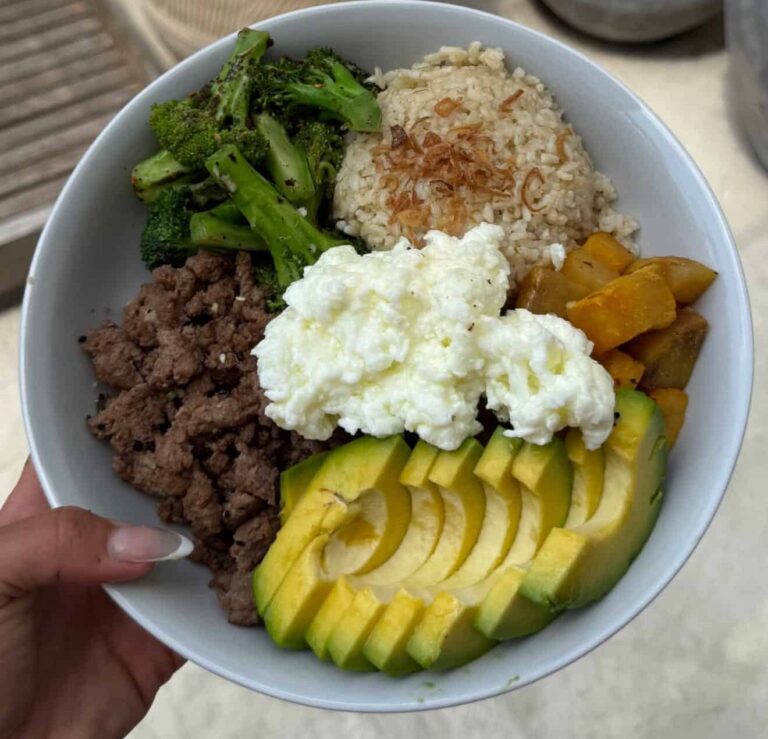
Where These Numbers Come From (The Research)
This isn’t bro-science or Instagram nonsense. The recommendations come from meta-analyses examining hundreds of studies.
Key research:
Morton et al. (2018) analysed 49 studies involving 1,863 participants. They found protein intake of 1.6g/kg daily maximised gains in fat-free mass in resistance-trained individuals. The upper confidence interval was 2.2g/kg.
Schoenfeld & Aragon (2018) reviewed protein requirements for strength athletes and concluded 1.6-2.2g/kg as the optimal range.
Phillips & Van Loon (2011) established that resistance training substantially increases protein requirements beyond sedentary recommendations.
This is consistent, replicated research. Not one cherry-picked study.
What Counts as “Protein”
Not all protein sources are equal. Your body needs amino acids—specifically essential amino acids it cannot produce.
Complete proteins (contain all essential amino acids):
- All animal sources: chicken, beef, pork, fish, eggs, dairy
- Some plant sources: soy, quinoa, hemp
Incomplete proteins (missing some essential amino acids):
- Most plant sources: beans, lentils, rice, nuts, seeds
You can combine incomplete proteins (rice + beans, bread + peanut butter) to get all essential amino acids. This works fine but requires more planning.
For simplicity: prioritise complete protein sources for at least 70-80% of total intake.
High-quality protein sources by quantity:
Per 100g:
- Chicken breast: 31g protein
- Lean beef: 26g protein
- Salmon: 25g protein
- Tuna (tinned in water): 25g protein
- Eggs: 13g protein (roughly 6g per large egg)
- Greek yoghurt: 10g protein
- Cottage cheese: 11g protein
- Tofu: 8g protein
- Lentils (cooked): 9g protein
Protein powders:
- Whey: 20-25g per scoop
- Vegan blends: 15-20g per scoop
How to Actually Hit Your Protein Target
Theory is useless without practical application. Here’s how to consistently hit 100-140g protein daily.
Build Meals Around Protein
Don’t add protein as an afterthought. Start with protein, then add carbs and fats.
Breakfast examples:
- 3-egg omelette with cheese: 25g protein
- Greek yoghurt (200g) with granola: 20g protein
- Protein shake with banana: 25g protein
Lunch examples:
- Chicken breast (150g) salad: 47g protein
- Tuna (tin) with quinoa: 30g protein
- Turkey sandwich (100g turkey): 30g protein
Dinner examples:
- Salmon (180g) with vegetables: 45g protein
- Lean beef (150g) with rice: 39g protein
- Tofu stir-fry (200g tofu): 16g protein
Snacks if needed:
- Protein yoghurt: 15-20g
- Hard-boiled eggs (2): 12g
- Protein bar: 15-20g
The 25-30g Per Meal Rule
Research suggests muscle protein synthesis is maximised with 25-30g protein per meal for most women. Beyond this, additional protein in a single meal doesn’t significantly increase MPS.
Practically: Aim for 4 meals with 25-30g protein each rather than 2 massive meals with 60g each.
Example distribution (120g daily target):
- Breakfast: 30g
- Lunch: 30g
- Dinner: 40g
- Snack: 20g
This pattern keeps MPS elevated throughout the day.
Use Protein Powder Strategically (Not Excessively)
Protein powder is food. Not magic. It’s just a convenient protein source.
Good uses:
- Morning when you’re not hungry for solid food
- Post-workout when you won’t eat a meal for 2-3 hours
- Between meals if you’re genuinely short on daily protein
Poor uses:
- Replacing proper meals habitually
- Drinking 3-4 shakes daily because you can’t be bothered to cook
- Thinking powder is superior to food (it isn’t)
Most women do fine with one shake daily, maximum. Get majority of protein from actual food.
I trained a woman who drank protein shakes four times daily because she thought that’s what “serious lifters” did. Her digestion was terrible, she felt bloated constantly, and she actually hated the shakes. We reduced to one shake and prioritised real food. She felt dramatically better and her results didn’t suffer at all.

Protein Timing: What Actually Matters
The fitness industry has made protein timing unnecessarily complicated.
What matters:
- Total daily protein intake
- Spreading intake across 3-4 meals
- Eating adequate protein on training days AND rest days
What doesn’t matter as much as claimed:
- Eating within 30-60 minutes post-workout
- Protein before bed being “essential”
- Precise timing down to the minute
Research shows the “anabolic window” is far wider than previously thought—more like 4-6 hours, not 30 minutes.
Simple, effective approach:
- Eat protein at breakfast, lunch, dinner, and maybe a snack
- If you train in morning, have breakfast with protein after
- If you train evening, have dinner with protein after
- Don’t stress about precise timing
The obsession with post-workout shakes immediately after training is largely marketing from supplement companies. If you’re eating a proper meal within 2-3 hours, you’re fine.
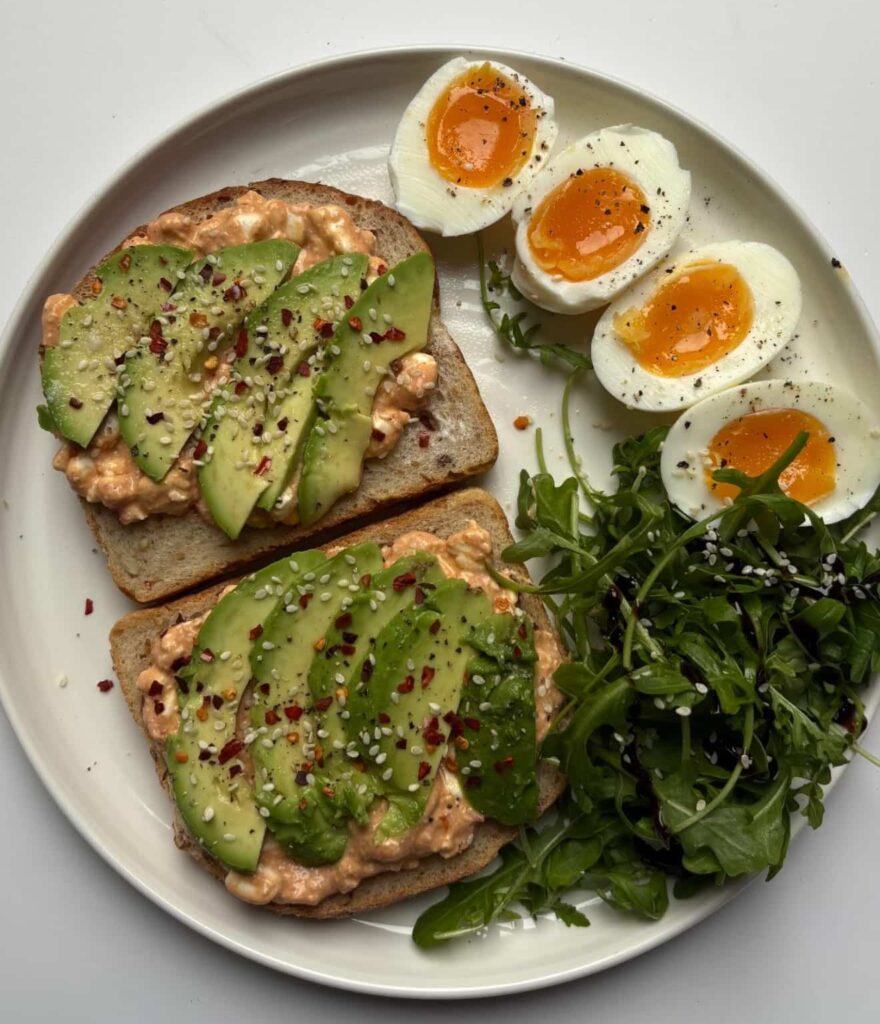
Common Protein Mistakes Women Make
Mistake 1: Eating the Same Amount as Sedentary Women
“My friend who doesn’t exercise eats 60g protein and she’s fine.”
Cool. You strength train. Your requirements are different. If you’re eating sedentary-level protein whilst training hard, you’re under-recovering.
Mistake 2: Relying Too Heavily on Plant Proteins
I’m not anti-vegetarian or anti-vegan. But plant proteins (except soy, quinoa, hemp) are incomplete and less bioavailable than animal proteins.
If you’re plant-based, you likely need the higher end of the range (2.0-2.2g/kg) to compensate for lower bioavailability.
Mistake 3: Not Tracking Anything
“I eat loads of protein.”
Do you, though? Most people dramatically overestimate protein intake.
Track for one week. Write down everything. Calculate actual grams. You’ll likely discover you’re eating 60-80g when you need 120g.
Mistake 4: Only Eating Protein Around Training
Protein on training days, carbs on rest days, random eating patterns.
Your body rebuilds muscle during rest, not during training. You need adequate protein EVERY day, whether you train or not.
Mistake 5: Thinking More is Always Better
If 1.8g/kg is good, surely 3.0g/kg is better?
No. Beyond 2.2-2.5g/kg, additional protein doesn’t enhance muscle growth. It’s just expensive calories that could come from carbs or fats instead.
Protein on a Budget
“I can’t afford that much protein” is common. Let’s fix that.
Cheapest high-quality protein sources (UK prices):
Eggs: £2-3 for dozen (72g protein total) = £0.03-0.04 per gram protein
Chicken breast: £5-7 per kg (300g protein total) = £0.017-0.023 per gram protein
Tinned tuna: £1-1.50 per tin (25g protein) = £0.04-0.06 per gram protein
Greek yoghurt: £1.50-2 per 500g pot (50g protein) = £0.03-0.04 per gram protein
Cottage cheese: £1.50 per 300g pot (33g protein) = £0.045 per gram protein
Whey protein: £15-20 per kg (750-800g protein) = £0.02-0.027 per gram protein
Lentils/beans: £1 per 500g dried (110g protein when cooked) = £0.009 per gram protein
Chicken, eggs, lentils, and protein powder are your budget staples.
Sample day hitting 120g protein for under £5:
- Breakfast: 3 eggs scrambled (18g) = £0.30
- Lunch: Chicken breast 150g (46g) = £1.05
- Snack: Greek yoghurt 200g (20g) = £0.60
- Dinner: Lentil curry 200g cooked lentils (18g) + chicken 100g (31g) = £1.50
- Protein shake (25g) = £0.50
Total: 158g protein for £3.95
Protein isn’t expensive. Convenience protein (pre-made meals, protein bars, fancy supplements) is expensive.
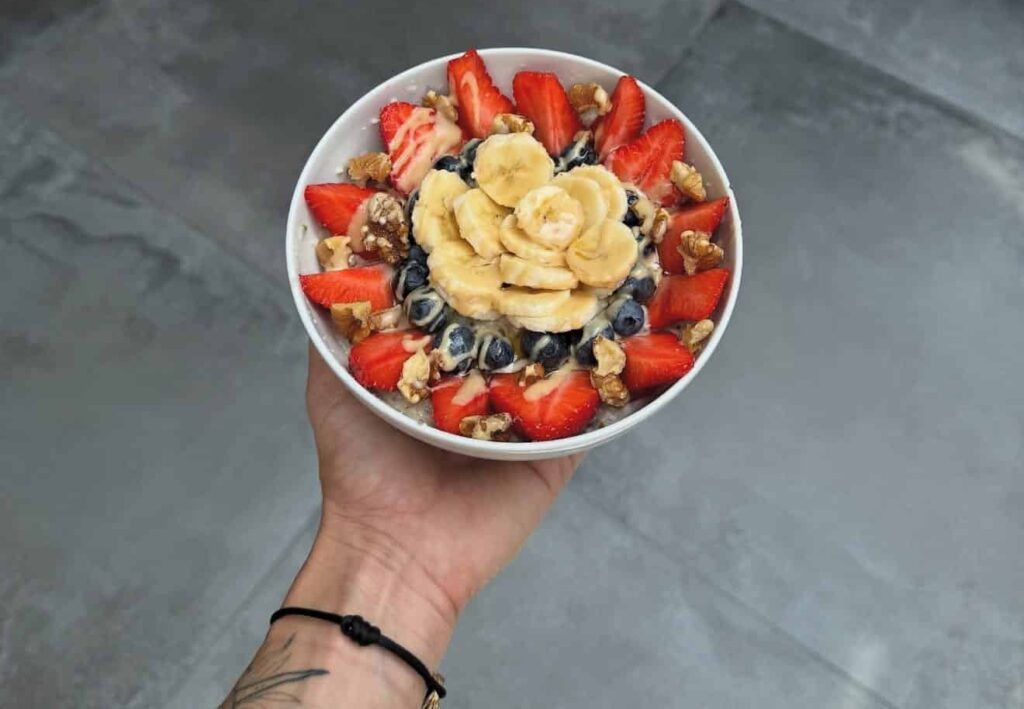
Protein for Fat Loss vs Muscle Gain
Your goals change how you apply these numbers.
Fat Loss (Calorie Deficit)
When cutting calories, protein becomes even more important. Higher protein intake (2.0-2.2g/kg) preserves muscle mass whilst in a deficit.
Research shows women in calorie deficits who eat higher protein lose significantly more fat and retain more muscle than those eating lower protein.
If you’re eating 1,600 calories daily trying to lose fat, prioritise protein first. Get your 120g protein (480 calories), then fill remaining calories with carbs and fats.
Muscle Gain (Calorie Surplus)
When eating surplus calories to gain muscle, protein requirements don’t increase beyond 1.6-1.8g/kg. The surplus calories provide additional energy for training and recovery.
You don’t need 2.5g/kg protein just because you’re bulking. Maintain 1.6-1.8g/kg and use extra calories for carbs to fuel training.
Do You Need Supplements?
Supplements that can help:
Whey protein powder: Convenient, cost-effective, high-quality. Worth having for busy days.
Creatine monohydrate: 5g daily. Well-researched, improves strength performance. Not protein, but supports muscle building. Worth taking.
Supplements you probably don’t need:
BCAAs: If you’re eating adequate protein, you’re getting sufficient branched-chain amino acids from food. Waste of money.
Amino acid pills: Expensive protein in pill form. Just eat food or have a shake.
Collagen protein: Incomplete protein, poor for muscle building. Fine for skin/joints but doesn’t count toward strength-training protein targets.
Expensive speciality proteins: Hydrolysed whey, isolate vs concentrate differences are negligible for most people. Standard whey works fine.
Save your money. Adequate total protein from food > expensive supplements.
How to Track Protein (Without Obsessing)
You don’t need to weigh every morsel forever. But initially, tracking helps you understand what hitting your target actually looks like.
Simple tracking method:
Week 1: Track everything meticulously using MyFitnessPal or similar. Weigh portions, calculate protein.
Week 2-4: Keep tracking but less precisely. You’re learning what 30g protein looks like on a plate.
After month 1: Track occasionally (maybe one day weekly) to ensure you’re still on target. Otherwise, eat intuitively based on what you’ve learned.
Visual portion guide (rough):
- Palm-sized chicken breast: ~30g protein
- 3 whole eggs: ~18g protein
- Fist-sized Greek yoghurt serving: ~15g protein
- Scoop of protein powder: ~25g protein
Once you know these visual cues, you can estimate reasonably well without constant tracking.
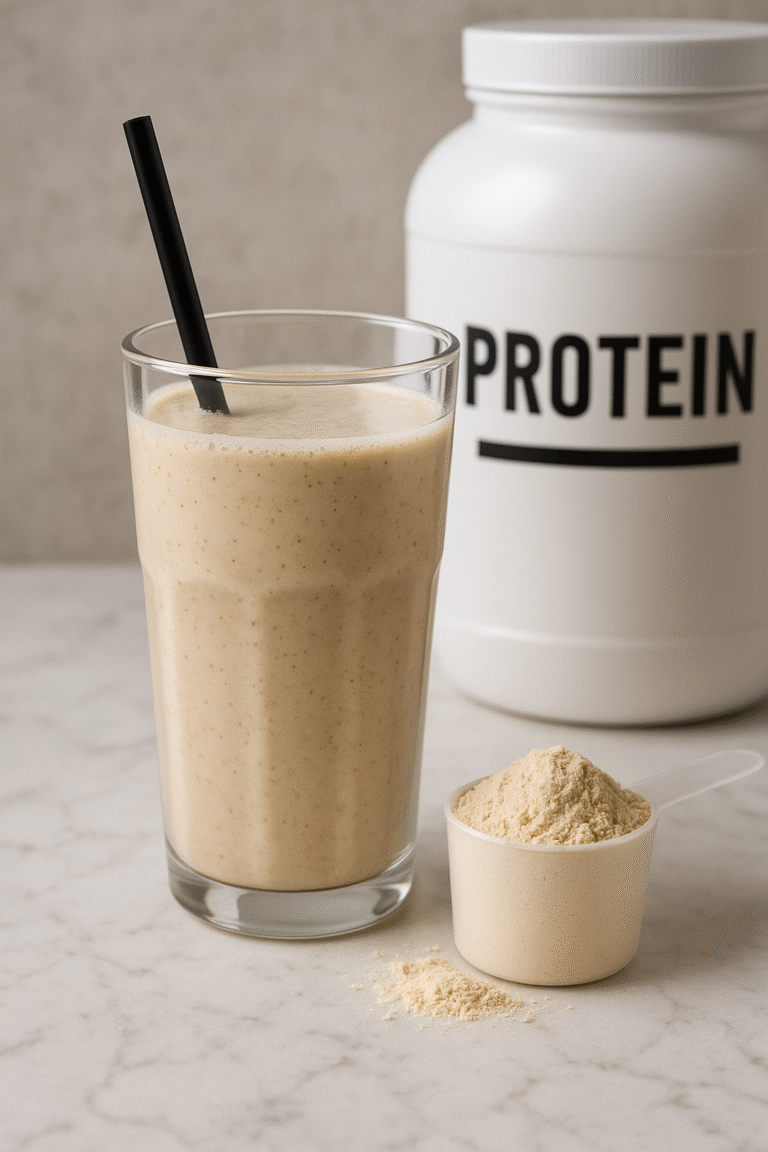
The Bottom Line on Protein
For women who strength train 2-4 times weekly, eat 1.6-2.2g protein per kg bodyweight daily.
Practically for a 65kg woman: 104-143g protein daily
How to hit this:
- Prioritise complete protein sources (animal products or soy/quinoa)
- Build each meal around a protein source
- Aim for 25-30g protein per meal across 4 meals
- Use protein powder if convenient, not as primary source
- Track initially to learn what portions look like
- Eat adequate protein EVERY day, not just training days
What doesn’t matter as much:
- Precise post-workout timing (within hours is fine)
- Expensive supplements beyond basic whey and creatine
- Protein every 2 hours
- Complicated timing strategies
Get the basics right—total daily intake, quality sources, consistent habits—and you’ve solved 95% of it.
I’ve trained women who obsessed over protein timing whilst eating only 70g daily. I’ve trained others who hit 140g daily with zero fuss about timing. The latter group always made better progress.
Protein is important. Don’t under-eat it. But also don’t make it more complicated than necessary.
References
- Morton, R.W., Murphy, K.T., McKellar, S.R., Schoenfeld, B.J., Henselmans, M., Helms, E., Aragon, A.A., Devries, M.C., Banfield, L., Krieger, J.W. and Phillips, S.M. (2018). A Systematic Review, Meta-Analysis and Meta-Regression of the Effect of Protein Supplementation on Resistance Training-Induced Gains in Muscle Mass and Strength in Healthy Adults. British Journal of Sports Medicine, 52(6), pp.376-384. https://doi.org/10.1136/bjsports-2017-097608
- Schoenfeld, B.J. and Aragon, A.A. (2018). How Much Protein Can the Body Use in a Single Meal for Muscle-Building? Implications for Daily Protein Distribution. Journal of the International Society of Sports Nutrition, 15(1), p.10. https://doi.org/10.1186/s12970-018-0215-1
- Phillips, S.M. and Van Loon, L.J. (2011). Dietary Protein for Athletes: From Requirements to Optimum Adaptation. Journal of Sports Sciences, 29(sup1), pp.S29-S38. https://doi.org/10.1080/02640414.2011.619204
- Longland, T.M., Oikawa, S.Y., Mitchell, C.J., Devries, M.C. and Phillips, S.M. (2016). Higher Compared with Lower Dietary Protein During an Energy Deficit Combined with Intense Exercise Promotes Greater Lean Mass Gain and Fat Mass Loss: A Randomized Trial. American Journal of Clinical Nutrition, 103(3), pp.738-746. https://doi.org/10.3945/ajcn.115.119339
- Thomas, D.T., Erdman, K.A. and Burke, L.M. (2016). Position of the Academy of Nutrition and Dietetics, Dietitians of Canada, and the American College of Sports Medicine: Nutrition and Athletic Performance. Journal of the Academy of Nutrition and Dietetics, 116(3), pp.501-528. https://doi.org/10.1016/j.jand.2015.12.006
- Areta, J.L., Burke, L.M., Ross, M.L., Camera, D.M., West, D.W., Broad, E.M., Jeacocke, N.A., Moore, D.R., Stellingwerff, T., Phillips, S.M. and Hawley, J.A. (2013). Timing and Distribution of Protein Ingestion During Prolonged Recovery from Resistance Exercise Alters Myofibrillar Protein Synthesis. Journal of Physiology, 591(9), pp.2319-2331. https://doi.org/10.1113/jphysiol.2012.244897
- Pasiakos, S.M., McLellan, T.M. and Lieberman, H.R. (2015). The Effects of Protein Supplements on Muscle Mass, Strength, and Aerobic and Anaerobic Power in Healthy Adults: A Systematic Review. Sports Medicine, 45(1), pp.111-131. https://doi.org/10.1007/s40279-014-0242-2