

By Will Duru, BSc (Hons) Sport and Exercise Science Award-winning Personal Trainer with over 10 years of experience in strength training and optimising recovery.
You’re in the gym, you’ve picked your exercise, and then you face the wall of dumbbells. What now? Do you grab the pink 2kg ones that feel safe but suspiciously light, or do you reach for the intimidating 10kg ones that might be too ambitious? Choosing your starting weight is the most common point of confusion for women starting strength training, and it’s a question that stops many people in their tracks.
In my ten-plus years as a personal trainer, I’ve seen two common mistakes play out repeatedly: starting so light that you don’t see results and wonder why you’re bothering, or starting so heavy that you risk injury and develop poor form habits. My passion is to help you find that sweet spot—the weight that challenges you just enough to get stronger without overwhelming you or compromising your safety.
This guide will give you a simple, practical method to determine your ideal starting weight for any exercise, so you can lift with confidence and get the results you deserve. No complicated formulas, no guesswork, just a straightforward system you can apply immediately.
The Goal: Finding Your 'Productive Struggle' Zone
Before we talk about specific numbers, let’s establish what we’re trying to achieve when we choose a weight.
Introduce the RPE Scale
We’re not going to talk about complex percentages of your one-rep max or scientific calculations. Instead, we’re going to use a simple, intuitive tool called RPE—Rate of Perceived Exertion. It’s a scale that measures how hard an exercise feels to you, from 1 to 10.
Here’s how to think about it:
- RPE 1-3: Extremely easy, like you’re lifting air
- RPE 4-5: Light effort, you could do many more reps
- RPE 6: Moderate effort, starting to feel challenging
- RPE 7-8: Hard effort, you could do 2-3 more reps with good form
- RPE 9: Very hard, maybe 1 more rep possible
- RPE 10: Maximum effort, couldn’t do another rep
This subjective measure is incredibly valuable because it accounts for variables that change day to day, your energy levels, sleep quality, stress, and recovery status. A weight that feels like an RPE 7 on Monday might feel like an RPE 8 on Friday when you’re tired.
The Sweet Spot (RPE 7-8)
For most of your working sets, the goal is to finish feeling like you could have done two to three more repetitions with good form. This is an RPE of 7-8, and it’s what I call the “productive struggle” zone.
This intensity is challenging enough to stimulate muscle growth and strength gains. Your muscles need to be pushed beyond their comfort zone to adapt and become stronger. But it’s not so demanding that your form breaks down, your risk of injury spikes, or you burn out mentally and physically.
When you’re working at RPE 7-8, the last few reps should feel genuinely hard, but you should still be able to complete them with proper technique. Your movement should remain controlled and deliberate, not desperate or jerky.
Why Not Lighter or Heavier?
RPE 1-5 (too light): If you finish a set feeling like you barely did anything, you haven’t provided enough stimulus for your muscles to adapt. This is the mistake many women make because they’ve been conditioned to believe they should use light weights. The result is frustration when they don’t see progress after weeks or months of consistent training.
RPE 9-10 (too heavy for most sets): Consistently training to complete failure or near-failure increases injury risk significantly, leads to excessive fatigue that impacts recovery, and is mentally draining. While there’s a place for occasional high-intensity sets in advanced programs, as a beginner, this approach does more harm than good.
The Trial-and-Error Method: Your First Set
Now let’s get practical. Here’s exactly how to find your starting weight for any exercise.
Pick a Conservative Weight
Choose a weight you’re confident you can lift for ten to twelve repetitions. Your ego is not your friend here. If you’re torn between two options, pick the lighter one. It’s much better to discover a weight is too light and adjust up than to discover it’s too heavy mid-set and risk injury or develop poor form.
For context, many women who are completely new to strength training might start with:
- 3-5kg dumbbells for shoulder exercises
- 5-8kg dumbbells for upper body exercises like rows
- 8-12kg dumbbells for lower body exercises like goblet squats
These are general guidelines, not rules. Your starting point depends on your current fitness level, prior athletic experience, and individual strength.
Perform Your First Set
Execute a set of ten to twelve repetitions with your chosen weight. Focus intensely on perfect form—controlled movement, full range of motion, proper breathing, and engagement of the target muscles. Form always takes priority over weight.
Pay attention to how the set progresses. Do the first few reps feel easy but the last few get challenging? That’s a good sign. Does the entire set feel effortless? You need more weight. Do you struggle to maintain form after six reps? You need less weight.
Assess the RPE
Immediately after completing the set, while the sensation is still fresh, rate the difficulty on the RPE scale. Be honest with yourself. This assessment is crucial for finding your ideal starting point.
If RPE was 5-6 (too easy): Rest for a minute or two, then increase the weight for your next set. Move up to the next available dumbbell weight or add small plates if you’re using a barbell. Then reassess after that set.
If RPE was 7-8 (just right): Excellent! You’ve found your starting weight. Use this same weight for your remaining sets today. Rest appropriately between sets (usually 60-90 seconds for beginners), and aim to complete the same number of reps for each set.
If RPE was 9-10 (too hard): Your form probably started breaking down toward the end, or you felt like you were genuinely struggling. Rest, then decrease the weight for your next set. There’s no shame in this—you’re gathering information.
The Power of a Workout Log
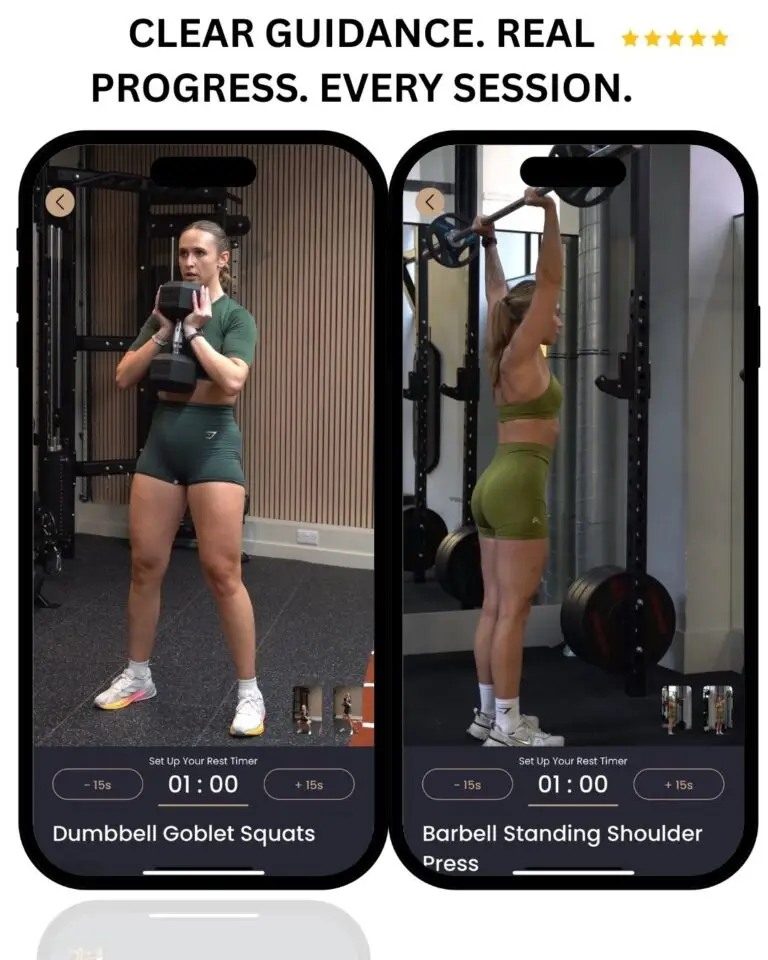
This is why you absolutely must track your workouts. When you find your starting weight through this process, immediately log it in your workout tracker along with the exercise name, number of sets, number of reps, and the RPE you experienced.
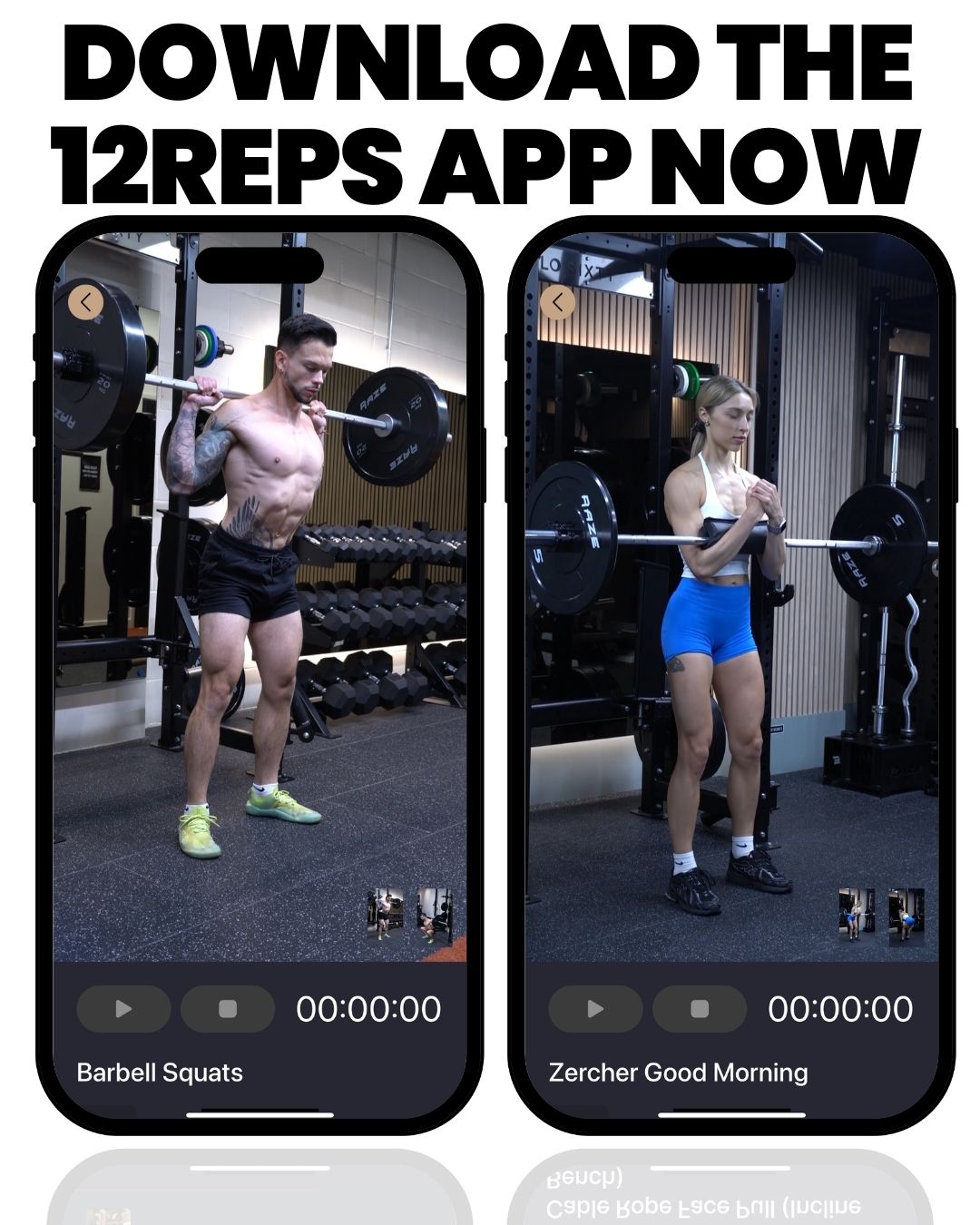
The 12reps app is the best strength training app for this purpose. Next week, when you come back to do the same exercise, you won’t have to go through the trial-and-error process again. You’ll know exactly where you started, and you can either use the same weight or make an informed decision to progress. Download it for a free trial and eliminate the guesswork from every workout.
Without tracking, you’re essentially starting from scratch every single session, trying to remember what you lifted last time and whether it felt right. That’s inefficient and frustrating.
When and How to Increase the Weight (Progressive Overload)
Finding your starting weight is just the beginning. The key to continuous improvement is progressive overload, systematically increasing the demands on your muscles over time.
Introduce Progressive Overload
Your body is remarkably adaptive. When you lift a certain weight repeatedly, your muscles, tendons, and nervous system adapt to handle that load efficiently. To keep getting stronger, you have to keep challenging your body with progressively greater demands. This principle, supported by extensive research, is the foundation of all strength training programs.
Progressive overload doesn’t necessarily mean adding weight every single workout. It can also mean adding reps, adding sets, or decreasing rest time. But for beginners, adding weight when appropriate is the most straightforward approach.
The 2-Rep Rule
Here’s a simple rule for when to increase the weight: When you can comfortably perform two more reps than your target for two consecutive workouts with good form, it’s time to increase the weight.
For example, if you’re aiming for ten reps per set and you complete twelve reps with solid form in both your second and third sets for two workouts in a row, the weight is no longer providing enough stimulus. Time to move up.
This approach ensures you’ve genuinely adapted to the current weight before progressing. A single good session might just be a great day. Two consecutive sessions demonstrate consistent capability.
How Much to Increase
When you’re ready to progress, make small jumps in weight. The goal is to make the next step challenging but achievable, not impossible.
For dumbbells, simply move to the next available weight in the rack. Most gyms have dumbbells in 2kg increments, which is perfect for steady progression.
For barbells, add the smallest plates available, typically 1.25kg plates on each side, for a total increase of 2.5kg. If your gym doesn’t have these small plates, consider purchasing your own fractional plates. They’re inexpensive and allow for more manageable progression.
After increasing the weight, expect your reps to drop slightly and your RPE to increase. That’s normal and expected. You’re creating a new stimulus that your body will adapt to over the coming weeks.
Conclusion
Choosing your weights will become second nature over time. After a few months of consistent training, you’ll instinctively reach for the right dumbbell or know exactly which plates to load. The uncertainty you feel now is temporary.
Remember the core principles: aim for an RPE of 7-8 on most working sets, use the trial-and-error method to find your starting weight for any new exercise, track everything in your workout log, and apply the 2-rep rule to know when to progress.
Don’t be afraid to experiment. Every lifter, no matter how experienced, occasionally misjudges a weight. Sometimes you’ll grab something too heavy and need to adjust down. Sometimes you’ll be pleasantly surprised by your strength and move up faster than expected. Both scenarios are part of the learning process.
The fact that you’re even asking this question—how much weight should I lift?—means you’re on the right track. You’re thinking like a lifter, not just someone going through the motions. That mindset is what separates people who see real progress from those who don’t.
Now, go find your productive struggle. Log your starting weights, focus on gradual progression, and get ready to see those numbers climb steadily over the coming weeks and months.