

By Will Duru, BSc (Hons) Sport and Exercise Science Award-winning Personal Trainer with over 10 years of experience in strength training and optimising recovery
You arrive at the gym with a plan to do both weights and cardio, but then you’re stuck. Where do you start? Do you hit the treadmill first to get your heart rate up, or do you head to the weights whilst you’re fresh? This is one of the most common questions I hear, and the answer actually does matter. The order you choose can significantly impact your results. The right answer depends on your primary goal.
I see people do it both ways, and I’ve had countless clients ask me for the “right” answer. My passion is to help you train smarter, not just harder. Structuring your workout correctly is a simple way to get better results from the time you put in. With my clients, I typically have them do five to ten minutes of light cardio as a warm-up at the beginning of the session, combined with mobility stretches to prepare the body for the main work ahead. But when it comes to your actual training session, the order matters.
This article will clear up the confusion once and for all. I’ll break down the science behind the debate and give you a clear recommendation based on whether your main goal is to build muscle, lose fat, or improve your general fitness.
The Golden Rule: Prioritise Your Primary Goal
Before we dive into specific scenarios, here’s the core principle that should guide your decision: do the exercise that’s most important to your primary goal first. You have the most energy, focus, and strength at the beginning of your workout. Use it for what matters most to you.
Energy Systems 101
Understanding how your body produces energy helps explain why order matters. Weightlifting primarily uses anaerobic energy systems, which provide short bursts of powerful effort. Think of this as your sprint system. Cardio primarily uses aerobic energy systems, designed for sustained, moderate effort over longer periods.
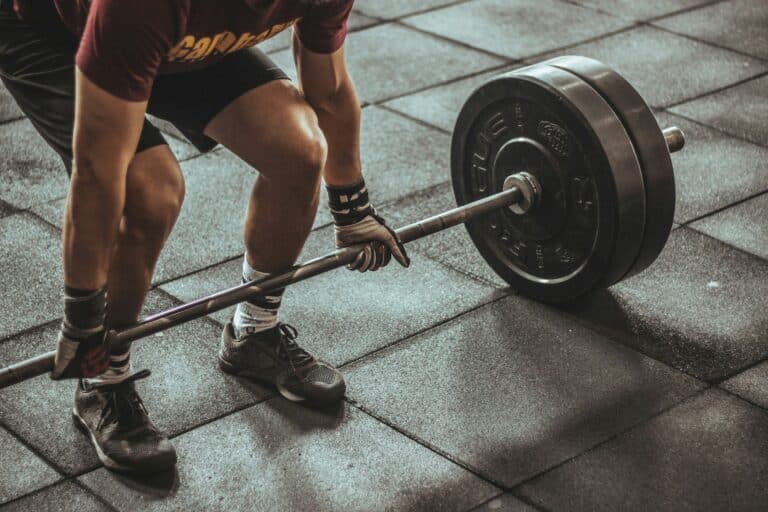
Lifting weights requires maximum power, coordination, and mental focus. You need to be able to generate force, maintain proper form, and push yourself hard enough to stimulate muscle growth. If you exhaust yourself with a long cardio session first, you simply won’t be able to lift as heavy or maintain good form. Your performance will suffer, and with it, your results.

If Your Goal is to Build Muscle or Get Stronger
The Verdict: Weights First, No Exceptions
If building strength or muscle is your primary goal, you must do your weight training first, whilst you’re fresh and your energy stores are full. This isn’t negotiable if you want optimal results.
Why This Matters
Maximum performance: To stimulate muscle growth, you need to lift with intensity and progressively challenge your muscles with heavier weights or more reps over time. This is called progressive overload, and it’s the fundamental driver of all strength gains. You can only achieve this when your muscles are fresh and your central nervous system is primed for maximal effort.
Doing cardio first is like running several miles before a sprint competition. It just doesn’t make sense. You’ll have depleted your glycogen stores, fatigued your muscles, and dulled your nervous system’s ability to recruit muscle fibres maximally. The result? You’ll lift lighter weights, complete fewer reps, and provide less stimulus for muscle growth.
Safety: Lifting weights is a skilled activity that requires concentration and body awareness. When you’re fatigued from cardio, your form is more likely to break down, which significantly increases your risk of injury. Proper technique on exercises like squats, deadlifts, and overhead presses requires full attention and muscular control. Fatigue compromises both.
The science: Research consistently shows that performing resistance training before aerobic exercise leads to better strength and power outcomes compared to the reverse order. Studies examining concurrent training demonstrate that doing cardio first can interfere with the adaptations you’re seeking from strength training.
How to Incorporate Cardio
Do your cardio after your weight session. A 15 to 20 minute session on the treadmill, bike, or rowing machine is an excellent way to cool down, burn some additional calories, and improve your cardiovascular health without compromising your strength gains. Think of it as a finisher, not the main event.
This approach gives you the best of both worlds: maximal strength performance when it matters, plus cardiovascular benefits after your primary work is complete.
If Your Goal is Fat Loss
The Verdict: Still Weights First
This surprises many people. The common assumption is that if you want to lose fat, you should prioritise cardio. But the science and practical experience tell a different story.
Why Strength Training Should Come First for Fat Loss
Building muscle boosts metabolism: The most powerful tool you have for long-term fat loss is building and maintaining muscle mass. Muscle is metabolically active tissue, meaning it burns calories even when you’re at rest. The more muscle you have, the higher your resting metabolic rate. Prioritising strength training is the best investment you can make in your metabolism.
When you do excessive cardio without adequate strength training, you risk losing muscle along with fat. This lowers your metabolic rate and makes it progressively harder to continue losing fat. You end up needing to eat less and less to see results, which is neither sustainable nor healthy.
The afterburn effect: Intense weightlifting creates what’s known as excess post-exercise oxygen consumption, or EPOC. This is the “afterburn” effect, where your body continues to burn calories at an elevated rate for hours after your workout is over. Whilst steady-state cardio burns calories during the activity, intense resistance training provides both immediate calorie burn and extended elevated metabolism.
Better body composition: The goal isn’t just to lose weight on the scale. The goal is to lose fat whilst retaining or even building muscle. This is what creates a toned, athletic appearance. Prioritising weights helps ensure you’re losing the right kind of weight.
Tracking Your Progress
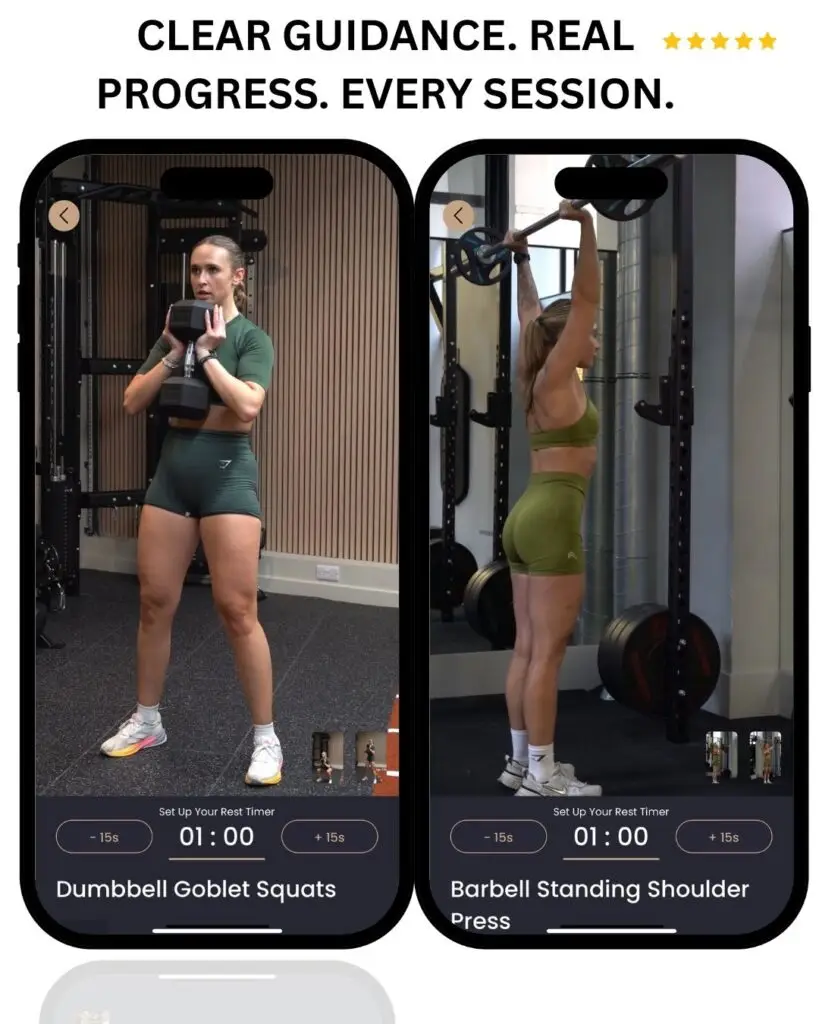
Use the 12reps app to track both your strength and cardio sessions. It’s the best strength training app to monitor how your performance is improving across all aspects of your training. Download it for a free trial and see your progress documented clearly.
The Exception: If Your Goal is Purely Cardiovascular Endurance
The Verdict: Cardio First
If you’re training for a specific endurance event like a 10k run, half marathon, or triathlon, then your running or cycling performance is the priority. In this case, do your cardio first whilst you’re fresh, and you can add some light, supplementary weight training afterwards to maintain strength and muscle mass.
However, even endurance athletes benefit from maintaining a strength training routine. It helps prevent injuries, improves running economy, and maintains muscle mass. The key is that for endurance athletes, the weights become supplementary rather than primary.

Conclusion
For 99% of women whose goals are to get stronger, build muscle, or lose fat, the answer is clear: lift weights first. This simple structural change to your workout can have a dramatic impact on your results.
Stop thinking of strength training and cardio as separate, competing activities. Think of your workout as a strength session with a cardio finisher. Your main work is building strength and muscle, and cardio serves as an excellent way to increase calorie expenditure and improve heart health without interfering with your primary goal.
The structure is simple: arrive at the gym, do five to ten minutes of light cardio and mobility work to warm up, complete your strength training session whilst you’re fresh and focused, then finish with 15 to 20 minutes of cardio if time permits and energy allows.
Next time you go to the gym, head straight to the weight room after your warm-up. Log your workout in your training tracker, then hit the treadmill or bike afterwards. Feel the difference in your strength, focus, and overall performance. Your results will speak for themselves.