


By Will Duru, BSc (Hons) Sport and Exercise Science Award-winning Personal Trainer with over 10 years of experience in strength training and optimising recovery
If you think you need to spend two hours in the gym to get results, I have good news for you. You don’t. In fact, for most people, marathon gym sessions are counterproductive. The question isn’t how long you’re in the gym, but what you do with that time.
I train some of the busiest women in the City of London. Lawyers, executives, entrepreneurs who have packed schedules and limited time. They don’t have hours to spare. My passion and my speciality is creating workouts that are brutally effective in 60 minutes or less. I use a timer to track rest periods, monitor sets and reps with the 12reps app, and ensure every single minute counts. It’s about quality, not quantity.
This article will free you from the “more is better” mindset. I’ll show you why the sweet spot for most strength training workouts is 45 to 60 minutes and how to structure your sessions for maximum results in minimum time.

The Science of Intensity vs Duration
Before we talk about how to structure your workout, let’s understand why shorter, focused sessions are actually superior to long, drawn-out ones.
The Hormonal Response
After about 60 to 75 minutes of intense training, your body’s primary stress hormone, cortisol, starts to rise significantly. In moderate amounts, cortisol is helpful for mobilising energy. But chronically elevated cortisol from excessive training duration can lead to muscle breakdown, fat storage, disrupted sleep, and impaired recovery. These are the exact opposite outcomes of what you want from strength training.
A focused 45 to 60 minute session keeps cortisol in the beneficial range while still providing enough stimulus for adaptation and growth. You get all the benefits without the hormonal downsides of prolonged training.
The Law of Diminishing Returns
Your workout is like a cup of coffee. The first cup gives you a great boost of energy and focus. The second might help a little. By the fifth cup, you’re just a jittery mess getting no additional benefit. Training works the same way.
The first 30 to 40 minutes of focused work provide the bulk of the adaptive stimulus. Each additional 15 minutes provides progressively less benefit whilst accumulating more fatigue. After a certain point, you’re not stimulating more growth, you’re just digging a deeper recovery hole that you’ll need to climb out of before you can train effectively again.
Focus is a Finite Resource
You can’t maintain high intensity and mental focus for two hours. Your ability to concentrate, execute proper form, and push yourself genuinely hard degrades over time. A shorter, more focused workout where every set counts and you’re fully present is far superior to a long session with lots of scrolling on your phone between sets, wandering around trying to decide what to do next, or going through the motions with suboptimal effort.
When I work with my City clients, intensity is everything. They have 60 minutes maximum. Every exercise is chosen strategically, every rest period is timed, and every set is executed with purpose. The results? They often surpass people training twice as long with half the focus.

The Anatomy of a 60-Minute Power Workout
Here’s how to structure the ideal efficient workout.
The Structure
5 to 10 minute warm-up: Dynamic stretching, joint mobility, and muscle activation exercises. This prepares your body for the work ahead and significantly reduces injury risk. Don’t skip this.
40 to 50 minutes of work: This is the core of your workout. Every minute should be productive. This is where your strength gains happen.
5 to 10 minute cool-down: Static stretching and breathing work. This aids recovery and brings your nervous system back down.
Making the Work Portion Count
To maximise the effectiveness of your 40 to 50 minute work window, use these strategies:
Compound exercises: Focus on movements that give you the most benefit for your time investment. Squats, deadlifts, presses, rows, and pull variations work multiple muscle groups simultaneously. A squat doesn’t just work your legs, it engages your core, back, and requires full-body coordination. Compare this to a leg extension machine that only works your quadriceps. Compound movements deliver far more results per minute invested.
Supersets: Pair two exercises back to back with minimal rest between them to save time and increase training density. For example, complete a set of dumbbell chest presses, then immediately perform a set of dumbbell rows, then rest. This allows one muscle group to recover whilst you’re working another, cutting your total workout time significantly whilst maintaining or even increasing the overall training stimulus.
Timed rest periods: Don’t guess your rest times or get distracted scrolling on your phone. Use a timer. For most exercises, 60 to 90 seconds of rest is plenty. This keeps your heart rate elevated, maintains training intensity, and ensures you’re not wasting time.
The App as Your Efficiency Tool
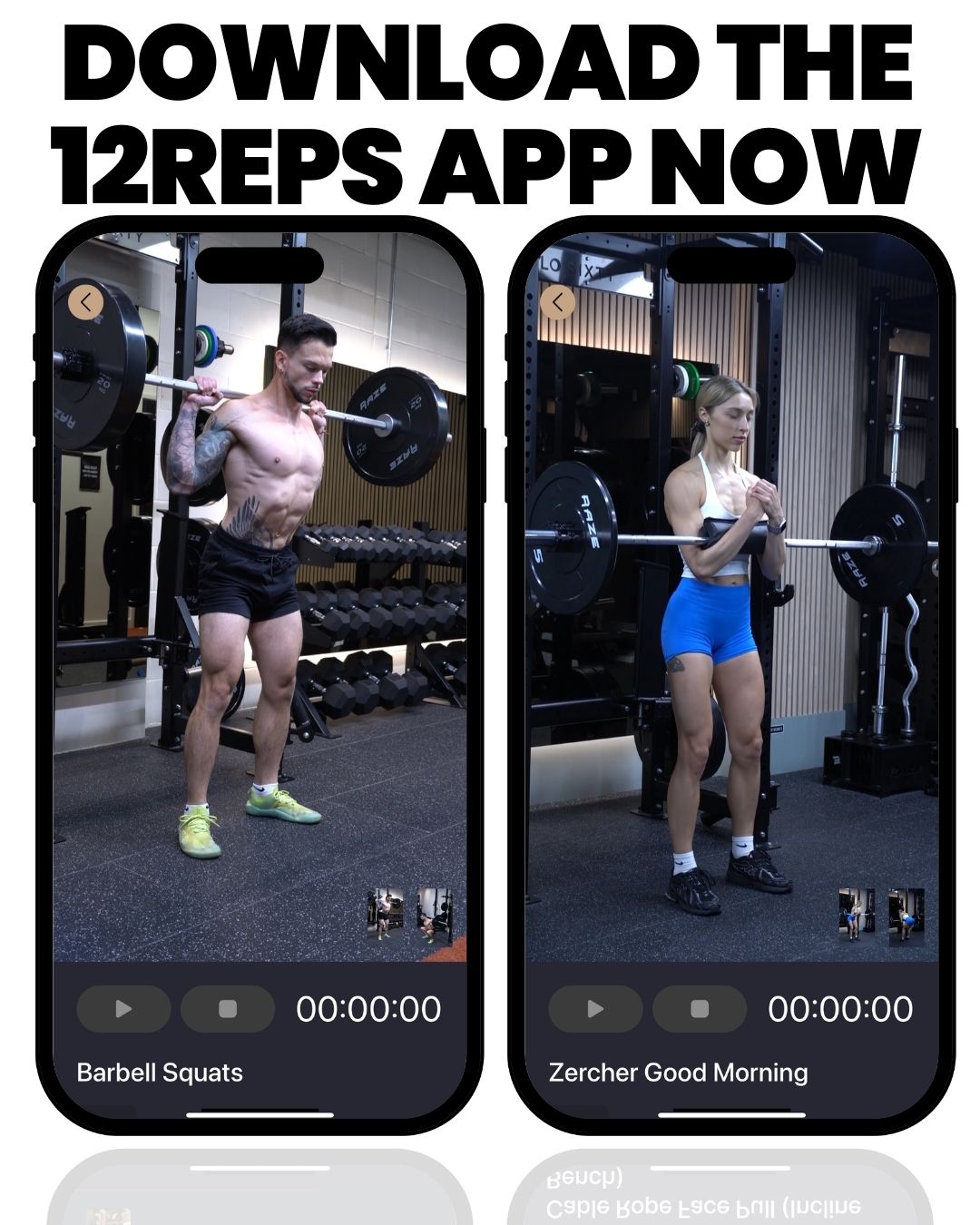
The 12reps app has a built-in rest timer that keeps you honest and on track. It’s the best strength training app for keeping your workouts efficient. You set your rest period, complete your set, tap the screen, and the timer counts down. When it beeps, you go again. No guessing, no getting distracted. Download it for a free trial and experience how much more focused and productive your training becomes when every rest period is controlled.
For my City professionals with tight schedules, this tool is essential. It transforms scattered, inefficient training into focused, time-optimised sessions.
What If I Have Less Than 45 Minutes?
Life happens. Some days you’ll only have 30 minutes. That’s still enough to get an excellent workout.
The 30-Minute Blitz
When time is tight, here’s how to structure a highly effective short session:
Focus on three to four compound exercises: Choose movements that work the most muscle with the least time. A squat variation, a push, a pull, and a core exercise covers your entire body.
Use full-body circuits: Perform one set of each exercise back to back with minimal rest, then rest for 60 to 90 seconds before repeating the circuit. Three to four rounds of a well-designed circuit can deliver a powerful training stimulus in 30 minutes.
Increase intensity: With less time available, you may need to push a bit harder on each set to ensure adequate stimulus. This doesn’t mean compromising form, it means being fully present and working near your capacity.
A 30-minute intense workout is always better than no workout at all. Don’t fall into the “all or nothing” trap where you skip training entirely because you don’t have your ideal timeframe available. Consistency with shorter sessions beats sporadic longer sessions every time.

Conclusion
Your time is valuable. Your workouts should be too. Free yourself from the idea that you need to live in the gym to get results. The truth is that 45 to 60 minutes of focused, intense, well-structured training will deliver better results than two hours of unfocused effort.
Remember the key principles: intensity matters more than duration, cortisol rises after 60 to 75 minutes of hard training, focus degrades over long sessions, and smart strategies like compound exercises, supersets, and timed rest periods maximise your efficiency.
Get in, work hard with purpose, and get out, knowing you’ve done exactly what you need to do to get stronger. Stop measuring success by how long you were at the gym and start measuring it by the quality of work you accomplished whilst you were there.
Time your next workout. Use the rest timer in your workout log and notice how much more focused and effective your session becomes when every rest period is controlled and every minute is purposeful. You’ll be amazed at how much you can accomplish in less time than you thought possible.