

By Will Duru, BSc (Hons) Sport and Exercise Science, Award-winning Personal Trainer with over 10 years of experience in strength training and optimising recovery
This full-body HIIT workout combines two cardio machines with three strength moves: the air bike, SkiErg, kettlebell swings, dumbbell thrusters and hanging leg raises or sit-ups. You do 5 sets of each exercise with 60 seconds of rest between sets. How many calories it burns depends on your size, effort and rest, so treat any figure as a rough estimate.
HIIT stands for high-intensity interval training. It means short bursts of hard effort broken up with rest. The NHS physical activity guidelines call this “very vigorous” activity.
You need a gym for this session, as it uses an air bike, a SkiErg, a kettlebell, dumbbells and a pull-up bar. On days without equipment, use our full-body bodyweight workout instead.
What HIIT can and cannot do
HIIT gets a lot of work done in a short time. It is not a magic fat burner, though. Here is what the research says.
- Fat loss is similar to steady cardio. A 2017 meta-analysis in adults with overweight or obesity found HIIT and moderate steady cardio gave similar changes in body composition. HIIT took about 40% less training time.
- One meta-analysis favored intervals for fat mass. A 2019 meta-analysis found both methods cut body fat percentage by a similar amount. Interval training gave 28.5% greater reductions in total fat mass in kilograms.
- The “afterburn” is small. Your body uses extra oxygen after hard exercise, known as EPOC (excess post-exercise oxygen consumption). A review of EPOC research found it adds only about 6 to 15% to the net oxygen cost of the exercise.
So most of the calories you use come from the workout itself, and your diet still matters most for fat loss. Our guide to the best workout for fat loss compares HIIT, steady cardio and strength training.
How many calories does this HIIT workout burn?
There is no single answer. Calorie use depends on your body weight, how hard you push and how long you rest.
Harvard Health’s estimates give a rough idea. For 30 minutes of vigorous stationary cycling, they list about 315 calories for a 125 lb person and about 441 calories for a 185 lb person. These are estimates, not measurements.
This workout also includes rest periods, which lower the average. The calorie counter on an air bike or SkiErg is an estimate too. Use these numbers as a rough guide, not a target.
The full-body HIIT workout
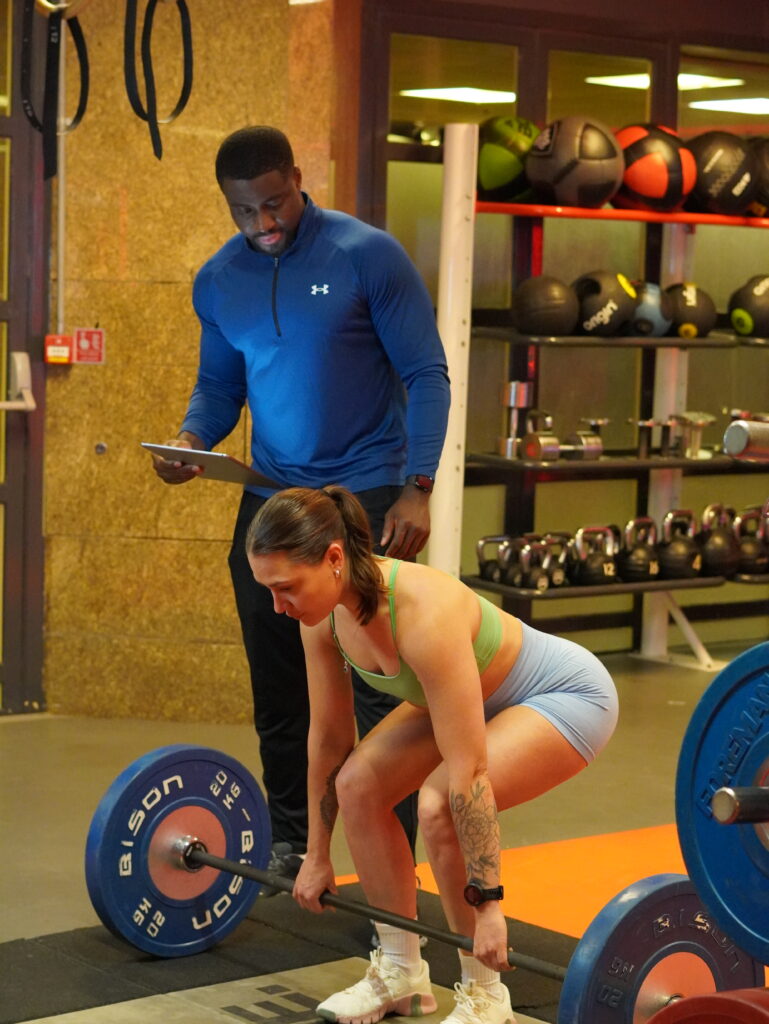
Here is the session. Warm up for 5 to 10 minutes first, then work through the exercises in order.
Do 5 sets of each exercise, resting 60 seconds between sets. Finish all 5 sets of one exercise before you move to the next. Push hard on each set, but keep your technique clean.
| Exercise | Reps or calories | Sets | Rest |
|---|---|---|---|
| Air bike | 10 calories | 5 | 60 seconds |
| SkiErg | 10 calories | 5 | 60 seconds |
| Kettlebell swings | 10 reps | 5 | 60 seconds |
| Dumbbell thrusters | 10 reps | 5 | 60 seconds |
| Hanging leg raises or sit-ups | 10 reps | 5 | 60 seconds |
If you are a beginner, do this workout twice a week with at least one rest day in between. If you are new to HIIT, start with fewer sets and build up as your fitness improves.
How to do each exercise
1. Air bike
The air bike (also called an assault bike) uses a fan for resistance. The harder you pedal and push, the more resistance you get. That makes it a good fit for short, hard efforts.
- Sit on the bike with your feet on the pedals and your hands on the handles.
- Drive with your arms and legs together at a steady, fast rhythm.
- Keep going until the monitor shows 10 calories.
- Stay tall and keep breathing steadily through the effort.
2. SkiErg
The SkiErg copies the pulling motion of cross-country skiing. It works your arms, back, core and legs together.
- Stand facing the SkiErg with your feet about shoulder-width apart.
- Hold the handles with an overhand grip, arms reaching up.
- Pull the handles down in one strong, smooth motion. Hinge at your hips and bend your knees slightly as you pull.
- Let the handles return overhead and repeat until the monitor shows 10 calories.
Use your whole body, not just your arms. Your hips and legs should start each pull.
3. Kettlebell swings
Kettlebell swings train your glutes, hamstrings and core, and they raise your heart rate fast. They are a hip hinge, not a squat or a front raise. For a full breakdown, see our guide on how to do a kettlebell swing.
- Stand with your feet slightly wider than shoulder-width, with the kettlebell on the floor a little in front of you.
- Hinge at your hips, bend your knees slightly and grip the handle with both hands.
- Hike the kettlebell back between your legs.
- Drive your hips forward to swing it up to about chest height. Let it swing back down and repeat for 10 reps.
The power comes from your hips, not your arms. Keep your core braced and your back flat throughout.
4. Dumbbell thrusters
The dumbbell thruster combines a front squat with an overhead press. It works your legs, shoulders and arms in one move.
- Hold a dumbbell in each hand at shoulder height, palms facing each other.
- Squat down, keeping your chest up and your back straight.
- As you stand, drive the dumbbells overhead in one smooth movement.
- Lower the dumbbells back to your shoulders and repeat for 10 reps.
Choose a weight that challenges you but still lets you keep good form on every rep.
5. Sit-ups or hanging leg raises
This final exercise trains your core. Do sit-ups if you have no pull-up bar, or hanging leg raises if you do.
Sit-ups
- Lie on your back with your knees bent and your feet flat on the floor.
- Cross your hands over your chest or rest your fingertips by your head.
- Brace your core and lift your upper body toward your knees.
- Lower back down with control and repeat for 10 reps.
Video: Sit-ups. Watch this demo of the sit-up option before your first set. The video at the end of this section shows the bar version.
Hanging leg raises
- Hang from a pull-up bar with your legs straight down.
- Keeping your legs straight, raise them until they are about parallel to the floor.
- Lower them slowly and repeat for 10 reps. Avoid swinging.
If straight legs are too hard, bend your knees and do a hanging knee tuck instead. The video below shows the knee tuck. See the hanging leg raise exercise page for the straight-leg version.
Why this workout works
The session mixes cardio and strength work. The air bike and SkiErg push your heart and lungs. The kettlebell swings and thrusters load your legs, hips and shoulders. The core exercise finishes the session.
The NHS guidelines suggest adults do strengthening activities on at least 2 days a week. They also suggest 150 minutes of moderate activity or 75 minutes of vigorous activity a week. A session like this can count toward your vigorous minutes, but it does not replace a full strength program.
If you also lift weights, read our guide to doing cardio and weights on the same day. For a structured plan, see our 3-day advanced HIIT split.
Tips to train safely and keep progressing
- Warm up first. Spend 5 to 10 minutes on light cardio and mobility drills before your first hard set.
- Form before speed. Fewer good reps beat rushed reps. Slow down if your technique slips.
- Progress gradually. As you get fitter, shorten the rest periods or add reps, one change at a time.
- Cool down. Finish with a few minutes of easy movement and gentle stretching.
- Recover. Eat well, sleep well and take rest days when you need them.
HIIT is hard on purpose. If you have a heart condition, high blood pressure or another health concern, or you are new to exercise, check with your doctor before you start.
Video: How strength training helps with fat loss. HIIT is one tool among several. This video explains why lifting weights also matters when your goal is fat loss.
For more on that, read strength training for fat loss. Diet matters too; our article on whether keto helps you lose weight or build muscle covers one popular approach.
HIIT workout FAQs
How often should I do this HIIT workout?
Beginners can start with twice a week, with at least one rest day in between. Fit it around your other training so you can still recover.
Can I do this workout at home?
Only if you have the equipment. Without an air bike, SkiErg and kettlebell, try our bodyweight workout instead.
How many calories will I burn?
It varies from person to person. Your total depends on your body weight, effort and rest, and machine or watch calorie counts are estimates. See the calorie section above for a rough guide.
Plan and log your sessions
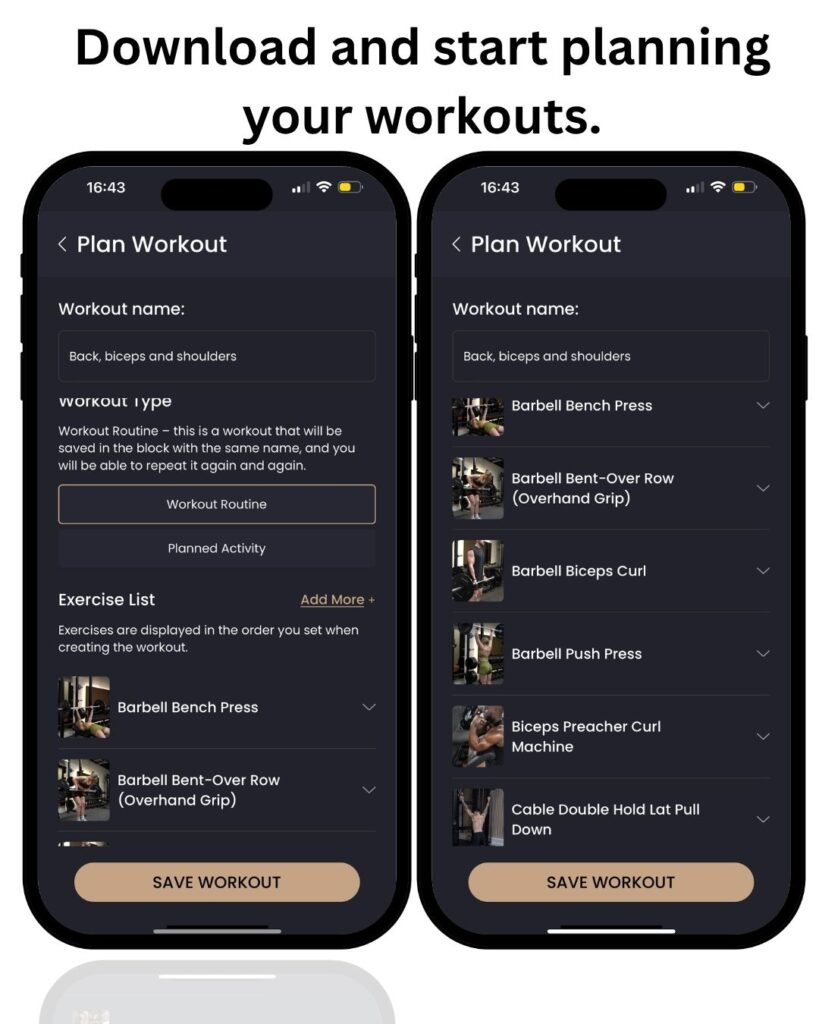
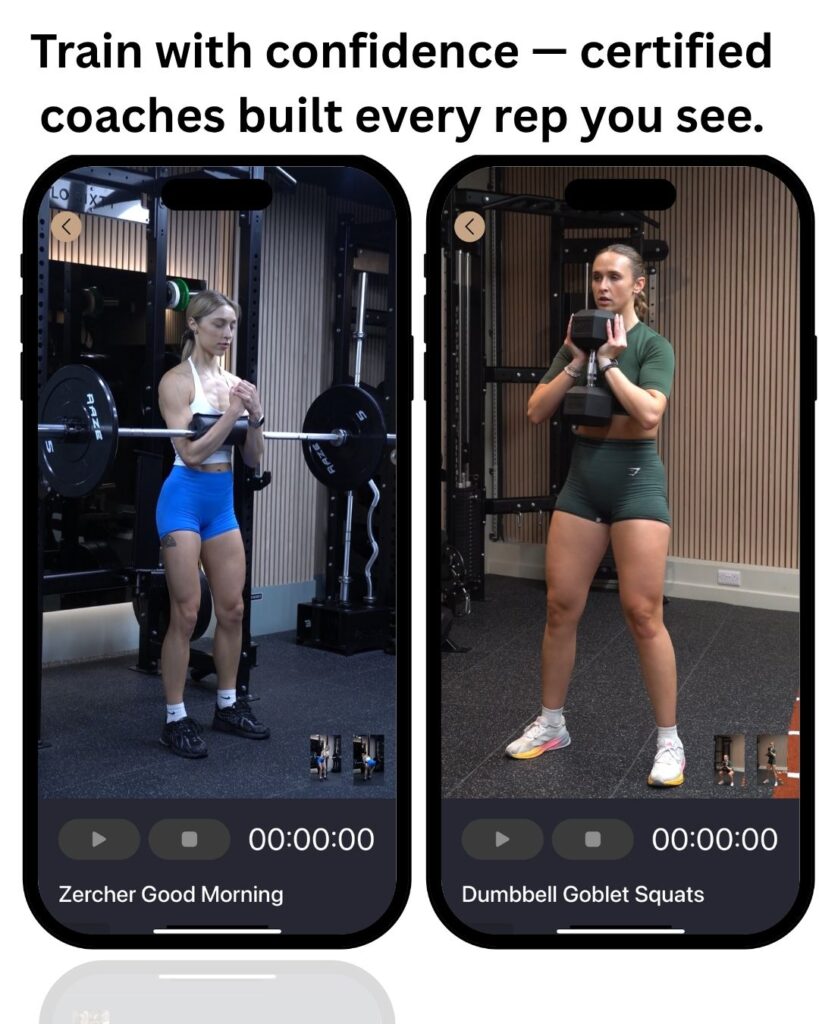
Seeing your numbers improve is one of the best reasons to keep going. If you want each session set out for you, 12REPS builds your workout around your goal, equipment and time. You watch a trainer demo, then log reps and weight for every set, so you have a number to beat next time.
Sources
- Physical activity guidelines for adults aged 19 to 64. NHS, accessed 2026. https://www.nhs.uk/live-well/exercise/physical-activity-guidelines-for-adults-aged-19-to-64/
- The effects of high-intensity interval training vs. moderate-intensity continuous training on body composition in overweight and obese adults: a systematic review and meta-analysis. Wewege M, et al., Obesity Reviews, 2017. https://pubmed.ncbi.nlm.nih.gov/28401638/
- Is interval training the magic bullet for fat loss? A systematic review and meta-analysis comparing moderate-intensity continuous training with high-intensity interval training (HIIT). Viana RB, et al., British Journal of Sports Medicine, 2019. https://doi.org/10.1136/bjsports-2018-099928
- Effects of exercise intensity and duration on the excess post-exercise oxygen consumption. LaForgia J, Withers RT, Gore CJ, Journal of Sports Sciences, 2006. https://pubmed.ncbi.nlm.nih.gov/17101527/
- Calories burned in 30 minutes for people of three different weights. Harvard Health Publishing, updated 2021. https://www.health.harvard.edu/diet-and-weight-loss/calories-burned-in-30-minutes-for-people-of-three-different-weights